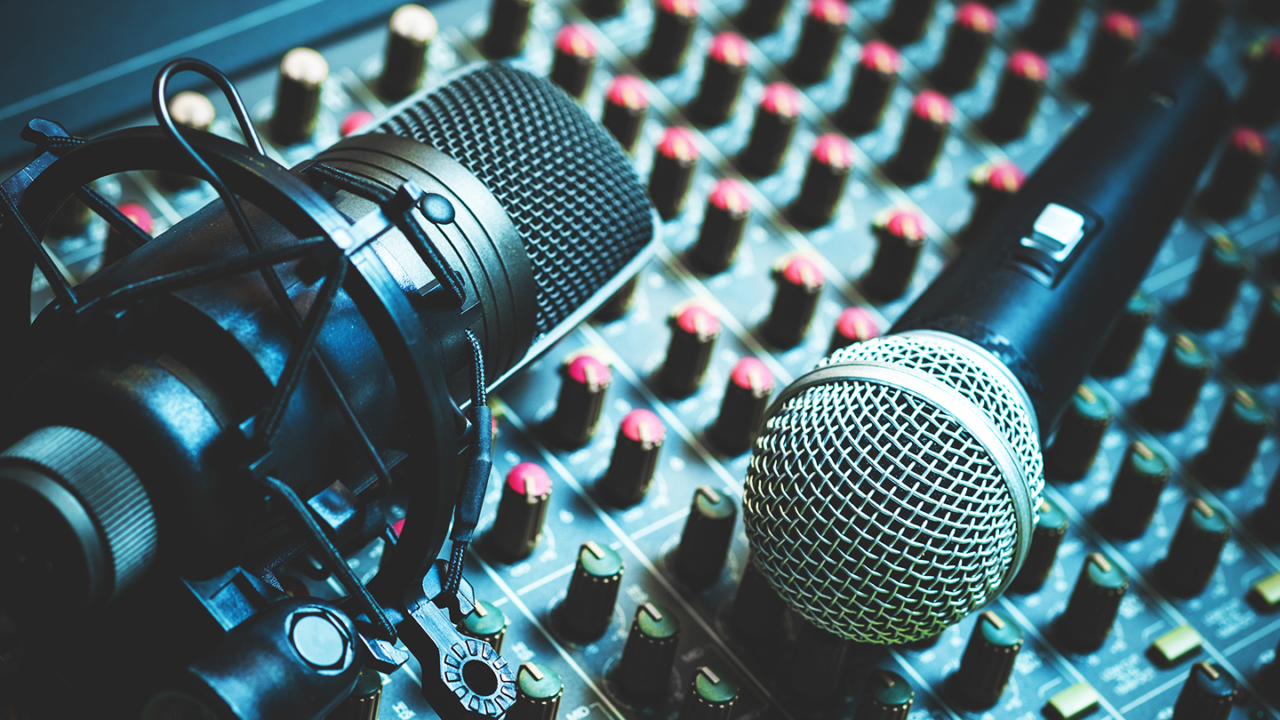

The main difference between condenser and dynamic microphones is how they convert sound into an electrical signal. For a first purchase, the practical choice comes down to your voice or instrument, recording space and setup. A condenser is often a good starting point for detailed vocals and acoustic instruments in a quiet room. A dynamic microphone is a practical choice for live vocals, guitar amplifiers and close-miked speech.
Neither type is automatically better, and neither eliminates background noise. This guide compares their strengths, explains USB and XLR connections, and introduces five microphones worth considering for your first setup.
Condenser vs Dynamic Microphones: The Quick Comparison
| Feature | Dynamic microphones | Condenser microphones |
|---|---|---|
| Common applications | Live vocals, guitar amplifiers, drums and close-miked speech | Studio vocals, acoustic instruments, piano and voiceovers |
| Sound characteristics | Many popular models have a focused sound tailored to vocals or instruments | Many models offer extended high-frequency response and capture fast transients clearly |
| Power requirements | Passive moving-coil XLR models do not require phantom power | Most XLR models require phantom power, commonly 48V; USB models receive power through USB |
| Preamp gain | Often need more gain, especially with quiet voices or instruments | Usually produce a higher output signal and need less gain |
| Background noise | Close placement can help keep the voice prominent over room sound | Can also work well with suitable placement and a controlled recording environment |
| Handling and transport | Many handheld models are built for regular stage use | Studio models generally need careful handling; dedicated stage models are also available |
A useful starting point: choose for the job, then compare individual models. Pickup pattern, frequency response and microphone placement can matter as much as whether the microphone is dynamic or condenser.
What Is a Dynamic Microphone?
A moving-coil dynamic microphone uses a diaphragm attached to a coil that moves within a magnetic field, generating an electrical signal. This is the design used by the dynamic models featured here.
Many dynamic microphones are robust and well suited to loud sources. Passive XLR models do not need phantom power, although their relatively low output can require more microphone-preamp gain when recording quiet speech.
For rehearsals and stage performances, browse dynamic vocal microphones. For drums or guitar cabinets, check that the individual model is suited to the instrument and the volume you want to record.
the t.bone MB85 Beta: An Affordable, Versatile Starting Point
The the t.bone MB85 Beta is a budget-friendly dynamic microphone suitable for vocals, drums and guitar amplifiers. Its supercardioid pickup pattern helps reduce sound arriving from the sides. Like other supercardioid microphones, it also has some rear pickup, so monitor-speaker placement matters on stage.
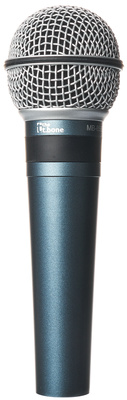
the t.bone
MB85 Beta
Shure SM58: A Familiar Choice for Live Vocals
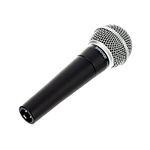
The Shure SM58 LC combines a cardioid pickup pattern, an integrated wind and pop filter, and a robust handheld design. It is a practical option for singers who need one microphone for rehearsals, concerts and home-recording experiments.
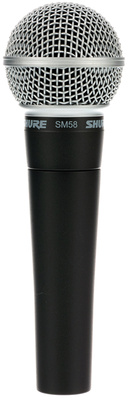
Shure
SM58 LC
What Is a Condenser Microphone?
A condenser microphone uses a lightweight diaphragm and a backplate to form a capacitor. Sound moves the diaphragm, and the microphone’s powered electronics turn those changes into an audio signal. Many condenser designs offer extended high-frequency response and capture fast attacks, such as the initial sound of a plucked string, clearly.
Most XLR condenser microphones require phantom power, commonly 48V, supplied by a compatible audio interface, microphone preamp or mixer. Always check the model’s power requirements. USB condensers receive power through their USB connection, while some specialist models use batteries or dedicated power supplies.
For studio vocals and voiceovers, large-diaphragm microphones are a useful category to explore. Check each product’s transducer type: a large diaphragm does not automatically mean that a microphone is a condenser.
the t.bone SC 400: A First XLR Studio Condenser
The the t.bone SC 400 is a large-diaphragm condenser microphone for an affordable home-recording setup. It requires 48V phantom power and includes a shock mount to help reduce mechanically transmitted vibrations. Consider it for vocals, spoken content and acoustic instruments when you already have, or plan to buy, a suitable audio interface.
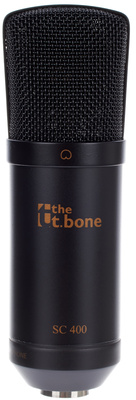
the t.bone
SC 400
Audio-Technica AT2020: A Cardioid Home-Recording Option
The Audio-Technica AT2020 is a cardioid condenser microphone worth considering for vocals and acoustic-instrument recording. The XLR version featured here requires 48V phantom power and includes a mount and pouch. It does not connect directly to a computer via USB; Audio-Technica’s USB models are separate products.
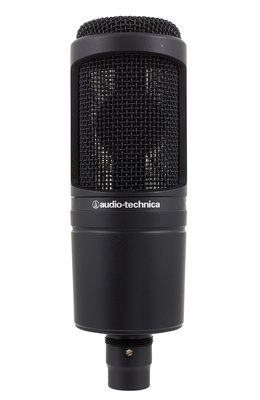
Audio-Technica
AT2020
Do Dynamic Microphones Pick Up Less Background Noise?
Not automatically. A microphone’s sensitivity describes its electrical output for a given sound level; it does not measure how effectively it separates your voice from a fan, traffic or room reflections. Raising or lowering gain changes both the wanted sound and the background sound already captured.
The practical advantage of many vocal dynamic microphones is that they are designed for comfortable close use. Moving closer makes your voice louder relative to more distant sounds. A condenser can also benefit from close placement, provided you manage breath noise, plosives and changes in bass response.
The most useful adjustments are reducing noise at its source, moving the microphone closer and directing its least-sensitive areas towards unwanted sound. Shure’s guide to microphone placement and room sound explains why distance is so important.
Cardioid vs Supercardioid: Why Pickup Pattern Matters
A cardioid microphone mainly captures sound from the front and reduces pickup from the rear. A supercardioid microphone has a narrower front pickup area but also captures some sound directly behind it. Neither pattern blocks all unwanted noise, and its behaviour varies with frequency.
On stage, position monitors according to the microphone’s pickup pattern. At a desk, aim the microphone towards your mouth and experiment with its angle relative to your keyboard and computer fan. For a visual explanation, see Shure’s guide to microphone types and polar patterns.
Which Microphone Should You Choose for Your Setup?
Home-Studio Vocals and Voiceovers
A condenser is a useful starting point for recording vocal detail in a quiet space. A dynamic can be equally valid if its sound suits your voice or you prefer working very close to the microphone. In an echoey room, improving placement and reducing reflections will help either type.
Live Vocals and Rehearsals
A handheld dynamic is often a straightforward first choice because many models are designed for stage handling and close vocal use. Stage condensers are also available. Compare live vocal microphones by pickup pattern, handling noise and how they work with your monitor setup.
Acoustic Guitar and Piano
A condenser is often a good starting point for capturing string attack, resonance and upper-frequency detail. Try different positions before changing equipment: small movements can noticeably alter the balance of body, brightness and room sound.
Electric Guitar Amplifiers and Drums
A dynamic microphone suited to instruments is a practical first option for close-miking a guitar cabinet, snare or tom. Condensers can also record loud sources, so check the individual microphone’s maximum sound-pressure level and any available pad rather than assuming that all condensers will overload.
Podcasting and Streaming
For a single speaker, prioritise a microphone you can position close to your mouth without blocking your screen or becoming uncomfortable. A dynamic can suit this approach, while a condenser can work well in a quiet room. If you want a direct computer connection, explore USB and podcast microphones, which include both dynamic and condenser options.
USB vs XLR Microphones: Which Is Better for Beginners?
USB and XLR describe the connection, not the microphone’s transducer type. A USB microphone contains the electronics needed to send digital audio to your computer. An XLR microphone sends an analogue signal to a microphone input on an interface, mixer or recorder.
- Choose USB for a simple solo setup. You can record without a separate audio interface. Check computer compatibility and look for a headphone output with direct monitoring if you want to hear yourself without a distracting software delay.
- Choose XLR for a setup you can expand. You can change microphones and interfaces independently. To record several people at once, choose an interface with enough microphone inputs for the whole group.
- Check the total setup cost. An XLR microphone may also require an interface, cable, stand and pop filter. A USB bundle may include some of these accessories.
For an XLR computer-recording setup, compare USB audio interfaces with microphone inputs. Check for sufficient preamp gain, direct monitoring and 48V phantom power if your chosen microphone requires it.
the t.bone SC 420 USB Desktop-Set: A Simple Computer-Recording Package
The the t.bone SC 420 USB Desktop-Set includes a USB condenser microphone, shock mount, pop filter, tabletop tripod and USB cable. Its headphone output offers direct monitoring. It is a practical option for a beginner who wants to record a single voice without assembling a separate XLR setup.
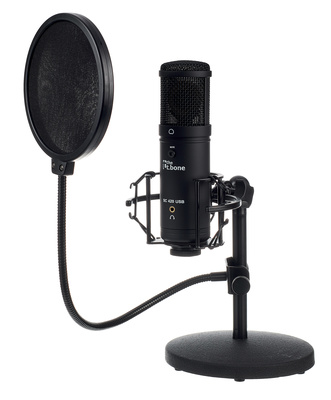
the t.bone
SC 420 USB Desktop-Set
How to Get Better Results from Your First Microphone
- Start with the quietest available position. Move away from noisy computers, open windows and other avoidable sound sources.
- Check which side to speak into. Many studio condensers are side-address microphones, while handheld vocal dynamics are usually addressed through the end grille. Follow the model’s instructions.
- Experiment with distance and angle. Listen for the balance between your voice, room sound, breath noise and bass buildup. Use a pop filter when needed.
- Set gain using the loudest part of your performance. Leave headroom so sudden peaks do not clip the recording.
- Make a short test recording. Listen on headphones before recording a full song, podcast or voiceover. Adjust the position before deciding that you need another microphone.
Which First Microphone Makes Sense for You?
For rehearsals and live vocals, start by comparing the the t.bone MB85 Beta and Shure SM58. For an XLR home-studio setup, consider the the t.bone SC 400 or Audio-Technica AT2020. For straightforward solo recording directly to a computer, the the t.bone SC 420 USB Desktop-Set brings the microphone and essential desktop accessories together.
Choose the microphone that suits your main use and leaves room in your budget for the rest of the setup. Careful placement and a suitable recording space will help you get more from whichever model you buy.
FAQ: Condenser vs Dynamic Microphones
Is a condenser or dynamic microphone better for vocals?
Both can produce excellent vocal recordings. A condenser is often chosen for studio detail, while a handheld dynamic is a common choice for live singing and close vocal use. The best match depends on your voice, room, microphone technique and the individual model.
Which microphone is better for an untreated room?
A microphone you can use close to your mouth, with a suitable directional pickup pattern, is a practical starting point. Many vocal dynamics suit this approach, but they do not remove room echo or background noise. Placement and reducing unwanted sound remain essential.
Do condenser microphones need 48V phantom power?
Most XLR studio condensers require phantom power, commonly 48V. USB condensers receive power through USB, and some other condenser designs use batteries or a dedicated power supply. Check the microphone’s specifications before connecting it.
Do dynamic microphones need phantom power?
Passive moving-coil dynamic microphones do not need phantom power. Models with active electronics or a separate inline booster may require it. A microphone needing more preamp gain does not, by itself, mean that it needs phantom power.
Do I need an audio interface for my microphone?
A USB microphone connects directly to a compatible computer without a separate interface. To record an XLR microphone into a computer, you normally need an audio interface or another device with a microphone preamp and a digital audio connection, such as a USB mixer.
Can a condenser microphone record loud instruments?
Yes. Many condenser microphones can handle loud instruments. Check the model’s maximum sound-pressure level, use its pad if appropriate, and make sure the microphone and the input stage of your interface or mixer are not overloading.



Comments 0
No comments yet.