









Whilst the shelf life of current chart hits is getting shorter and shorter, many of the classical works penned by famous composers are unrivalled in their longevity. These compositions remain in constant demand, enjoying unbroken popularity. The public never tires of the canon of classical masterpieces. Reason enough to turn our eyes and ears to a few wonderful works and their composers. Here is a small selection of timeless pieces from the vast treasure trove of the gigantic classical repertoire.
1. Claude Debussy: Clair de lune
The French composer Claude Debussy was a master of evocative musical imagery, transporting his audience to dreamlike worlds. With his composition ‘Clair de lune’, the third movement from his ‘Suite Bergamasque’, the then young Debussy set moonlight to music. Interestingly, he was labelled an Impressionist, although he hated the term and did not want to be pigeonholed into what was then a rather unflattering category. Nonetheless, he is still regarded today as the founder and one of the most significant figures of musical Impressionism. It took Claude Debussy a full fifteen years to complete “Clair de lune”. In fact, he had no intention of publishing the work. Fortunately, he was persuaded to change his mind, thereby inspiring entire generations of composers. Is “Clair de lune” easy to play? The biggest challenges arise from the sometimes rapid arpeggios, the flowing runs, and the nuanced dynamics. Furthermore, the piece is written in D-flat major, a key that happens to have five accidentals.
Although ‘Clair de lune’ is primarily a work for the piano, it has also been arranged for other instruments and ensembles.
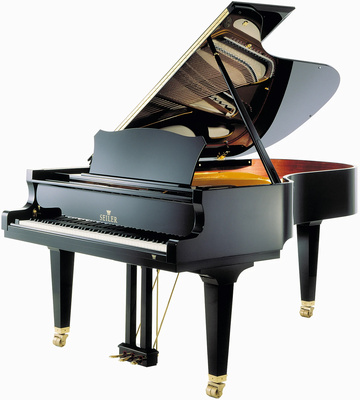
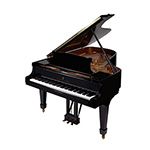
Seiler
214 Concert Grand Piano
2. Georg Friedrich (George Frideric) Handel: The Messiah
Many now legendary composers actually received little attention during their lifetime. Handel, however, was an exception: he rose to stardom during his lifetime and enjoyed international success. From his creative mind came “The Messiah”, a three-part work dedicated to a religious theme: the Saviour. Anyone who listens to even a short section of it is struck by the virtuoso complexity of the composition, which is at the same time kept simple. Handel strived to make his music accessible; he wanted the audience to understand his message. How long did Handel spend writing Messiah? He must have been a truly quick-thinking mind: incredibly, the monumental work ‘Messiah’ was completed in a record-breaking 24 days.
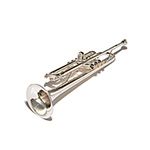
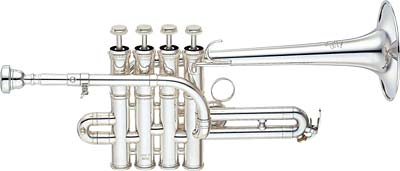
The sonic foundation is provided by violins, violas, and cellos. In the festive movements, such as the famous ‘Hallelujah’, the trumpets really come into their own.

3. Sergei Rachmaninoff: Piano Concerto No. 3 in D minor
The Oscar-winning cinema classic “Shine” tells the story of pianist David Helfgott, who spends several years in psychiatric hospitals due to a schizoaffective disorder. Although the illness cannot be fully cured, he gathers his strength and makes a triumphant return to the stage as a former child prodigy. The legendary film score in this cinematic melodrama contains Sergei Rachmaninoff’s Piano Concerto No. 3. Is the concerto difficult to play? The virtuoso had composed the concerto with such a high degree of difficulty and spectacular passages that it was considered unplayable at the time. The film’s protagonist was brought to his knees by this monumental work, yet Rachmaninoff played it time and again.
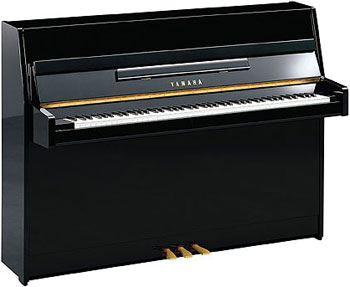
Yamaha
b1 PE
4. Antonio Vivaldi: The Four Seasons
Reflecting the natural cycle of the year, Vivaldi’s ‘Four Seasons’ consists of four concertos. In this classical masterpiece, the Venetian composer employs unconventional stylistic devices. He imitates the singing and chirping of birds and does not shy away from musical depictions of a thunderstorm and a snowstorm, woven into the fabric of the pieces with a stunning complexity that caused a sensation even in the Baroque era. The ‘Four Seasons’ remains one of the most frequently performed Baroque works to this day. A beautiful piece for the musical treasure chest.
5. Joseph Haydn: London Symphonies
The fact that Haydn was Beethoven’s teacher and a friend of Mozart’s already hints at his skill and significance. In fact, he was a composer with an almost unbelievable output. Given the more than 100 symphonies he penned, one might think he was churning out musical products on an assembly line. As is well known, that was not the case; in fact, he just kept getting better. Nevertheless, his creativity, productive energy, and perfection only really took off when he was able to travel after being fired. He composed his final symphonies in London. And these ‘London Symphonies’, particularly Nos. 99–104, are regarded by experts as the absolute pinnacle of his oeuvre.
6. Bedřich (Friedrich) Smetana: The Moldau
“The Moldau” (Vltava) is the most famous piece by the Czech composer Bedřich Smetana. Part of the symphonic cycle “My Fatherland”, it sets to music in a unique way the course of the river of the same name, the largest river in the Czech Republic, which is also known as the “Bohemian Sea”. Smetana translates images of nature into sound, and ‘The Moldau’ has long since become a sort of surrogate national anthem in the Czech Republic. By the way: when Smetana gave the complex work the light of day in 1874, he was already completely deaf himself!
In his symphonic poem, Smetana picturesquely depicts the typical scenes of the river’s course, using specific instruments and groups of instruments for each. For example, the flutes represent the warm source of the Vltava, whilst the clarinets represent the cold source. Strings and horns symbolise the river’s journey through the landscape.

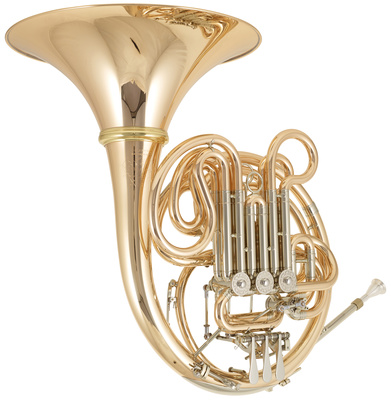
7. Gustav Mahler: Das Lied von der Erde (The Song of the Earth)
Gustav Mahler’s “Das Lied von der Erde” is characterised by its unique formal structure. The sequence of movements is modelled on the symphony, with weighty outer movements emphasising the sonata form based on the stanza structure. The modulation from C minor to C major underscores the crescendo right up to the final movement. An interesting point in this context: in his major works – including “Das Lied von der Erde” – Mahler placed the highest demands on the musicians. In doing so, he explored the boundaries of various symphonic genres.
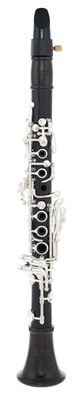
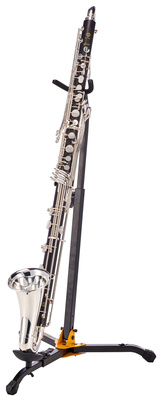
“Das Lied von der Erde” features an enormous orchestration. Among its distinctive features is the use of woodwinds, including the clarinets – such as the E-flat clarinet and bass clarinet –, which provide the bird-like and mist-shrouded sounds.
8. Pyotr Ilyich Tchaikovsky: The Nutcracker
With ‘The Nutcracker’, Tchaikovsky composed one of the most famous and enchanting ballets in musical history, alongside ‘Swan Lake’ and ‘Sleeping Beauty’ – a feast for the senses that transports listeners into a world of dreams and fantasy with its melodic magic. Typical of this seminal Romantic composer was the fusion of Russian folk music with Western forms and elements. This is clearly evident, for example, in the ‘Waltz of the Flowers’. To create the right atmosphere, he even brought the celesta to Russia, which had been unknown in the country before then. The sparkling tone of the bell piano seemed tailor-made for the fairy world. And it became a sensation.
Playing on a genuine celesta, the historic bell piano, is a privilege. The vast majority of musicians have to look for an affordable alternative, such as the Viscount Cantorum VI Plus, which features celesta sounds.
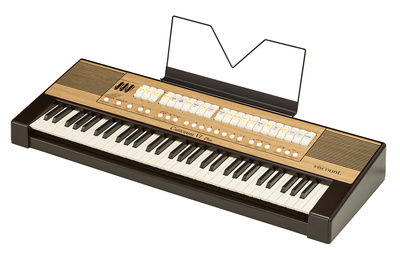
Viscount
Cantorum VI Plus
9. Wolfgang Amadeus Mozart: Eine kleine Nachtmusik
There is still uncertainty as to how many movements Mozart’s serenade ‘Eine kleine Nachtmusik’ originally had. Mozart’s catalogue of works lists five movements; the second of which is unfortunately missing. Whether the pages were deliberately removed, lost, or forgotten is unknown. The classical rumour mill continues to buzz. In any case, the serenade is a musical masterpiece and as intricately structured as a symphony. And it is beautiful.
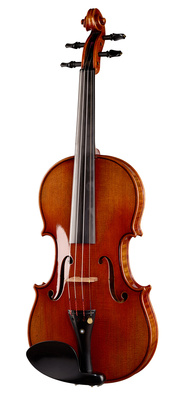
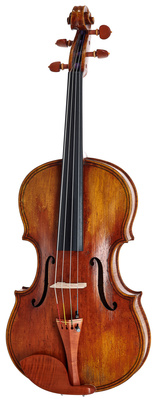
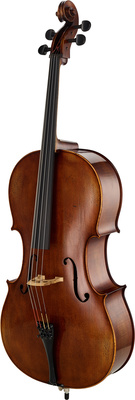
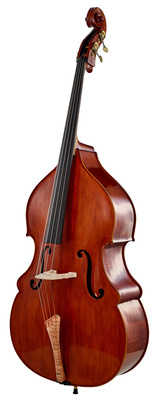
‘Eine kleine Nachtmusik’ was originally written for a chamber music ensemble comprising two violins, a viola, a cello, and a double bass.
10. Ludwig van Beethoven: Ode to Joy
A very special version of the Ninth Symphony was sold at auction by the London auction house ‘Sotheby’s’ back in 2003 for a cool three million euros. The titan of music had once again gone through the 575 pages of his grand symphony to make corrections. He was absolutely furious about how poorly the copyists had transcribed his handwriting. Beethoven’s angry remarks are immortalised in this copy of his work; exasperated sighs that the master jotted down in the margins of the score. Among the most famous pieces is, of course, “Ode to Joy”. After all, the musical setting of Friedrich Schiller’s ‘Ode to Joy’ is one of the most frequently performed pieces in the world and has been the anthem of the European Union – which was then still called the European Community – since 1985.
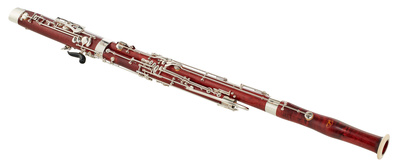
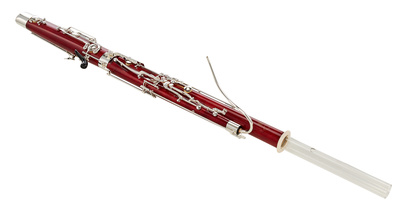
In the instrumental version, the theme is first introduced by cellos and double basses, after which the bassoons and viola take over, followed by the woodwinds and finally the entire orchestra.
Which classical masterpiece is your favourite?
Given the creative genius of the composers, any list of beautiful classical works is bound to be incomplete. We look forward to your comments on which works and composers have impressed you the most.











Comments 1