







What does the tritone sound like?
Before diving into theory… press play to understand what the Tritone actually sounds like
After the rain and the tolling church bell, Tony Iommi plays three notes: a low G, the same G an octave higher, then a C♯ that seems to drop through the floor. That last drop is the tritone, and it opens what many call the first heavy metal song.
Now try to make the sound yourself:
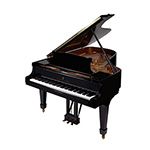
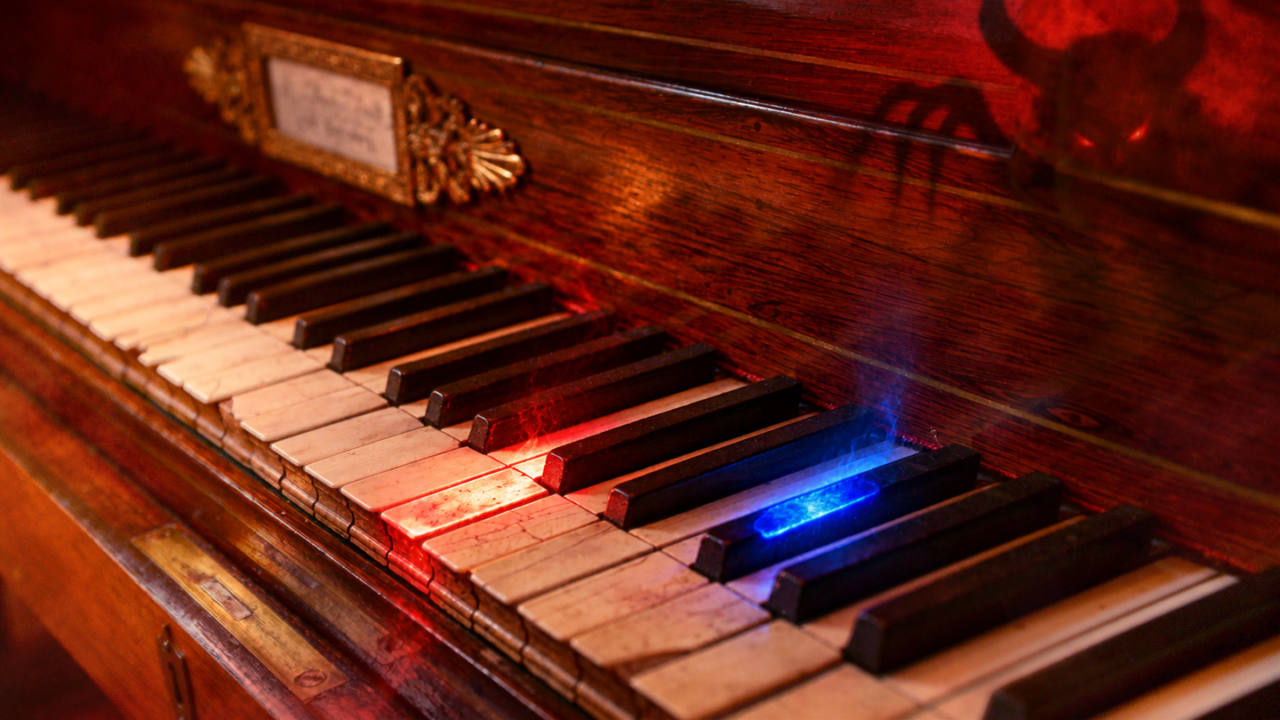
- Keyboard: play C, then the F♯ six keys above it, counting every black and white key. Play them one after the other, then together.
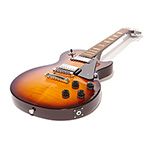
- Guitar: play any note, then the note six frets higher on the same string. Or play the open low E string with B♭ on the 1st fret of the A string. That is the exact clash that opens “Purple Haze”.
Notice how the sound refuses to settle. It hangs in the air like a question nobody has answered yet. Keep that feeling in mind: by the end of this article, you’ll recognise it in a second.
What exactly is a tritone?
A tritone is an interval made of three whole tones, which equals six semitones. An octave has twelve semitones, so the tritone splits it exactly in half.
Count it from C: C–D, D–E and E–F♯ are three whole steps, so C to F♯ is a tritone. Depending on how you spell the top note, it has two names:
- Augmented fourth (A4), C–F♯: a perfect fourth stretched by one semitone.
- Diminished fifth (d5), C–G♭: a perfect fifth squeezed by one semitone.
On a piano or in your DAW, F♯ and G♭ are the same key. The name only tells you which way the note wants to move.
| Interval | Semitones | From C | How it sounds |
|---|---|---|---|
| Perfect fourth | 5 | C–F | Open, stable |
| Tritone (A4 / d5) | 6 | C–F♯ / G♭ | Restless, unresolved |
| Perfect fifth | 7 | C–G | Strong, settled |
Two more facts worth knowing. Every major scale contains a tritone between its 4th and 7th notes: F and B in C major. And it’s the only interval that inverts to itself: flip C–F♯ into F♯–C and you still get six semitones.
How tension becomes resolved: the tritone inside the V7 chord
The tritone’s restlessness is the engine of Western harmony. Its most important home is the dominant seventh chord (V7), the chord that tells your ear “home is next”.
In the key of C, the V7 chord is G7: G, B, D and F. Between B and F sits a tritone, and each of those two notes is just a semitone away from the home chord:
- B, the leading tone, rises a semitone to C.
- F, the seventh of the chord, falls a semitone to E.
The tritone collapses into a major third, C–E, the core of the C major chord. That is the “aah” you feel at the end of countless songs.
Try it: play G7, then C, and listen to B and F move. Then play G7 and stop. The unfinished feeling hanging in the air is the tritone. The same tension lives in the diminished triad B–D–F, which is why diminished chords always sound as if they’re about to go somewhere.
Why was the tritone called the Devil’s Interval?
Because early musicians found it hard to sing and awkward to fit into their system, and later writers gave that awkwardness a devilish name. The scary story you have probably heard, about the Church banning it, is mostly myth.
In the 11th century, Guido of Arezzo built the hexachord system, the ancestor of do-re-mi. The F–B tritone didn’t fit neatly, so singers learned to avoid it, often by lowering B to B♭. The clash became known as mi contra fa: “mi” from one hexachord set against “fa” from the next.
The famous Latin tag diabolus in musica has no known medieval source. It first appears in writing in the 18th century, usually credited to musicians of the past:
| When | Who | What happened |
|---|---|---|
| 11th century | Guido of Arezzo | His hexachord system steers singers around the F–B tritone |
| 1702 | Andreas Werckmeister | Earliest documented use of diabolus in musica, credited to older authorities |
| 1725 | Johann Joseph Fux | Cites the phrase in his counterpoint treatise Gradus ad Parnassum |
| 1739 | Johann Mattheson | Writes that older singers called mi contra fa “the devil in music” |
| 19th century | Liszt, Wagner, Saint-Saëns | Use the tritone on purpose to suggest Hell, menace and Death |
| 1970 | Black Sabbath | Open their debut album with it and help create heavy metal |
Stories of singers being excommunicated for singing a tritone are almost certainly invented. What is true: from the Middle Ages to the Renaissance, theorists treated it as a dissonance to avoid. Baroque and Classical composers then put it to work inside the dominant chord, and the Romantics leaned into its sinister reputation. Liszt used it to depict Hell in his Dante Sonata, and Wagner tuned the timpani to C and F♯ for the brooding start of Act 2 of Siegfried.
Noticeable examples of the tritone in music
Once you know the sound, you’ll find it everywhere: in cartoons, rock riffs, Broadway, classical music and even disco. Here are fice examples to listen to, from sinister to joyful.
The Simpsons theme – Danny Elfman (1989)
The opening choir and the main melody both lean on C and F♯, a tritone apart. The bassline even swaps the usual marching-band root–fifth for root–tritone. The whole theme is built on the Lydian dominant scale, a major scale with a raised 4th and a lowered 7th, so the tritone is baked in. Listen:
Purple Haze – The Jimi Hendrix Experience (1967)
Before the famous riff, Hendrix plays B♭ octaves on guitar while Noel Redding hits E on the bass. That gives two full bars of pure tritone from the very first second. Listen:
Maria – Leonard Bernstein, West Side Story (1957)
When Tony sings the name “Maria”, the first two syllables leap up a tritone and the last slides up a semitone. Tension and release happen inside a single word. Bernstein built much of West Side Story on this interval, from the Prologue to “Cool”. Listen:
Danse macabre – Camille Saint-Saëns (1874)
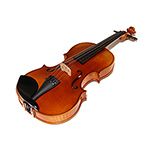
After the harp strikes midnight, Death tunes up his violin. The top string is tuned down from E to E♭, so the open A and E♭ strings sound a tritone. It’s the devil’s interval played by Death himself. Listen:
Sir Duke – Stevie Wonder (1976)
In the chorus, the bass leaps a tritone as the harmony lurches from B major to an unexpected F minor. It sounds bright and surprising, not dark. Listen:
5 ways to use the tritone in your songs or composition
The tritone isn’t only for horror. Used with intent, it adds pull, colour or menace to any style. Six ways to try it today:
- Make your cadences pull harder. Write V7–I and let the tritone voices move by semitone: B up to C, F down to E. For more drama, hold the V7 an extra bar before resolving.
- Try a tritone substitution. Swap a dominant seventh for the one a tritone away. G7 and D♭7 share the same tritone (B and F, written C♭ and F in D♭7), so Dm7–D♭7–Cmaj7 works and gives a smooth chromatic bass line D–D♭–C. Hear it in The Girl from Ipanema, where a G♭7 slides down to F in place of C7.
- Write a heavier riff. On guitar in standard tuning, combine the open low E with B♭ on the 1st fret of the A string: the Purple Haze notes. Play it slow and palm-muted for doom, fast for thrash.
- Use the blue note. The ♭5 is the extra note in the blues scale (in A: A, C, D, E♭, E, G). Bend into it or pass through it on the way to the 5th; don’t park on it.
- Build suspense with diminished chords. A diminished seventh chord stacks two tritones: B–D–F–A♭ contains B–F and D–A♭. It’s ambiguous enough to lead almost anywhere, which is why film and game composers love it for cliffhangers.
Back to the opening sound: have your ears learned it?
Go back to Black Sabbath and press play once more. Listen past the rain and the bell for the moment the riff drops from the high G to C♯. It’s the same unanswered question you made yourself with C and F♯, and now you know why it sounds that way.
Now put your ears to the test:
- Sing “Maria” and stop on the second syllable. You’re holding a tritone. Sing the last syllable and feel it resolve.
- Play the first five seconds of Purple Haze and hum the two clashing notes, B♭ and E.
- Ask a friend to play C–F, C–F♯ and C–G in random order. Name each one: open, restless or settled?
- Play G7 and stop. Can you hear which two notes want to move, and where they want to go?
- Put on The Simpsons theme and catch the tritone in the very first sung notes.
If you felt the pull every time, your ears have learned the devil’s interval. From now on you’ll hear it in film scores, riffs and jazz changes, and you’ll know how to use it in your own music.
FAQ
How many semitones are in a tritone?
Six. That’s three whole tones, exactly half an octave.
Is a tritone an augmented fourth or a diminished fifth?
Both. C–F♯ is an augmented fourth and C–G♭ is a diminished fifth. In equal temperament they sound identical; the spelling depends on the key and where the note resolves.
Did the Church ban the tritone?
There’s no evidence of a formal ban. Medieval singers avoided it for musical reasons, and stories of punishment are almost certainly invented.
Why does the tritone sound tense?
It divides the octave exactly in half, so it doesn’t point clearly to any key. Inside a dominant seventh chord, its two notes each sit a semitone from the home chord, so your ear expects them to move.
What is a tritone substitution?
A jazz technique where you replace a dominant seventh chord with the one a tritone away, for example D♭7 instead of G7. Both chords share the same tritone, so the substitute resolves the same way.









Comments 0
No comments yet.