







The strings and their interaction with the soundboard are an essential part of how an acoustic guitar produces sound. Yet, the importance of choosing the right strings for steel-string and classical guitars is still underestimated by many, even though it has a huge impact on the sound.
What role do strings play in an acoustic guitar?
Unlike an electric guitar, where factors such as the pickups and the amp are major components of the overall sound, the sound of an acoustic guitar is produced entirely within the wood. The string acts as the direct link between your fingers and the soundbox, transmitting vibrations through the top into the body. The characteristics of the strings directly affect the volume, dynamics, and frequency response of the guitar. Even the slightest differences in string gauge or material can have a major impact on the sound of your instrument – not to mention the playing feel. By choosing the right strings, you can significantly enhance your acoustic guitar and tailor it to your personal needs.

Which strings are right for me and my acoustic guitar?
Strings for classical and steel-string acoustic guitars are now available in a wide range of designs for every budget. With so many strings to choose from, it can be difficult to distinguish between their characteristics in terms of sound, playing feel, and durability. We’ve taken a closer look at the most important types of strings for acoustic guitars to help you find the perfect set.
As the designations of string types can vary greatly, we’ve supplemented this article with examples from D’Addario’s current catalogue (and a few budget alternatives) to make comparison easier.
Acoustic Guitar Strings: Gauge
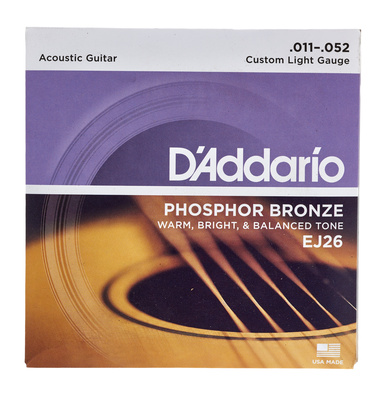
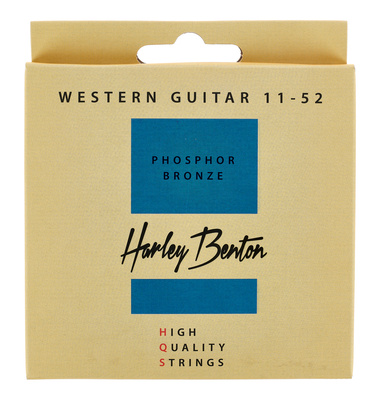
The gauge of steel strings is usually specified in thousandths of an inch. Designations such as ‘.011’ or ‘011’ therefore refer to a diameter of 0.011 inches. Most guitarists swear by .011 gauge (e.g. 11–52) or .012 gauge sets (12–53/54) for acoustic guitars, as these gauges offer an optimal balance between playability and tone. Thinner strings (e.g. .010) produce less volume and projection, but are well suited to beginners or fingerstyle techniques. Thicker strings (e.g. .013 strings) provide more tension and projection and can make your acoustic guitar sound even louder and more powerful when strumming.
The first choice for many: a set of .011 strings for the acoustic guitar:
Unlike steel strings, classical guitar strings are categorised not by their diameter but by their hardness and the resulting tension. Terms such as ‘light’, ‘medium’, ‘hard’ and ‘extra hard’ have become standard here. Soft strings (Low/Light Tension) are slightly easier to fret and are therefore particularly well suited to beginners. Harder strings (High/Hard Tension) deliver more punch in the bass range and are generally less prone to buzzing. For most amateur and professional guitarists, string sets in the Hard or Medium Tension range have become the norm.
A good compromise for many styles: ‘Normal Tension’ nylon strings
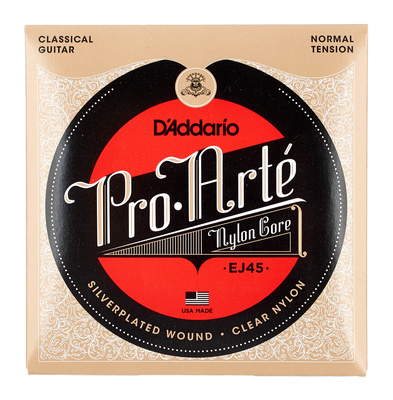
Daddario
EJ45
Material and coating
While the string gauge primarily affects the feel of the string when played, the material plays a crucial role in a string’s tone.
Like electric guitar strings, steel strings for acoustic guitar consist of a steel core wound with a wire. As the magnetic properties are irrelevant to the purely acoustic sound of the string, most manufacturers use a copper-tin alloy (bronze) for the wound strings (E, A, D, G).
Bronze-Steel (bronze for short)
Bronze strings are among the most widely used steel strings and usually contain 80 percent copper and 20 percent tin. This ratio of materials is often abbreviated to Bronze 80/20. Bronze strings are considered all-rounders and offer a very direct and dynamic sound, which gains warmth after a certain amount of playing time.
The all-rounder for the acoustic guitar: Bronze 80/20
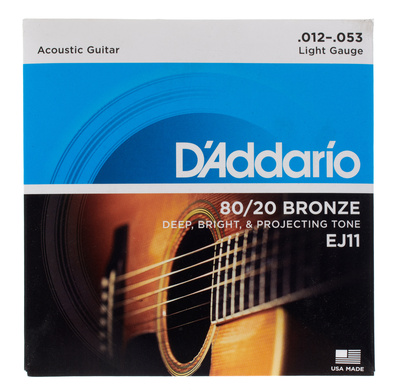
Daddario
EJ11
Phosphor bronze
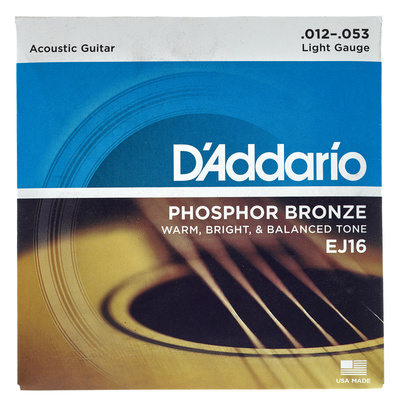
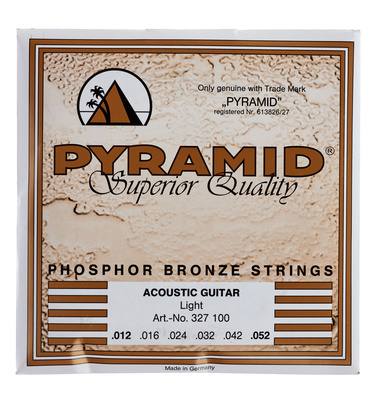
Phosphor bronze strings have a higher copper content and also contain phosphorus. They are considered harder and more durable than pure bronze strings. To many guitarists’ ears, they sound warmer, with a more pronounced mid-range and a more balanced tone than pure bronze strings. Phosphor bronze strings can confidently be described as the most popular choice for acoustic guitars.
The most popular acoustic guitar string: phosphor bronze
Coated strings
Coated strings are standard bronze or phosphor bronze strings that have undergone a special surface treatment during manufacture. This coating makes the strings particularly durable and resistant to corrosion and dirt. As a result, coated strings retain their fresh, brilliant sound for much longer, but they also cost slightly more than standard strings.
Durability and brilliant sound: coated steel strings
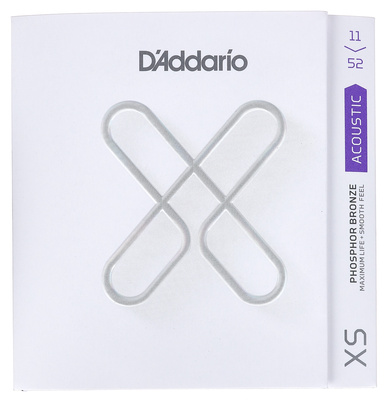

‘Coated strings’ don’t necessarily have to be expensive:
Classical guitar strings used to be made from animal gut and are now predominantly made from nylon or related materials such as Nylgut. A silver-plated or gold-plated copper wire is usually used for the winding of the bass strings.
Nylon strings
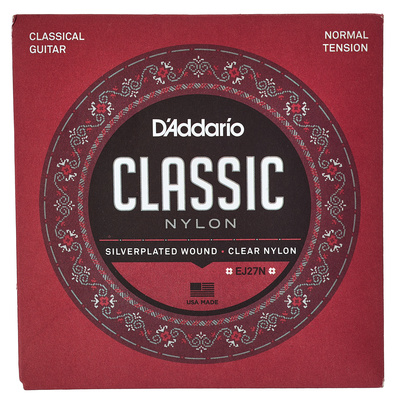
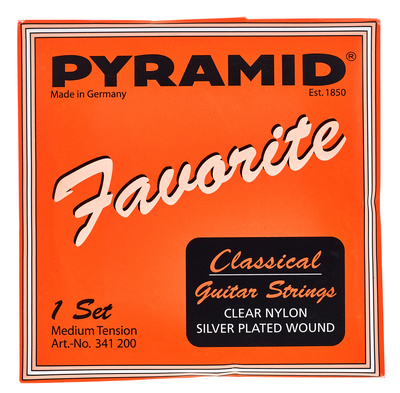
Nylon strings are still considered the standard for the classical guitar. They are comparatively easy to play and produce a balanced, warm and soft tone. The differences between nylon string sets mainly lie in the quality of the nylon fibre and the type of winding (bass strings).
The first choice for beginners and advanced players: nylon strings
Carbon strings
Classical guitar strings made from fluorocarbon are commonly referred to as ‘carbon strings’ and, to many guitarists, sound more brilliant and balanced in terms of the volume ratio between the bass and treble strings. However, as they also have a higher string tension, they are not considered the first choice for beginners.
Greater tension and projection: carbon strings
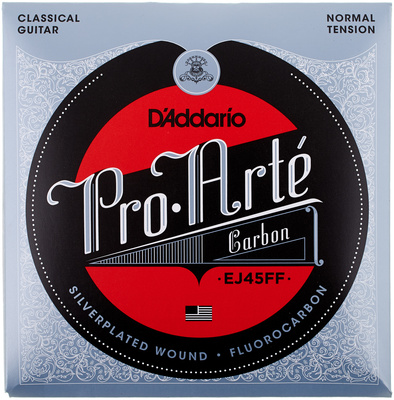
Daddario
EJ45FF
Coated classical guitar strings
Coated strings are also becoming increasingly popular for classical guitars. Thanks to the surface treatment applied to the bass strings, these sets last longer than other strings and are more resistant to wear caused by dirt and corrosion.
Less wear and tear, longer life: coated strings for the classical guitar
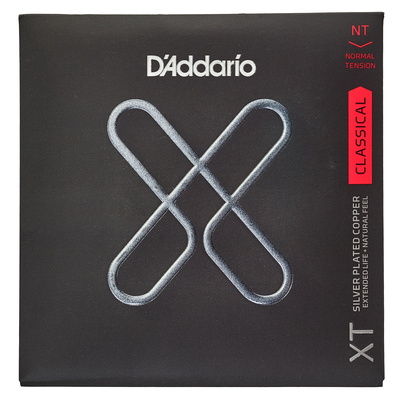
Daddario
XTC45 Normal
Which type of string is best for my acoustic guitar?
Apart from the distinction between steel and nylon strings, there are no hard and fast rules about which strings are best suited to your guitar.
As a beginner on the steel-string acoustic guitar, it’s best to start with a standard .011 phosphor bronze string set and see if these strings suit your hands and your sound preferences. If you like to play loudly and mainly use a pick, you might find that a heavier gauge set suits you better. And if your guitar sounds too muffled or indistinct to you, it might be worth trying coated strings.
On a classical guitar, you should start with a standard medium-tension set of nylon strings. If the treble strings sound too quiet to your ears, carbon strings might be the right choice. For frequent players whose wound bass strings wear out quickly, switching to coated nylon strings may be worthwhile in the long run.
Your Feedback: Acoustic Guitar Strings
Which acoustic guitar strings have you been happiest with so far? Let us know in the comments.














Comments 0
No comments yet.