

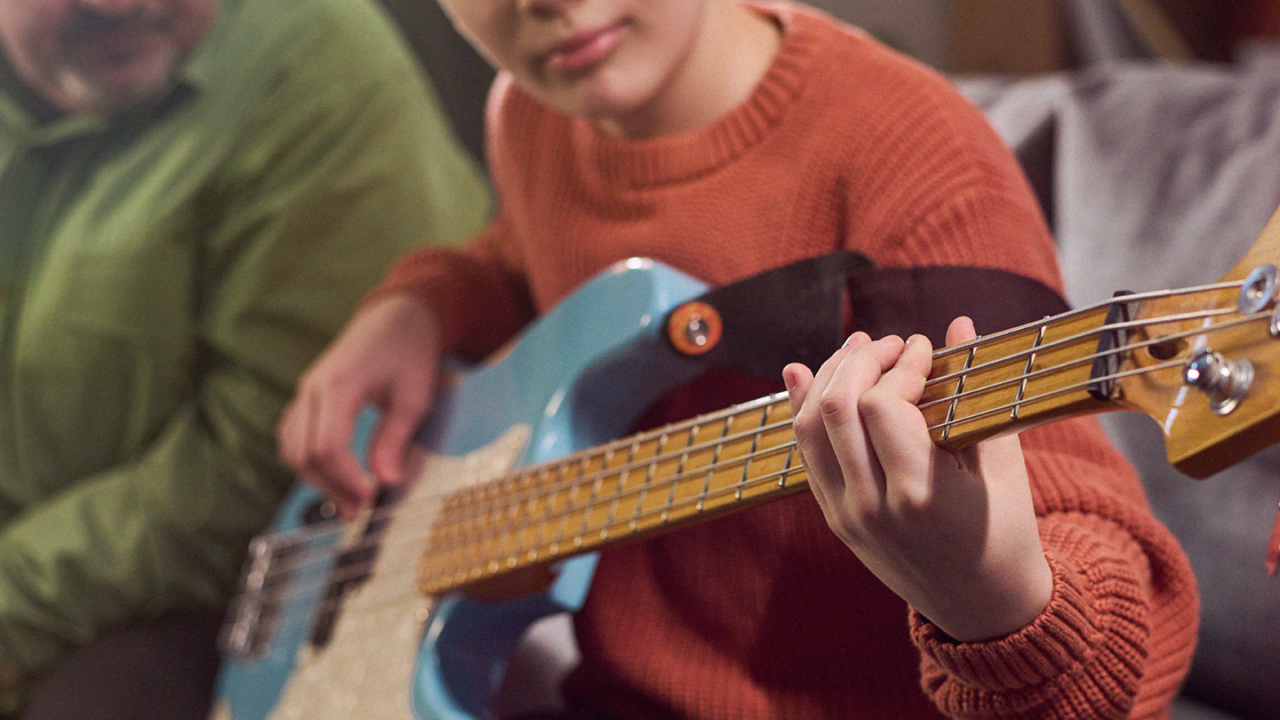

Learning an instrument is most fun when you make rapid progress and can see your own improvement first-hand. As is always the case when learning something new, quick successes are the key to greater motivation and more fun. But how do you manage to improve quickly on your instrument? We’ve got a few tips on practising for you – and perhaps for your parents too!
👉🏻 Back to School starts here 👈🏻
How often and how long should you practise for?
If you’ve just started learning an instrument, you naturally want to improve quickly. So why not simply practise as much and for as long as possible every day? Perhaps you’ve also heard stories of famous virtuosos who supposedly sat at the piano for eight hours a day from the age of four.
But do you really need to practise for many hours a day to improve quickly? Can you only improve if you set aside a practice session of a certain length at a fixed time every day?
Fortunately, learning an instrument works a bit differently from cramming maths problems. With those, you just have to practise them until you eventually get them right. When it comes to making music, however, the journey is the destination. Unlike maths problems, there’s no ‘right’ or ‘wrong’, and it’s not about achieving perfection straight away. Instead, the goal is to get to know your instrument, yourself and your musicality better and better over time.
The key to efficient practising is to enjoy yourself, learn at your own pace and create a practice routine that suits you. Practising shouldn’t be a chore that has to be ticked off every day, but rather a time that fulfils you and makes you happy – like a little break from everyday life. If you put yourself under too much pressure and demand too much of yourself, you might end up achieving the opposite of what you set out to do.
Is there a limit on how much you should practice your instrument?
There’s no fixed maximum amount of time you should practise, as this depends on your experience, goals, the instrument you play and the intensity of your practice. However, practising for too long can become counterproductive. Once your concentration starts to fade or your muscles become fatigued, your technique may become less precise. By doing this, you risk reinforcing mistakes rather than improving your playing.
Instead of focusing solely on how many hours you practise, aim for regular, focused sessions with breaks when needed. Your brain and body need repeated exposure to movements in order to store them in your motor memory, which is why consistency is generally more useful than occasional marathon sessions.
If you practise for a few days and then leave your instrument untouched for a month, you may find yourself having to relearn some of what you worked on. Even 15 minutes of focused practice a day can therefore be more productive than one very long session every now and then.
The most important thing is to pay attention to the quality of your practice. If your concentration is gone, your technique is deteriorating or you start to feel pain, it’s probably time to stop and take a break.
How to practise effectively?
So practising more doesn’t necessarily mean progressing faster. How you practise matters more than how long you practise. Find a quiet environment, remove distractions and take regular breaks during longer sessions so you can stay focused.
When learning a new piece, avoid trying to master everything at once. Instead, break it into short sections and work on each one individually before putting them together. You can gradually increase the size of each section as it becomes more familiar. This approach, often known as chunking, makes complex material easier to process and remember.
It also helps to start difficult passages slowly. Playing too fast too soon often leads to mistakes, and repeatedly practising those mistakes can make them harder to correct later. Focus on accurate notes and movements first, then gradually increase the tempo once you can play the section cleanly.
With focused practice, manageable sections and a gradual increase in tempo, even difficult pieces become much easier to tackle.
Why am I not making any progress?
Do you sit down at your instrument every day and feel as though you’re simply not getting any better? Is the piece you set out to learn weeks ago still not working out? Then it’s time to think about how to structure your practice sessions. Because you might actually be making progress – you just don’t realise it because you haven’t set yourself any goals, or haven’t set the right ones.
Like any slightly more complex subject, learning an instrument works best when you set yourself manageable, achievable goals that are neither too easy nor too difficult. This might mean, for example, breaking a difficult piece down into several sections and tackling one of them per practice session. You might not get through a whole piece in a single day – but you can certainly manage a small part of it. And just like that, you’ll feel you’ve achieved something you can be proud of!
Here’s another tip: sometimes, most of the piece is already going well, but you keep getting stuck in the same places again and again. In that case, it’s best not to play through the whole piece every time, as you’ll end up wasting a lot of time on something that isn’t really helping you. Instead, focus on the sections that are still giving you trouble and set the rest aside for now. It’ll be all the more satisfying when you’ve finally mastered those sections and can play the whole piece fluently.
To help structure your practice sessions better, it can be useful to keep a practice diary where you keep track of your goals and your progress. If you have a teacher, it’s best to discuss together which goals are realistic and what such a diary might look like. And there’s absolutely nothing wrong with treating yourself to a little reward when you’ve achieved one of your goals!

Micro-learning apps for music theory and ear training
Music theory and ear training are often somewhat neglected during practice – and this applies to beginners and advanced players alike. Who wants to grapple with such dry subjects when you could be having fun with your instrument instead? Yet both are an integral part of learning an instrument. If you know a few theoretical basics and have a trained ear, you’ll make faster progress on your instrument too!
The good news is that there are now plenty of great apps for musicians that make learning theory and training your ear much easier to fit into your routine. Apps such as Sonid, Earmaster, Better Ears and ToneGym break the content down into small chunks, so you can fit in a quick lesson whenever you have a spare moment. This way, you can train your ear and improve your theory skills without turning every practice session into a study session.
Service & Advice
As a general rule for all instruments, their size must be suited to the child’s physique and stage of development. When buying an instrument, it’s therefore best to seek advice from an experienced teacher or make use of our Service & Advice options, where our experts can help you make the right choice.
If you have any questions about instruments for children, our experts are always on hand to offer advice and assistance – online or at our shop in Treppendorf.
If you’re unable to visit us in person, please feel free to give us a call, use our live chat or send us an email. You’ll find all the relevant contact details for our specialist departments here.









Comments 2