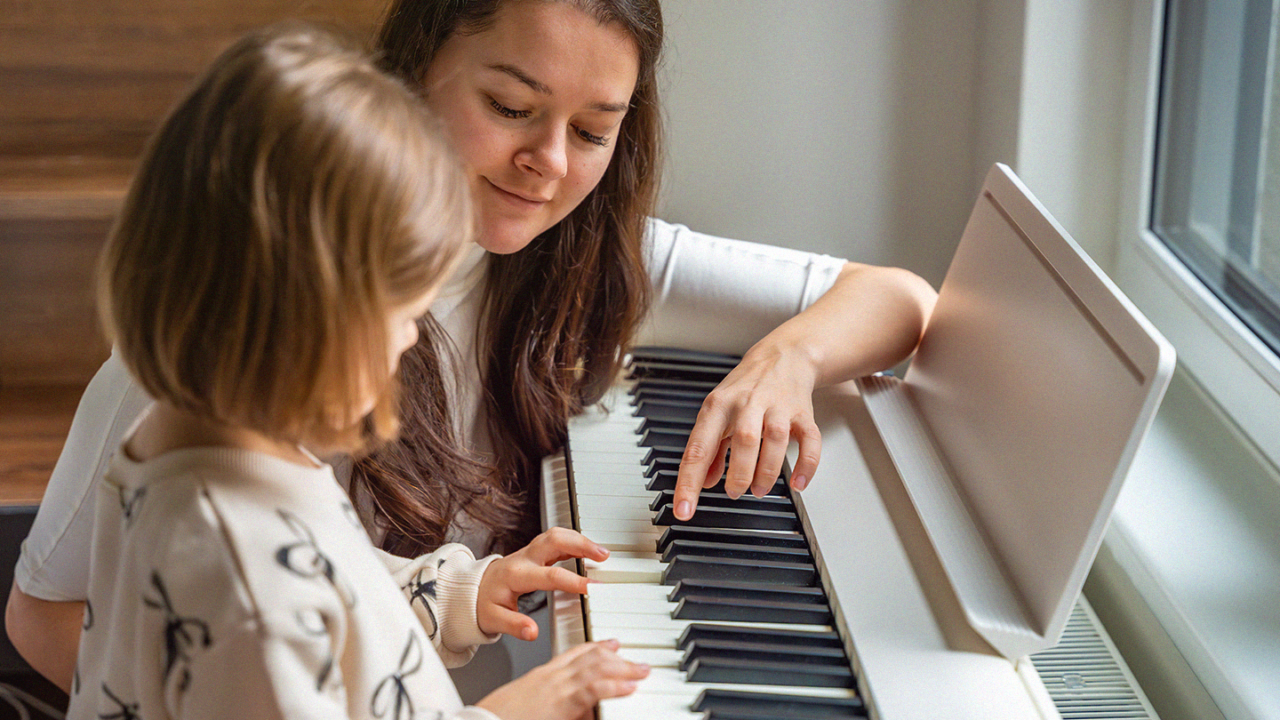

You’re fascinated by (electronic) keyboard instruments, and now you want to get started properly. 🎹 But what’s the best way to start learning the keyboard? Here are a few tips to help you get started with your new dream instrument. Let’s dive into the world of black and white keys!
Back 2 School
You’re really eager to learn an instrument, but you’re unsure which one suits you best? Whether you are a complete beginner or getting back into it after a break, our “Back 2 School” campaign is here to help you find the right instrument.
Discover our
👉 Back 2 School selection 👈
Is the Keyboard easier to learn than other instruments?
As always, there’s no simple answer to this question. But it’s true: keyboard instruments like the home keyboard or digital piano have an advantage that makes getting started particularly easy. Unlike many other instruments, the notes on the keyboard are laid out next to one another in a clear, straightforward and logical way. So you don’t have to practice for hours just to get a clean sound out of the instrument. That’s why playing your first melodies and chords is indeed easier when learning the keyboard than on other instruments.
Not to mention that keyboards and digital pianos come with a whole host of sounds and features. This adds variety and fun to practising, but also presents challenges. To learn the keyboard properly, you should focus not only on how to play but also on the instrument’s technical features. Only then will your musical journey truly take off.

Do you need to be able to read music to learn the keyboard?
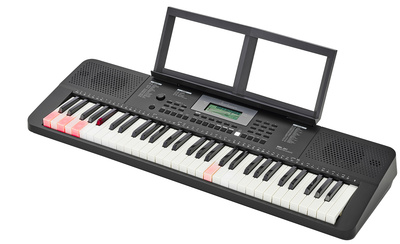
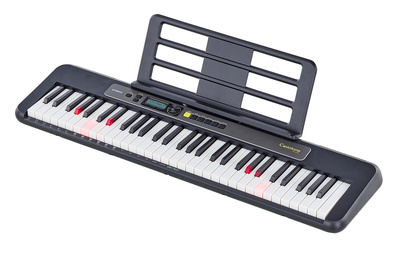
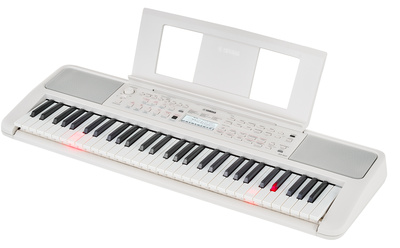
So, the first few notes come relatively easily when learning the keyboard. But after those first tentative steps, one of the basic requirements soon follows. Even though many famous musicians claim to know nothing about theory, when learning the keyboard it’s best to learn the names of the keys right from the start. But don’t worry: this doesn’t mean you need to know how to read music to get started. It’s more about knowing your way around the keyboard: which notes are where, and how are they related to one another? With this knowledge, your first melodies and chords will come together much more easily. To help memorize them, you can stick the names of the notes onto the keyboard using small sticky notes or dots, for example. Before long, you’ll have the names in your head. Tip: Many keyboards for beginners have illuminated keys, which also helps a lot.
How to play the first melodies when learning the keyboard
Whether you’re learning to play the keyboard or the digital piano, you’ll usually start with simple melodies played with your right hand. You’ll soon realise that the keyboard has far more keys than you have fingers. But don’t worry: you’ll quickly get the hang of ‘crossing over’ at the right places, and you’ll then be able to play melodies with more than five notes. The best way to practise this technique is with scales such as the C major scale. At the same time, you’ll practise the correct sitting and finger posture and get a feel for the dynamics of the keys.
As always when taking on a new challenge, the same applies to learning the keyboard: start with just a few notes and try to develop a feel for the keyboard and the playing technique. It can also be helpful to practise difficult sections slowly at first. Step by step, you’ll notice that your scales and melodies become increasingly fluid. And then you’ll soon reach the point where you can add your left hand.
Do you need to know chords to learn the keyboard?
The left hand often has a different role when playing the keyboard than it does on a piano or digital piano. Home keyboards have an auto accompaniment feature (arranger) built in – your personal backing band, so to speak. You control this by playing chords in the left hand. So it’s true: learning the keyboard also means learning chords.
To be able to play most simple songs, you should know the most important basic chords (major, minor) in all keys. To avoid having to reposition your hand awkwardly whilst playing, it’s also handy to know the so-called inversions of the chords in addition to the standard position, as this means your hand won’t have to ‘jump’ around the keyboard as much. And while we’re at it, it’s best to familiarise yourself with the notation of the chords as well.
How do you synchronise your left and right hands when learning the keyboard?
Once you’ve got the hang of the first melodies and chords, it’s time to use both hands together. People often talk about synchronising the left and right hands. In reality, however, the opposite is actually the case: the hands should learn to play different things at the same time. On the keyboard, the left hand usually plays the chords, whilst the right hand plays the melody. But there are exceptions: for example, you can also play a bass line with your left hand and the chords with your right.
At first, your hands might not do exactly what you want them to. But don’t worry: if you take the time to practise slowly and patiently, your hands will get used to the movements. The key to playing with both hands is that you no longer have to think about it – and that simply takes a bit of time. Don’t stress yourself out and start slowly – it’ll get faster all by itself.
What goals can I set myself when learning the keyboard to make faster progress?
The best way to learn the piano or keyboard is with an experienced music teacher who motivates you and helps guide your musical journey. However, it can also be very helpful to set yourself achievable goals. If you know where you’re heading, practising will feel much easier. It’s important not to expect too much of yourself at the start, as this can lead to frustration. Set yourself small, achievable milestones and allow yourself enough time to reach each one. After all, a sense of achievement is always the best motivation. These milestones could include, for example:
- Being able to name the keys on the keyboard
- Practising playing melodies and crossing over with the right hand
- Learning chords with the left hand on the keyboard
- Practising playing simultaneously and independently with both hands
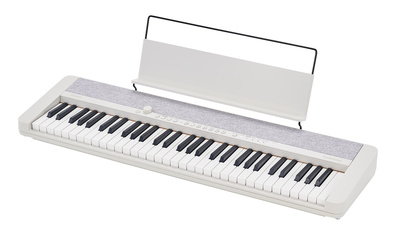
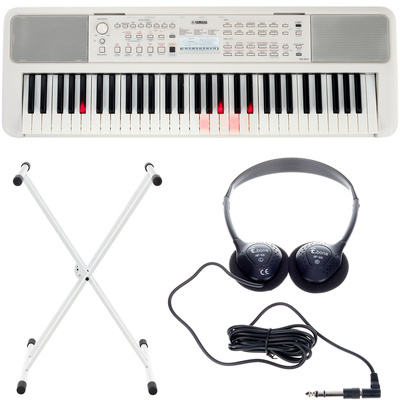
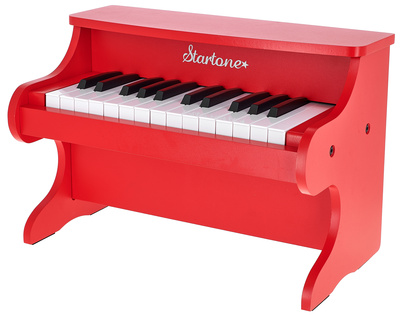
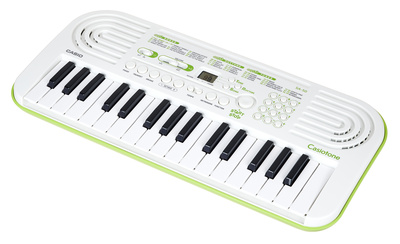
Instruments and equipment for learning the keyboard: the right equipment to get started
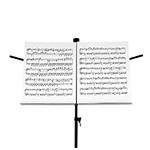
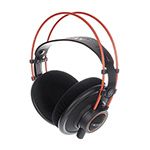
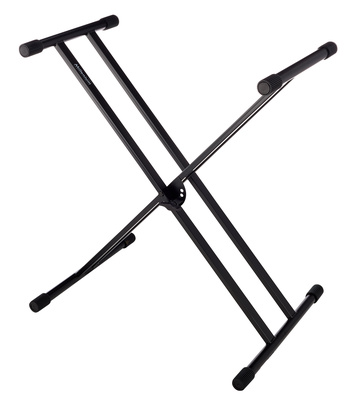
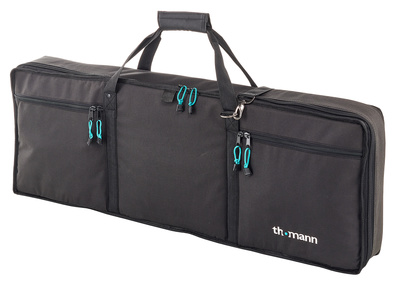
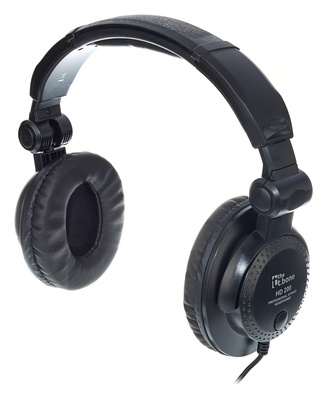
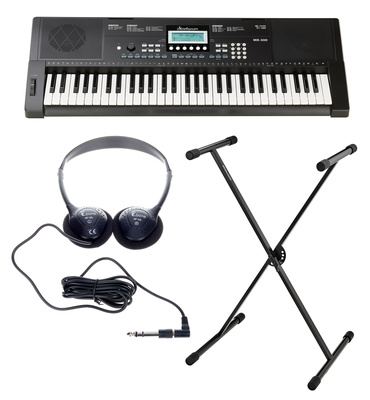
Keyboards, digital pianos, and other keyboard instruments for beginners are usually ready to use straight away: set them up, switch them on, and start playing. However, you should factor in a few accessories right from the start so that you have a suitable environment for practising. A sturdy keyboard stand is just as useful as a keyboard stool. With a pair of headphones, you can practise the keyboard without making noise – perfect if you want to take your first steps without disturbing anyone. If you’re taking it seriously, you’ll also need learning materials and sheet music – a keyboard teacher can help you choose. And of course, you shouldn’t carry your valuable instrument to lessons or the rehearsal room without a protective cover or a case.
Keyboards for Kids & Adults

Digital Pianos for Kids & Adults
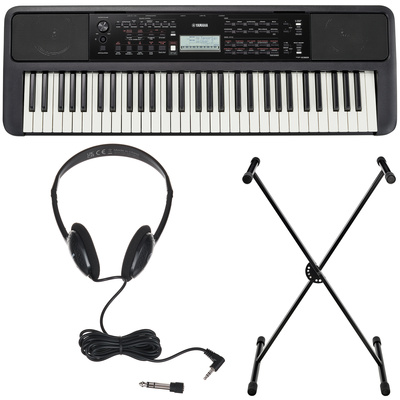
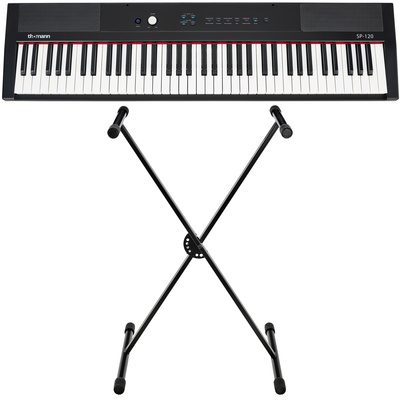
The Thomann SP-120 digital piano is the ideal introduction to the fascinating world of keyboard instruments – and offers unbeatable value for money. Thanks to its light weight, it’s also perfect as a versatile companion for the stage and rehearsal room.
The set includes a foldable keyboard stand. With 73 lightly weighted keys with touch sensitivity, the SP-120 is ideal for beginners. It also comes equipped with a sustain pedal, a music stand, a USB port, authentic piano sounds, a mains adapter, and a headphone jack – everything you need to learn the digital piano. It can even be powered by batteries.
Free Online Guides and Info on Keyboards and Digital Pianos
Do you have any questions about keyboards, digital pianos and accessories, or would you like more comprehensive information before you start learning the keyboard? In our comprehensive online guide, you’ll find detailed information and tips on all instruments and the necessary accessories. Also be sure to check out our blog post on the differences between acoustic and digital pianos.

Any questions? We’re happy to help!
If you need further information on accessories, teaching materials, or the instruments themselves, our specialist departments for keyboard instruments – Homekeys and Piano – are always here to help. If you can’t pop in in person at our shop in Treppendorf, please feel free to give us a ring, use our live chat on thomann.de, or send us an email.
You can find the contact details for all departments here.
Home Keyboard Department | Contact homekeys@thomann.de
☎ (+49) 9546-9223-33
Click here to go directly to our Keyboard Department
Piano Department | Contact klaviere@thomann.de
☎ (+49) 9546-9223-34
Click here to go directly to the Piano Gallery
Directions:
Musikhaus Thomann
Hans-Thomann-Str.
96138 Burgebrach / Treppendorf
Germany
Don’t hesitate to speak to our colleagues. They’re all seasoned musicians. They all started out at some point and had the same questions you have now.
Learning the digital piano, piano, or keyboard: your feedback ✍
Do you have any tips for beginners on the keyboard or digital piano? What experiences have you had learning the keyboard? Why not share them with the community! We’d love to hear your tips!





Comments 1