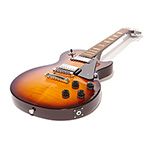



We’ll help you choose the right guitar for your first steps with the instrument – whether you’re a child, an adult or returning to the instrument after a break.
Every beginning is difficult! That goes for playing the guitar too. But choosing the right guitar model can save you a lot of hassle at the start. Just as every person is unique, so too are their preferences when it comes to instruments. We’ll give you tips to help you find your way through the jungle of guitar models and answer the question: Which guitar is right for me?
E or A – a fundamental decision?
Many beginners get bogged down by the question of whether they should buy an electric guitar or an acoustic guitar as their first instrument. Campfire or rehearsal room? Singer-songwriter or rock star? Quiet or loud?
Yet these two types of the same instrument are actually very similar and can both lead to the same learning success. Nevertheless, all types of guitar have their pros and cons.
Electric guitars
– Steel strings
– compact and easy to play
– Additional equipment required (cables, amplifiers, etc.)
– ideal for playing in a band
Classical guitars (also known as concert guitars)
– perfect for children starting out
– Wide necks and nylon strings make fingering easier
– Lightweight
– available in many different sizes
Acoustic guitars
– relatively thick steel strings
– a good compromise between an acoustic and an electric guitar
– ideal accompaniment instrument for singers
– Louder than a classical guitar
By the way: Many acoustic guitars (whether classical or acoustic) are now fitted with a built-in pickup system and can be amplified to any volume for use in bands and on stage. Furthermore, almost all manufacturers also offer left-handed versions of their key models.
Which is the best electric guitar for beginners?
When choosing your first electric guitar, finding a good balance between price, performance and sound is crucial. Of course, personal taste and appearance also play an important role. Most electric guitar models today are still based on the classic designs from the ‘pioneering era’ of electric guitar making in the 1950s. As well as their obvious shape, however, the different models also embody specific tonal characteristics. Here is a brief overview with some buying tips:
ST models
– clear sound with plenty of treble
– versatile
– Single-coil pickups are more prone to feedback
– Genres: pop, funk, blues, rock
Great value for money with a classic look: the Harley Benton ST-20
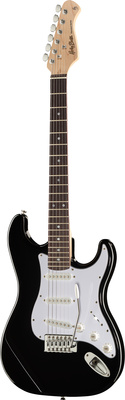
Harley Benton
ST-20 BK Standard Series
An affordable electric guitar with integrated modeling system for a greater variety of sounds: the Mooer GTRS Guitars Standard 800 SP

Mooer
GTRS Guitars Standard 800 SP
T-models
– a more direct and assertive sound
– slightly warmer and ‘earthier’ than the Stratocaster
– also fitted with single-coil pickups
– Genres: pop, country, blues, rock
An entry-level Tele with a genuine vintage vibe: the Harley Benton TE-52
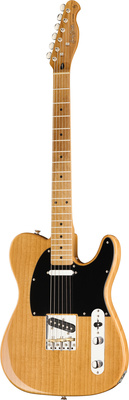
Harley Benton
TE-52 NA Vintage Series
Complete package including a guitar, cable and amp: Harley Benton TE-20HH SBK w/Marshall MG10G
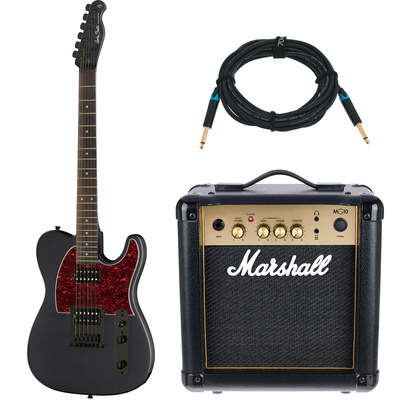
Harley Benton
TE-20HH SBK w/Marshall MG10G
Single-cut models (Gibson Les Paul design)
– mid-range-heavy, powerful sound
– particularly well suited to distorted sounds
– Humbucker pickups are less prone to feedback
– Genres: jazz, blues, rock, hard rock
An affordable Single Cut with modern features: the Harley Benton SC-1000
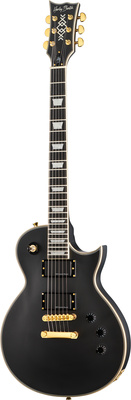
Harley Benton
SC-1000 SBK Progressive Line
From Gibson, yet still affordable: the Epiphone Les Paul Tribute Plus
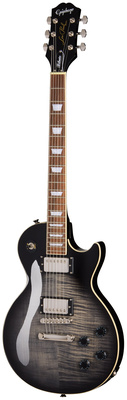
Epiphone
Les Paul Tribute Plus EB
Hollow-body models (based on the Gibson ES-335 design)
– semi-acoustic guitar with a thin body
– warm, percussive tone with acoustic elements
– More prone to feedback despite the humbuckers
– Genres: jazz, blues, pop
Entry-level hollow-body with a stylish look: Harley Benton HB35Plus

Harley Benton
HB-35Plus Black
Already considered the first choice back in the Beatles’ day: the Epiphone Casino
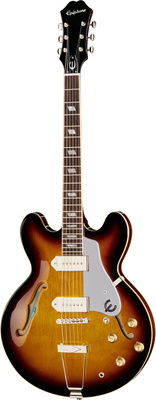
Epiphone
Casino Vintage Sunburst
Heavy guitars
– modern designs that break away from conventional body shapes
– an aggressive and assertive tone
– particularly well suited to heavily distorted sounds
– Genres: hard rock, metal
For the dark side of rock: the Harley Benton WL-20BK

Harley Benton
WL-20BK Rock Series
Classic heavy-duty design for under 400 euros: Jackson JS32 King

Jackson
JS32 King V WH AH
Electric guitars for children (also known as short-scale, junior or mini)
– short neck
– small body
– ideal for children under 8
An electric guitar for the very youngest: Harley Benton ST-Junior

Harley Benton
ST-Junior HSS SBK
3/4-size short-scale model: Harley Benton RG-Junior
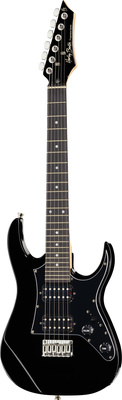
Harley Benton
RG-Junior BK Rock Series
The best classical guitars for children and beginners
Unlike the electric guitar, there are hardly any significant variations in the classic design of the classical guitar when it comes to shape and features. Instead, manufacturers have agreed on a very detailed range of guitar sizes, allowing the classical guitar to be tailored precisely to a child’s height and age. As well as the body size, this primarily affects the scale length (the length of the freely vibrating string between the nut and the bridge) and, consequently, the neck length.
| Age | Height | Guitar size | Scale length (+/- 15 mm) |
| from 12 years | from 160 cm | 4/4 | 650 mm |
| 10–13 years | 140–160 cm | 7/8 | 620 mm |
| 8–11 years | 130–150 cm | 3/4 | 600 mm |
| 6–8 years | 120–140 cm | 1/2 | 540 mm |
| 4–6 years | 110–130 cm | 1/4 | 460 mm |
| under 5 years | up to 110 cm | 1/8 | 420 mm |
(Specifications may vary)
For those taking their first steps in primary school: Startone 1/2 classical guitar

Startone
CG 851 1/2
High-quality entry-level model for children up to 10 years old: Thomann ¾ classical guitar
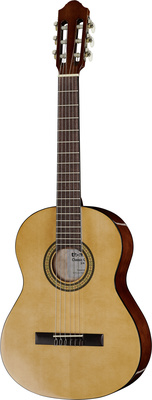
Thomann
Classic Guitar 3/4
A complete package with a full-size classical guitar, gig bag, foot rest and tuner: Yamaha C40 Bundle

Yamaha
C40 Bundle
Which is the best acoustic guitar for beginners?
Acoustic guitars are also available in different sizes for children and beginners. Unlike with classical guitars, however, it is primarily the body shape that determines the actual size.
Dreadnought and Jumbo
– large body (not always suitable for children)
– full, powerful and assertive sound
– popular with singer-songwriters
– mainly played with a pick
A full-size Dreadnought for under 100 euros: Harley Benton D-120CE
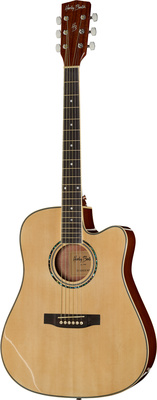
Harley Benton
D-120CE NT
A Dreadnought with a pickup and cutaway: Takamine GD11MCENS

Takamine
GD11MCENS
Acoustic guitars – O/OO/OOO
– smaller body with a shorter scale length
– direct and mid-range-focused tone
– well suited to fingerstyle playing
A particularly small and affordable acoustic guitar: the Gretsch JD Parlour

Gretsch
JD Parlor WPG RXB
A good balance between size and sound: Harley Benton HBCG45

Harley Benton
CG-45 NS
Traveller and travel guitars
– very compact design
– well suited for children
– ideal for on the go
An acoustic guitar for your luggage: Harley Benton Traveler E-Steel

Harley Benton
Traveler-E-Steel
A great starter guitar for aspiring singer-songwriters: Harley Benton D-120CE
Harley Benton
D-120CE NT
What accessories do I need?
That depends mainly on the choice of guitar. With an acoustic guitar, you can basically get started straight away after unpacking it. An electric guitar needs at least a cable and an amplifier to be heard properly. But there are also other accessories that are virtually indispensable for a successful start.
Tuner
– A tool for tuning the guitar strings
– an essential part of your kit
– Available in its simplest and most popular form as a clip-on tuner
Clip-on tuners detect the pitch of a string by sensing the vibrations in the wood and work with any type of guitar

Thomann
CTG-10 Clip Tuner
Cable
– Connects to the amplifier
– Available in various lengths
– Known as an instrument cable or jack cable
A typical instrument cable for home use, 3 metres long: The Snake IPP1030
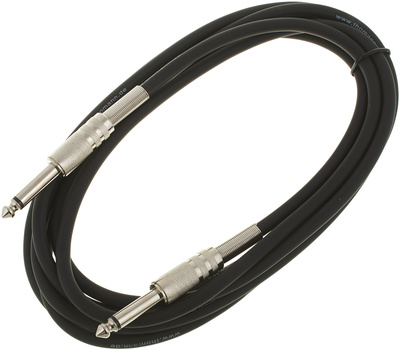
the sssnake
IPP1030
Amplifier
– Available for electric and acoustic guitars fitted with pickups
– amplifies the guitar’s sound to any volume (depending on power output)
– may include various channels and effects (e.g. reverb)
A desktop guitar amplifier: Positive Grid Spark 2
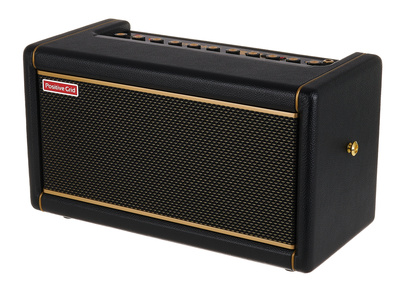
Positive Grid
Spark 2 BK
Decent sound pressure with built-in reverb: Harley Benton HB-20R
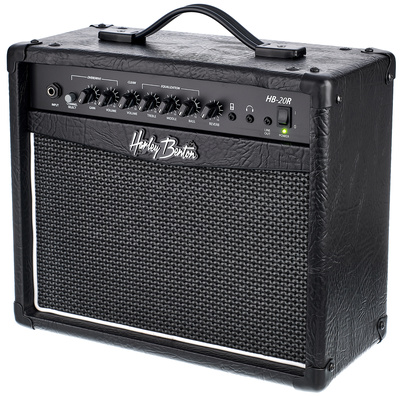
Harley Benton
HB-20R
Plectrum
– for plucking the strings
– primarily designed for electric and acoustic guitars
– available in a wide variety of shapes, colours and thicknesses
One of each, please! A set of picks to try out:
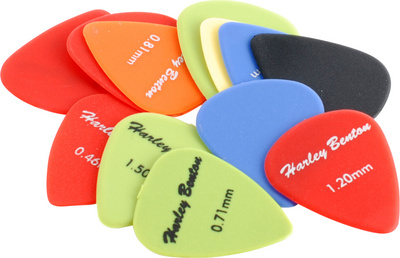
Harley Benton
Nylon Player Pick Set Mixed
Stand
– ensure optimal storage at home
– available as a floor stand or wall mount
Stable stand for electric and acoustic guitars: Millenium GS-200

Millenium
GS-2000
Bag, gig bag, case
– essential for transport
– Available as a soft case with a shoulder strap
– Includes accessory compartments
A secure gig bag for the journey to lessons: Thomann Acoustic-Steel Gig Bag

Thomann
Acoustic-Steel Gigbag BK
Spare strings
– Strings are consumables (they can age and snap)
– Available individually or in sets
Always on the safe side: Ernie Ball 2221
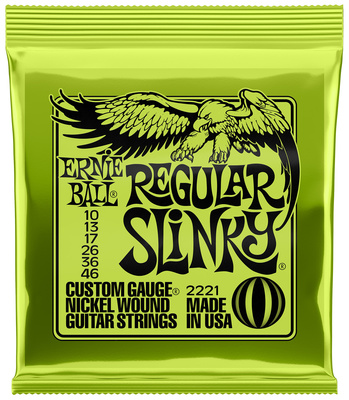
Ernie Ball
2221
Capo
– can transpose a guitar into a higher key
– particularly popular with singers
Suitable for electric and acoustic guitars. Harley Benton HBCA-K

Harley Benton
HBCA-K Acoustic/Electric Capo
Guitar sets – a good choice for beginners
If you’re a complete beginner to the world of electric guitars, an electric guitar set is often a good choice. Here you’ll find an all-in-one package comprising a guitar and accessories, allowing you to kick-start your musical journey straight away. Thomann offers guitar sets in every category (electric guitars, classical guitars, acoustic-electric guitars) and in a variety of configurations. A guitar set generally offers the best value for money. We’ve already introduced two of them to you above; here are some more.
The perfect starter set: Harley Benton ST-20 BK Standard Series Bundle Set
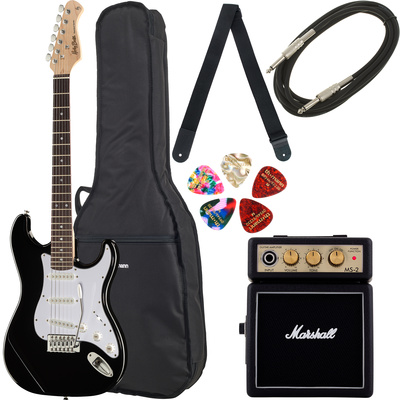
Harley Benton
ST-20 BK Standard Serie Bundle
Ideal for children up to 10 years old: Thomann Classic Guitar 3/4 Bundle 3

Thomann
Classic Guitar 3/4 Bundle 3
Conclusion
Choosing your first guitar is ultimately a very personal decision and depends largely on your own preferences and goals. With a good classical guitar in the right size, you really can’t go far wrong when you’re starting out. However, if you’re choosing a guitar primarily as an accompaniment to your own singing, you might be happier with an acoustic guitar. And if your career goal is already set on becoming a ‘rock star’, the electric guitar naturally remains the gold standard.

Buying your first guitar: your questions & advice
Do you still have questions? Feel free to leave a comment or contact our specialist advisors on any product page using the “Advice” button! We offer free, no-obligation advice tailored to your wishes and needs.
Under this link you will find all our contact addresses if you prefer telephone advice.
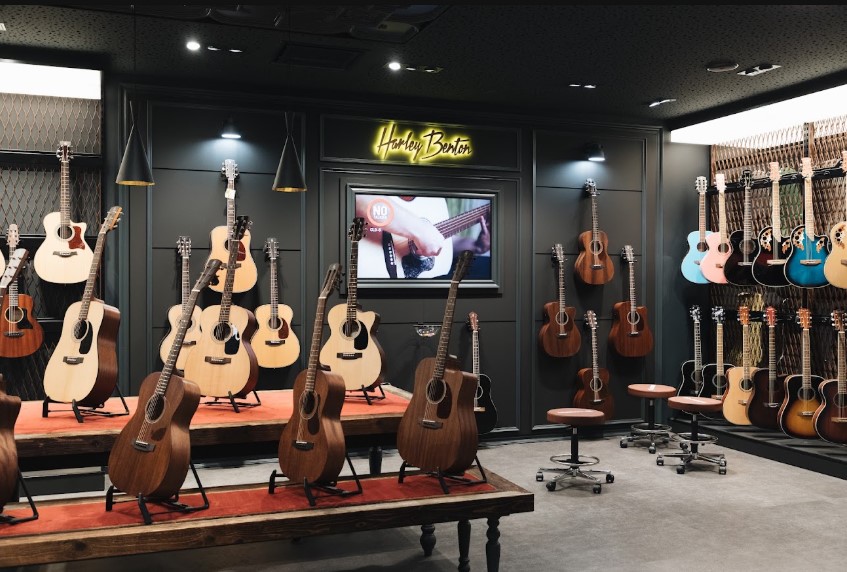
You’re also welcome to visit our shop in Treppendorf! Here you can try out individual guitars and get help from friendly Thomann staff. We look forward to your visit, whether alone, with your band or with your family! ❤️

Your feedback and experiences
Of course we look forward to your feedback on whether this guide was able to help you a little. And even if you are already an experienced guitarist, you can support the community with tips and experiences. Feel free to leave a comment!
Feedback: Guitar for beginners – what to consider?
What criteria are most important to you when choosing your first guitar, and have you found what you’re looking for yet? Do let us know in the comments.












Comments 0
No comments yet.