








Although the Eurorack format has been with us for decades, it’s now gone from a niche corner of electronic music to something close to a movement. And yet, while obtaining a rack full of modules is a super-exciting hobby for many, it can also be a costly enterprise if you haven’t done your homework. So before you start browsing, let’s ask why this format has taken hold so firmly in the electronic music world, and whether it’s right for how you make music.
What is Eurorack?
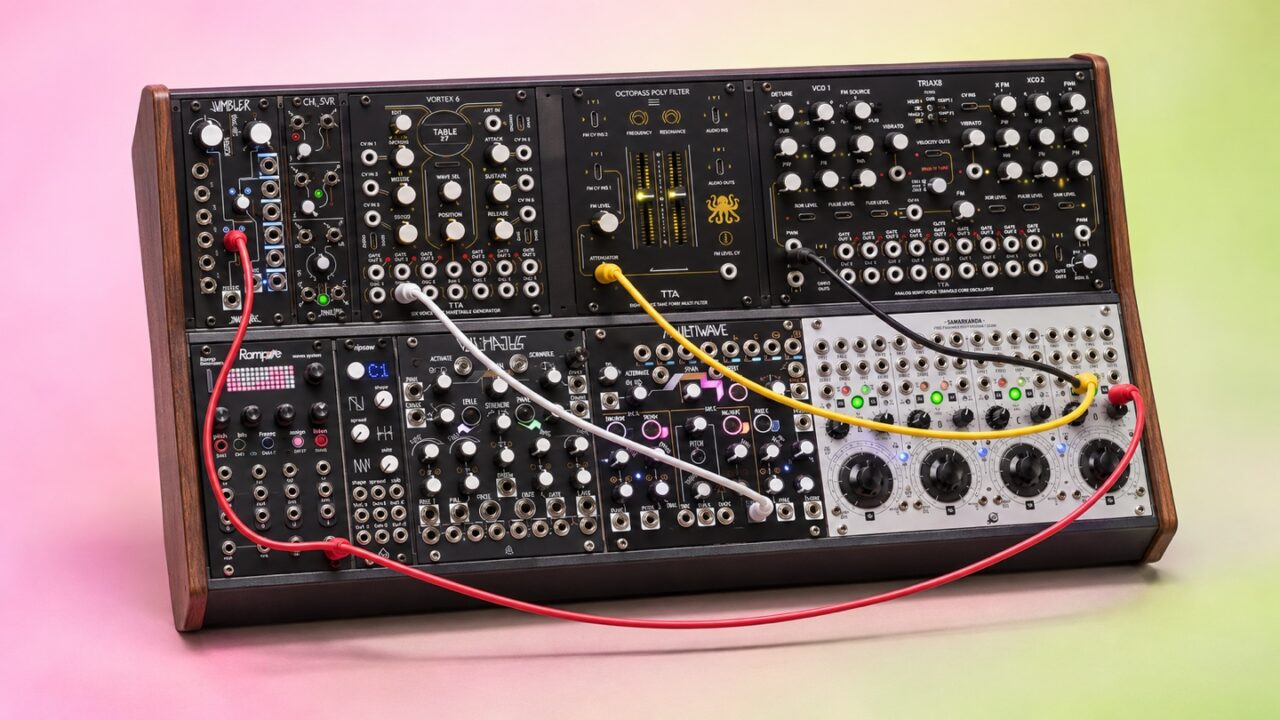
When I was a naïve synth addict, I once asked a producer what Eurorack was and his answer has always stuck with me – “Eurorack is a Lego set for sound”. The first thing to note, however, is that Eurorack is a standard, not a brand. Instead of buying a pre-made synthesiser in which the manufacturer decides how everything should look and sound, Eurorack was created to allow you to build your own dream instrument completely from scratch.
Here’s how it works, and it’s remarkably simple! You start with an empty box called a ‘case’ (most include a power supply, though some are bought separately) before purchasing individual electronic blocks called ‘modules’. Each individual module does a specific job, which could be to generate a sound, shape a sound, move a sound, or decide when things happen.
For example, one module might make a strange pulsing sound, another might add an effect that sounds like you’re sending it down a wind tunnel, and a third might control a beat. But the real beauty of Eurorack is that despite hundreds of different companies making lots of clever modules, you can mix and match them in any way you like – hence the Lego analogy!
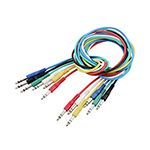
Virtually all Eurorack modules are built to a shared panel height and power format that allows a filter from one maker to sit happily beside an oscillator from another. And to get the modules to talk to each other, you connect them using colourful wires called ‘patch cables’.
Once two modules are connected, you can start shaping the sound – and the coolest part is that because there’s an almost endless variation of modules, no two Eurorack systems are ever likely to sound the same.
Why is everyone buying Eurorack?
Although the Eurorack standard has been around since 1995, it’s only now that people are truly waking up to its limitless possibilities. For its first couple of decades, it was a bit of a niche format hidden in the basements of underground electronic producers and synth gearheads. Today, the ecosystem has exploded with creative tech. While most modules used to be confined to basic bleeps and bloops, now there are thousands available and creators are coming up with increasingly ingenious designs.
These days, there’s an almost unlimited number of software plugins to choose from, and while that offers music makers boundless choice, it can often leave a recognisable ‘digital footprint’ that risks making your music sound almost too perfect. In a world of screens, there’s something authentic about touching sound directly and getting an instant response to turning a knob.
With Eurorack, you choose every module and patch every wire yourself, creating your own one-of-a-kind instrument. And not only has the technology evolved from a niche hobby into a creative playground, but its community is always willing to share and help make the technology a lot easier to learn.
What are the downsides to Eurorack?
Like all technologies, Eurorack is not for everyone. Individual modules are often quite affordable, which is great, but a system is the sum of many modules and you’ll need to buy a case, cables, and if one isn’t already included, a power supply. Without a plan, you could end up with a bunch of modules that all do similar things and nothing to control them.
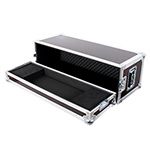
In addition, when picking out modules online, they might look small, but once you’ve screwed in a handful of cool sound makers and a ‘wind tunnel’-sounding module, you might find that your case is suddenly 100% full and you’re forced to spend another £150 (or more) for what is effectively an empty box.
Some of the more modern digital modules can hog a lot of power too. If you plug in too many at once and exceed your case’s power limit, your system could start glitching or shut down completely.
Eurorack rewards curiosity more than efficiency, so while terms like ‘signal flow’, ‘voltage control’ and ‘modulation’ are all learnable, nobody should expect to master them in a week.
Should you buy Eurorack?
With the warnings out of the way, let’s focus on the creative benefits. First, it’s worth questioning whether you have the personality to go down the Eurorack rabbit hole by asking yourself some basic questions.
Do you enjoy experimenting and working in a non-linear way? Do you prefer hands-on control rather than menu diving? And do you like the idea of creating an instrument that evolves with you, where sound design is part of the point? If the answer to all of those is ‘yes’, you might want to investigate the Eurorack world.
I should point out that there’s also a middle path. Semi-modular synths bring patching into a self-contained instrument so you can test the water before committing to a case. Plenty of people are happy to stay there, and some use it as a stepping stone.


How do you start buying Eurorack?
My advice would be to begin with a small case that covers the basics, with just a little room to grow. Too small and you’ll be buying another case within weeks; too big and you’re paying for empty space while still finding your feet.


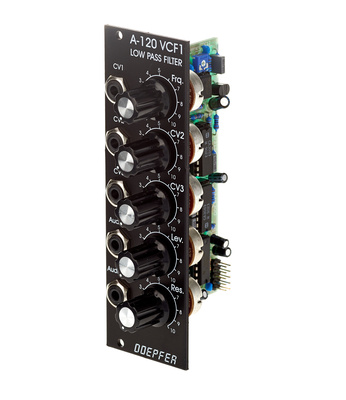
Once you have a case, you can focus on filling it with modules. First, you’ll need a voice, which is basically a single sound-generation chain consisting of an oscillator (creates the raw sound), a filter (shapes the tone), and an amplifier (controls the volume).


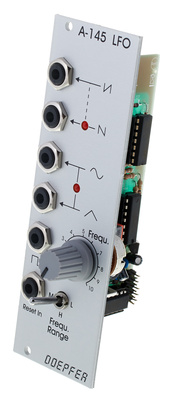
To bring your synthesiser voice to life, you’ll need three essential building blocks: an envelope to control the volume of a note from start to finish, an LFO to add automated effects like a rhythmic wobble or tremolo, and a sequencer to play your melodies automatically.
Combined, these components will teach you ‘signal flow’ – how audio and control signals travel through the synth – and modulation, which is the art of automatically changing your sound over time to keep it dynamic and expressive.


When powering your system, choose your power supply carefully by calculating the total current draw of your components and ensuring it covers your modules with at least a 20% safety margin to prevent overheating or system crashes. Try not to skimp on cables, as cheap, poorly shielded cords can introduce unwanted background hiss, crackle and signal degradation into your audio path.


If you add slowly, live with a module for a few weeks and learn what it does, the gaps in your rack will tell you what to buy next. And if you need a little extra help, read reviews, watch patch demos on YouTube and ask questions of the online Eurorack community.
So, is Eurorack worth it?
Eurorack isn’t a trend to chase – it’s a small, hands-on, personal instrument that’ll allow you to sound like nobody else. If that sounds like your idea of a good time: start small, stay curious and if it’s not for you, there’s no shame in buying a MIDI keyboard and a bunch of presets.













Comments 0
No comments yet.