

Whether you’re a beginner, an advanced player or a professional – as a drummer, you’re bound to be familiar with the problem. The search for the perfect drumstick is like searching for the proverbial needle in a haystack. That’s where our Woodpicker tool comes in!
What makes the perfect drumstick?
Ideally, your drumsticks should help you achieve the best sound and the most comfortable playing feel with the least amount of effort. However, as everyone’s hands are slightly different, not every stick suits every person. A stick that’s too thick or too heavy means you have to exert disproportionately more effort when playing, or you may struggle to grip the stick properly.
Conversely, a drumstick that’s too small will break more easily (especially if you play lots of hard rimshots!) and will lack punch on impact. The art of buying drumsticks therefore lies in finding the ideal balance between all parameters: length, thickness, tip shape, surface finish, taper and material.
Click here to go straight to the Thomann Woodpicker! 👇
How does the Thomann Woodpicker work?
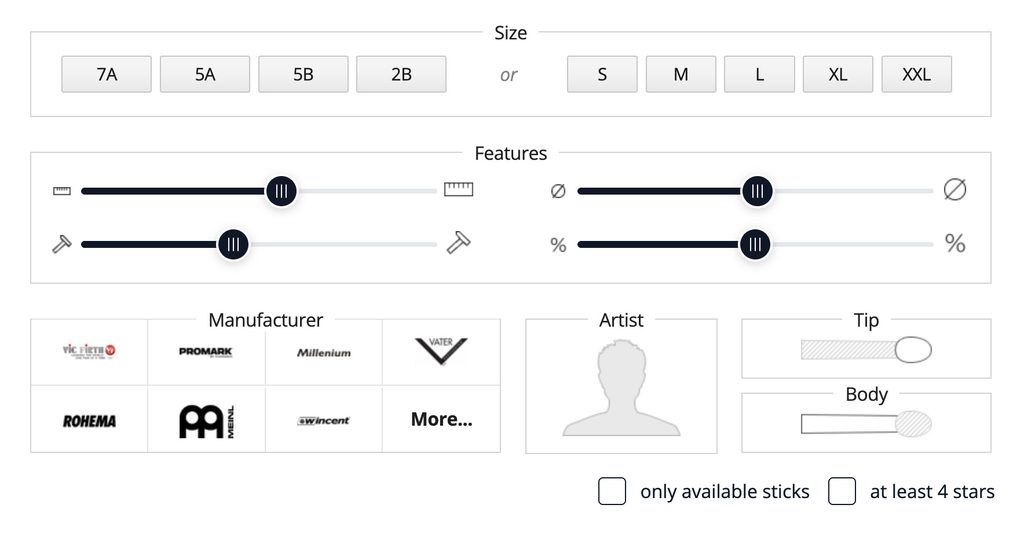
Using a total of eleven parameters, you can precisely specify the characteristics your drumsticks should have. If you don’t want to adjust so many details, you can simply click either on the sizes or on the standard designations 7A, 5A, 5B or 2B. You’ll then be shown all the sticks of this type from all manufacturers. By the way, the four sliders below also immediately show you the basic characteristics of the drumsticks. We’ll now explain exactly what these mean.

How does the length of a drumstick affect its performance?
The length of your drumsticks mostly affects two aspects of your playing. The first is the reach. Long sticks allow for a slightly greater distance from the instrument; there’s a good ten centimetres between the shortest and the longest sticks. The second factor is the extra punch that a long stick provides. This is simply because there is more ‘wood’ beyond the pivot point between your thumb and index finger. A typical standard length is around 40 centimetres. Children and shorter people might want to look for something shorter, whilst those who prefer longer sticks should move the slider a little further to the right.
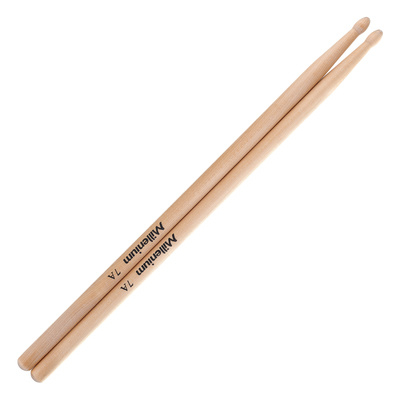
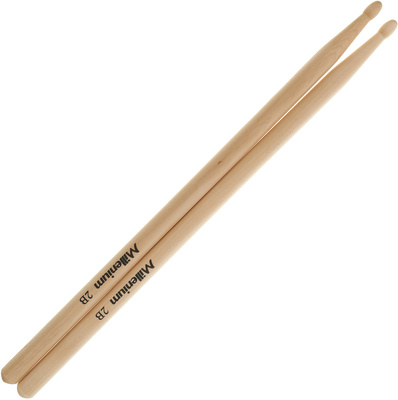
The diameter of your drumsticks should suit the size of your hands
A standard 5A stick has a diameter of just over 14 millimetres. In the Woodpicker tool, simply click on the ‘5A’ button to view the corresponding drumsticks. Most teenagers and adults get on well with this stick diameter; children and smaller people might want to move the ‘Diameter’ slider slightly to the left or click the ‘7A’ button.
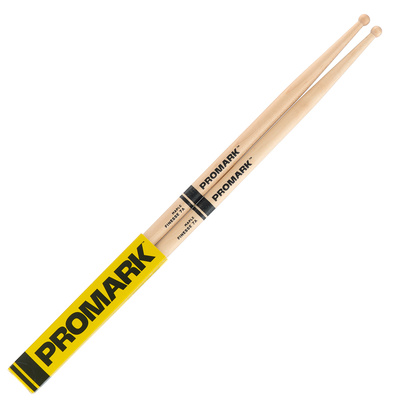
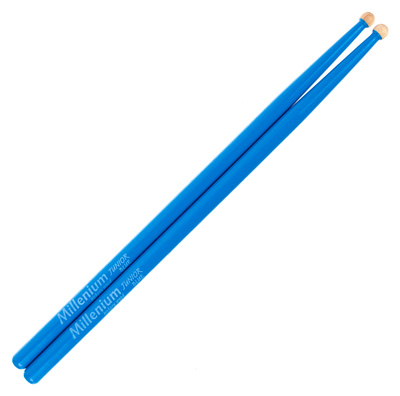
You’ll then be shown models with a thickness of 13.5 to 13.8 millimetres. For rock, metal, drummers who like to play loudly and drummers with large hands, we recommend thicker ‘5B’ or ‘2B’ drumsticks. Alternatively, you can move the ‘Diameter’ slider to the right. You’ll then also be shown drumsticks and mallets for marching and concert drums.
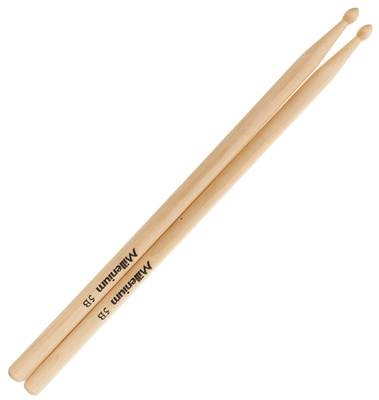
Millenium
5B Maple Drum Sticks -Wood-
Which drumsticks deliver a proper punch?
Next comes the ‘Punch’ slider. This relates to the anatomy of the drumsticks. Some drummers describe their sticks as ‘front-heavy’ or ‘tail-heavy’. A front-heavy stick is heavier towards the tip, so you need to exert less energy to achieve more punch. A tail-heavy drumstick has its centre of gravity closer to your hand. You need a little more energy when striking, but in return the stick comes back faster.

The shorter the taper of the stick, the more head-heavy and punchy it is. But which type of stick taper is right for you? This is where it gets very subjective! Some drummers prefer sticks that really ‘want to go towards the drum’, whilst others like it when the balance leans more towards the tail end. For quiet playing, a tail-heavy stick can allow for better control of ghost notes or cymbal work, whilst a front-heavy stick is good for greater volume with less effort.
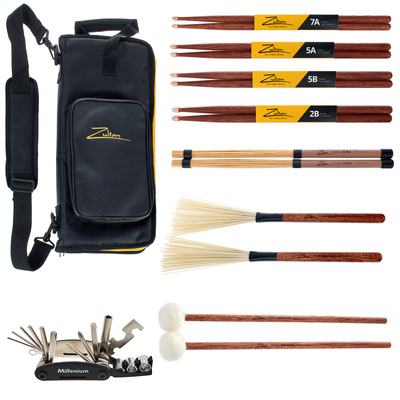
Zultan
Stick Starter Set
How much should your drumsticks cost?
The fourth slider determines the price of your chosen drumsticks. Sticks from established brands are usually slightly more expensive, including Vic Firth, ProMark, Zildjian and Ahead. This is often due to particularly rigorous quality control, but also depends on whether the products are imported from abroad. Rohema manufactures in Germany and is slightly cheaper. You can find affordable drumsticks by moving the ‘Price’ slider all the way to the left or by clicking on the brands Millenium, Zultan or Thomann in the next section, ‘Manufacturer’.
Why should you buy signature drumsticks?
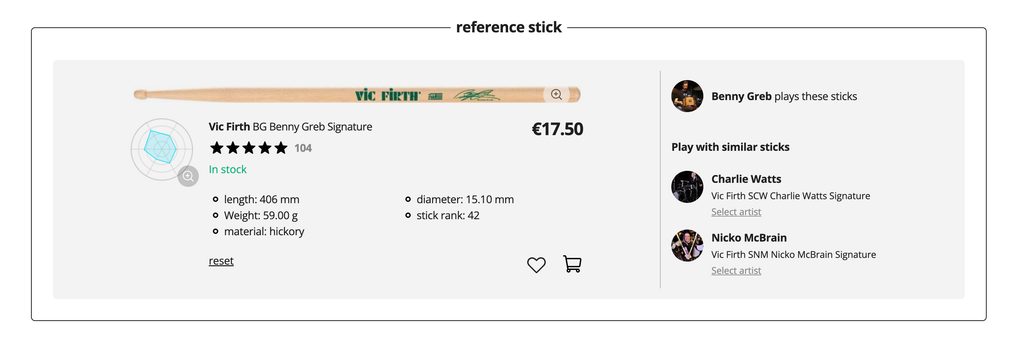
You probably have a favourite drummer, and perhaps they have their own signature drumstick. If you’re a die-hard fan, you’ll naturally want to get your hands on one. But you might also be wondering whether this stick really suits you and your preferences. Can you play your rudiments and fill-ins perfectly with it, will it last long enough, and does it feel good in your hand? This is where the Woodpicker tool offers another advantage. When you select a stick in the ‘Artist’ field, the tool shows you not only the stick itself but also its specifications.
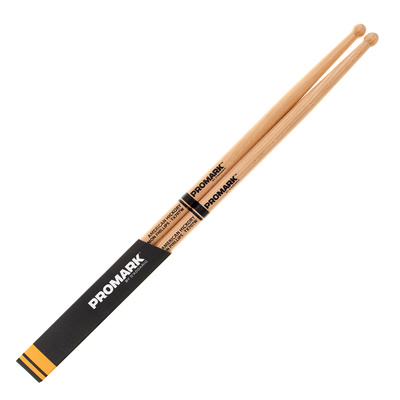
Pro Mark
TX707W Simon Phillips
Is the shape of the drumstick tip important?
Absolutely! The next parameter shows you the basic tip shapes. There are roughly four distinct shapes, although all manufacturers produce their own variations. Acorn, Barrel, Teardrop and Round describe the most common shapes. The tip determines the sound the stick produces on drumheads and cymbals.
The smaller the striking surface, the more precise and brighter the sound will be. This is the case, for example, with a round or small, barrel-shaped tip. An oval, teardrop-shaped tip will produce a wider and fuller sound. A particularly large tip will also shift the balance of the stick so that it is front-heavy.
What material should your drumsticks be made of?
Most drumsticks are made of wood, but there are also sticks made of aluminium, plastic and even carbon fibre. But which material is best for drumsticks? Most drummers are looking for a good balance of durability, feel, sound and price. Hickory has clearly taken the lead here, as it offers all these qualities in perfect balance.
It’s suitable for all styles, from rock, pop, jazz, hip-hop and metal to R&B and electronic music. Next comes maple, with a softer texture and lighter weight. Maple is a great choice, particularly for drummers who want a softer sound on cymbals and drums. When it comes to durability, however, it cannot compete with hickory. As an alternative to hickory, some manufacturers offer hornbeam sticks. If you can do without the organic feel of wood but need maximum durability, you might want to look at drumsticks made from carbon fibre or aluminium. Brands such as Techra and Ahead have made a name for themselves in this area.
In the end, only one thing matters: your personal preference!
The Woodpicker is a uniquely precise tool for choosing your drumsticks. However, the likelihood that you’ll stick (ahem) with the first sticks you pick at the start of your drumming career is very low. Preferences and tastes change; perhaps you’ll switch bands or musical genres, or you get to a point where you’d like to try something new.
We believe that this is all part of musical development, and that inspiration is always a great thing. It might not have to be a new ride cymbal – perhaps a new stick is the better (and cheaper) idea!












Comments 0
No comments yet.