

JT
Almost perfect, but .................
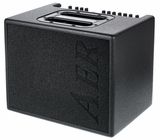
Fanstastisk amp I forhold til størrelse . lyder fremragende og har ok output . Reverb effekterne er ret gode .
Cons :
Kunne godt tænke mig DI out for hver kanal
ønsker 48volt phantom power
Kunne være super hvis man manuelt kunne indstille delay time
Cons :
Kunne godt tænke mig DI out for hver kanal
ønsker 48volt phantom power
Kunne være super hvis man manuelt kunne indstille delay time
1
0
Report
JS
There's more to it than great sound
For starters, the sound is absolutely astounding. If that’s “all” you want to know, you can stop reading now.
It disturbs me when it is so obvious that the maker deliberately has “crippled” the different tiers of the models just to create incitaments to buy the more expensive model instead of focusing on core functionality, performance and features.
To begin, I don’t care if the Compact 60/4 is on the lower side on the model range. At this price level I expect all components to be premium quality. The combined XLR input on channel 2 is the cheapest one I have come across. It looks cheap, it feels, cheap, it has no lock for the XLR. The TRS input is ridiculously flimsy. The Plug almost falls into place without any force needed. Terrible! I do believe though that all models have this “amazon quality” input.
And then, there’s the “missing” phantom power switch on the XLR input! As serious maker as the AER seems to be, the stupidity totally beats me that there isn’t any switch for the phantom power. ANY cheap consumer gear that provides phantom power has a switch but not this AER. There’s however a switch (a tiny simplistic push button on the back) for the 9V phantom power on channel 1. I guess the cost for this switch would be like 2 dollars or so. There is indeed dip switches INSIDE the darn thing for controlling phantom power on channel 2 and this proves it even more so how simple its would be to just solder two cables from there and expose another inexpensive push button, or the dip switch itself for that matter. On a higher end AER (the Compact Classic Pro) they have actually chosen to expose this dip switch section. A very cheap operation which would raise the usability and safety on the Compact 60. Yes I know, the TRS input has no phantom power, but still you need a different cable to be able to connect a dynamic microphone using this input… And while being somewhat cynical, it makes it even more obvious that this design approach is an act of pure greediness. In the manual for the Compact Pro they actually have a half page section talking about the importance of not having the phantom power switched on when connecting gear to the XLR input without knowing if equipment can handle it. And of course, in the Compact 60 manual they don’t talk much about that for obvious reasons (being cynical again).
The effects, especially the reverb is quite unimpressive. Live on a stage, maybe there isn’t need for the must lush sounding reverb, but this one is quite bad and you can hear it. Not premium at all.
After using this powerful amplifier for a short time I have thought of a feature that would be very useful. The possibility to control muting/unmuting the amplifier with a remote (cabled) pedal switch. It would fit the normal use cases of this amplifier. When you are on stage, or at home for this matter sitting on a chair with your instrument in your knee or the violin under you cheek, tangled with cables, and suddenly you get a piercing almost “lethal” feedback (yes, the feedback when it happens is instant like a gun shot and LOUD!!!). Then you want to kill it quickly without breaking things on the way. I don’t mean breaking the amplifier, I mean literally breaking things on your rush to the amp… :-)
Pro’s:
- The clean acoustic sound
- The portability
Cons:
- Acoustic amplifiers seem to be expensive, but still I stand with my opinion that the AER range is somewhat overpriced.
- No phantom power switch!
- Quite bad quality reverb/chorus
It disturbs me when it is so obvious that the maker deliberately has “crippled” the different tiers of the models just to create incitaments to buy the more expensive model instead of focusing on core functionality, performance and features.
To begin, I don’t care if the Compact 60/4 is on the lower side on the model range. At this price level I expect all components to be premium quality. The combined XLR input on channel 2 is the cheapest one I have come across. It looks cheap, it feels, cheap, it has no lock for the XLR. The TRS input is ridiculously flimsy. The Plug almost falls into place without any force needed. Terrible! I do believe though that all models have this “amazon quality” input.
And then, there’s the “missing” phantom power switch on the XLR input! As serious maker as the AER seems to be, the stupidity totally beats me that there isn’t any switch for the phantom power. ANY cheap consumer gear that provides phantom power has a switch but not this AER. There’s however a switch (a tiny simplistic push button on the back) for the 9V phantom power on channel 1. I guess the cost for this switch would be like 2 dollars or so. There is indeed dip switches INSIDE the darn thing for controlling phantom power on channel 2 and this proves it even more so how simple its would be to just solder two cables from there and expose another inexpensive push button, or the dip switch itself for that matter. On a higher end AER (the Compact Classic Pro) they have actually chosen to expose this dip switch section. A very cheap operation which would raise the usability and safety on the Compact 60. Yes I know, the TRS input has no phantom power, but still you need a different cable to be able to connect a dynamic microphone using this input… And while being somewhat cynical, it makes it even more obvious that this design approach is an act of pure greediness. In the manual for the Compact Pro they actually have a half page section talking about the importance of not having the phantom power switched on when connecting gear to the XLR input without knowing if equipment can handle it. And of course, in the Compact 60 manual they don’t talk much about that for obvious reasons (being cynical again).
The effects, especially the reverb is quite unimpressive. Live on a stage, maybe there isn’t need for the must lush sounding reverb, but this one is quite bad and you can hear it. Not premium at all.
After using this powerful amplifier for a short time I have thought of a feature that would be very useful. The possibility to control muting/unmuting the amplifier with a remote (cabled) pedal switch. It would fit the normal use cases of this amplifier. When you are on stage, or at home for this matter sitting on a chair with your instrument in your knee or the violin under you cheek, tangled with cables, and suddenly you get a piercing almost “lethal” feedback (yes, the feedback when it happens is instant like a gun shot and LOUD!!!). Then you want to kill it quickly without breaking things on the way. I don’t mean breaking the amplifier, I mean literally breaking things on your rush to the amp… :-)
Pro’s:
- The clean acoustic sound
- The portability
Cons:
- Acoustic amplifiers seem to be expensive, but still I stand with my opinion that the AER range is somewhat overpriced.
- No phantom power switch!
- Quite bad quality reverb/chorus
0
0
Report