


ADAM Audio A77H

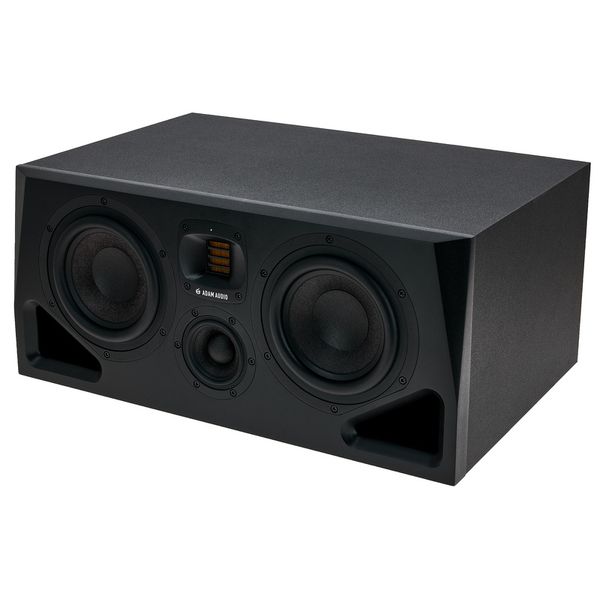
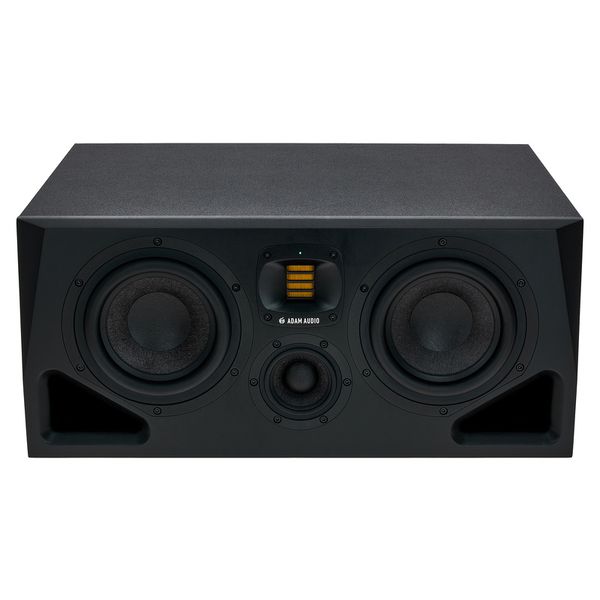
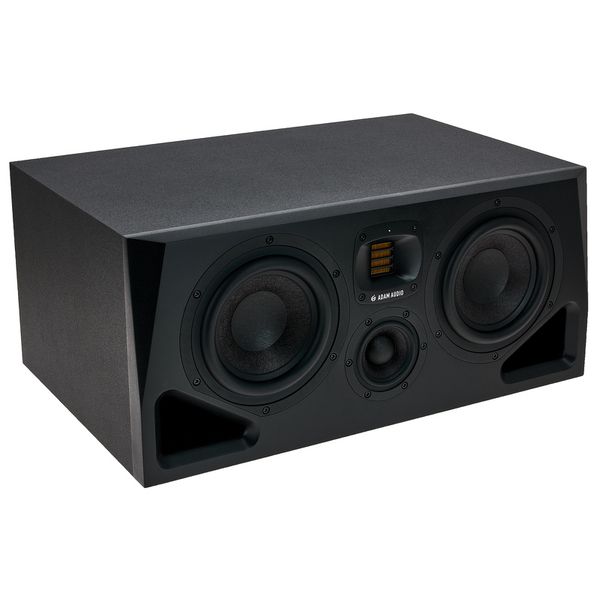
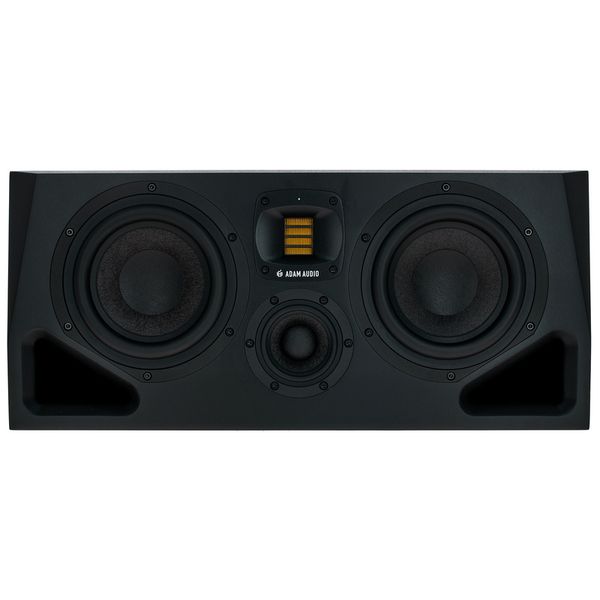
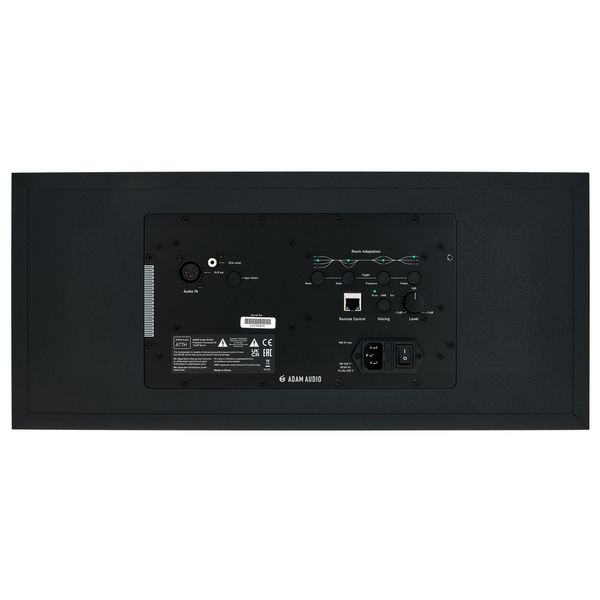
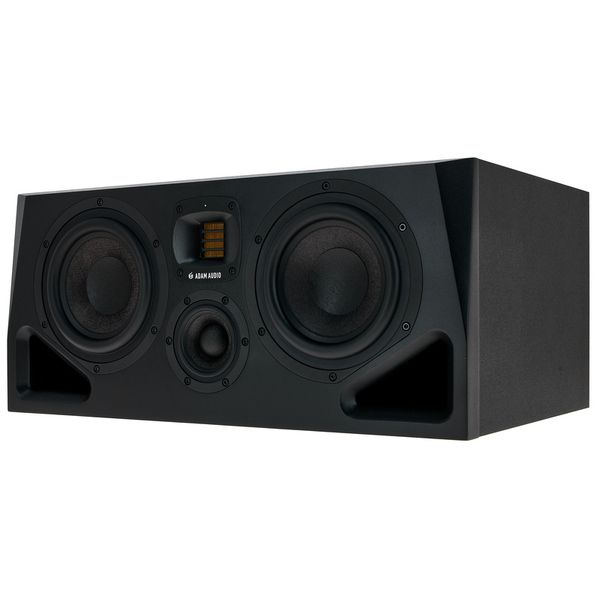


Active 3-Way Bass Reflex Midfield Monitor
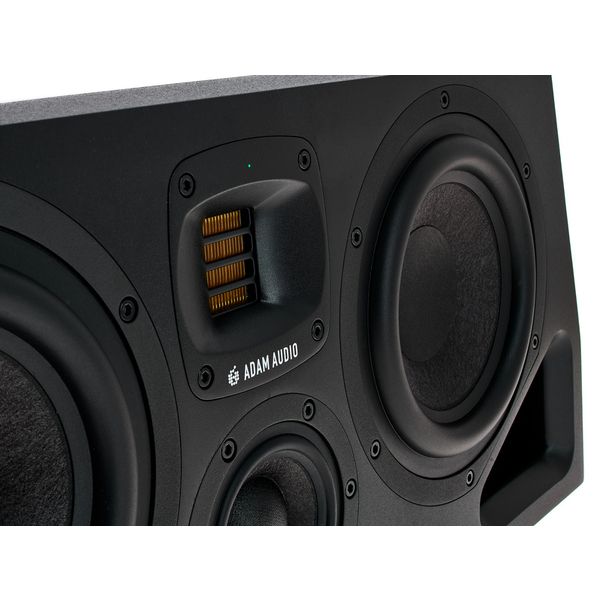
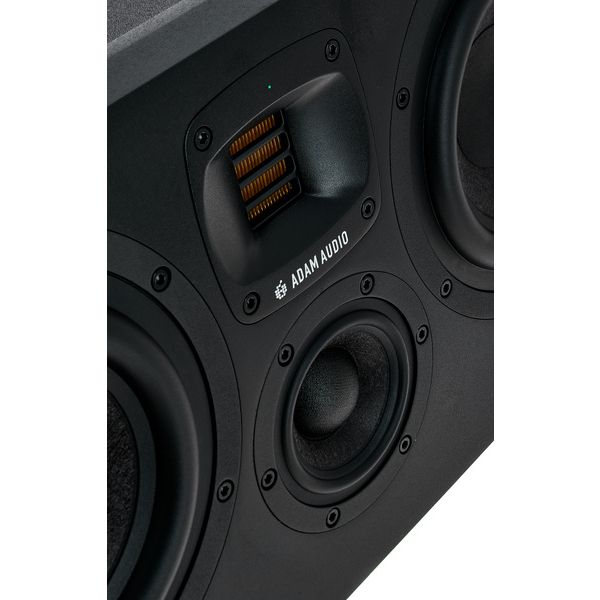
- Drivers: 2x 7" MLM woofer, 1x 3.5" MLM midrange driver, rotatable X- ART tweeter + HPS waveguide
- Amplifier power RMS: 250 W (woofer) + 70 W (midrange) 20 W (tweeter)
- Crossover frequency: 400 Hz, 3 kHz
- Power rating: max. 500 W
- Built-in AD-converter 24-bit / 96 kHz
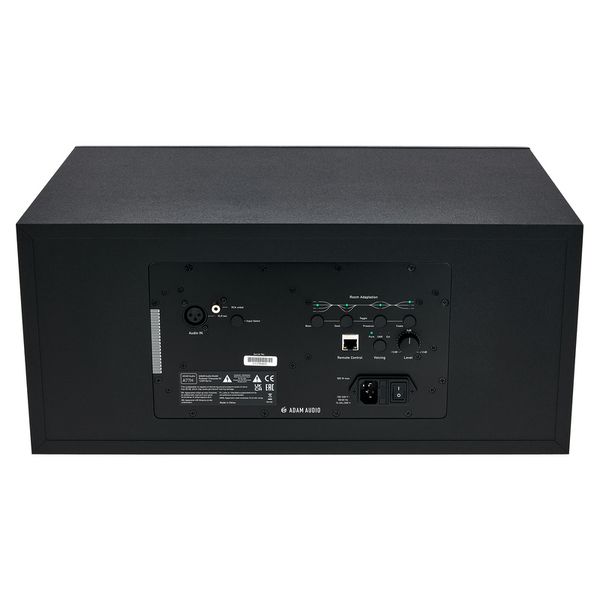
- 4-Band equaliser with "Bass", "Desk", "Presence" and "Treble" parameters to adapt to room acoustics
- Voicings function with preset sound profiles
- Real-time control of DSP-based functions via ethernet
- Control Remote software allows filter models to be loaded into the monitors own DSP
- Sonarworks integration (Sonarworks software and measurement microphone not included)
- AC input voltage: 100 - 240 V, 50/60 Hz
- 1 Line input: XLR balanced
- 1 Line input: RCA
- 1 Ethernet connection
- Dimensions (H x W x D): 236 x 531 x 350 mm
- Weight: 17.1 kg
- Quantity: 1 piece
-
Available since September 2022
-
Item number 540698
-
Sales Unit 1 piece(s)
-
Woofer Size Class 7"
-
Number of Ways 3
-
Construction Typ - Bass System Bass Reflex
-
Coaxial System No
-
Power per Piece 340 W
-
Frequency Range 37 Hz – 41000 Hz
-
Analog XLR Input Yes
-
Analog TRS Input No
-
Analog Mini TRS Input No
-
Digital Input No
-
Manual EQ Yes
-
DSP Room Correction optional with Sonarworks SoundID
-
Weight 17,1 kg
-
Analog RCA Input Yes
-
Woofer 2x 7"
-
Midrange Speaker 3,5"
-
Tweeter X-Art Tweeter
-
Height 236 mm
-
Width 531 mm
-
Depth 350 mm
-

Midfield monitoring for audio aficionados
Part of Adam's professional studio-grade A Series, the Adam A77H is a three-way monitor designed for midfield monitoring in recording studios. As the successor to the successful Adam A77X, it expands on that model's 2.5-way configuration. Sonically, the speaker will satisfy even the highest standards, delivering exceptional detail and spatial imaging across a frequency range of 34Hz to 45kHz. Bass reproduction is handled by two 7" woofers, complemented not only by a tweeter but, unlike its predecessor, also by a 3.5" midrange driver. The H in the model name stands for horizontal, as it's primarily designed for this position – but in fact its impressive width of over 53cm is unlikely to be an issue, as the rotatable waveguide with HPS technology allows the monitor to be positioned either horizontally or vertically. In addition, the integrated DSP enables users to adapt the A77H's output to the acoustic characteristics of the room.

)
High-tech membranes for high-end sound
The Adam Audio A77H's bass diaphragms have a multi-layered construction made from a lightweight mineral composite that offers high rigidity at an extremely low weight. The speaker's bass reflex system adds even more bottom end, with front-facing ports that blend seamlessly into the design. The A77H's tweeter is a hand-crafted X-ART unit made from a ribbon folded into a lamellar shape, and thus capable of exceptionally fast sound transmission. A multicolour LED indicating the speaker's status will assist producers when they're adjusting the DSP remotely using Adam's proprietary A Control software suite. The monitor accepts signals in both professional and consumer formats through XLR and RCA connections and delivers them with a powerful amplification of 270W RMS, achieving a maximum level of 106dB SPL.
For pros and those who want to be
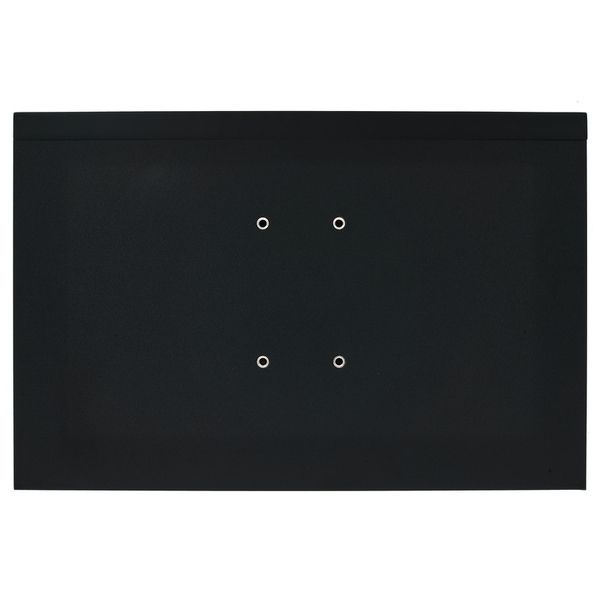
The Adam A77H is a high-quality monitoring solution for professional studios, as well as for project studios with particularly demanding sonic requirements. The speaker's automated room adjustment function is handled by its integrated DSP and is based on algorithms from Sonarworks, a company renowned for its calibration software for speakers and headphones. This makes the monitor suitable even for control rooms whose geometry or equipment isn't necessarily optimised for monitoring purposes. To position the speaker in the studio (for which purpose four M8 mounting threads are provided), a stand or shelf capable of supporting its weight of just over 17kg (including its vinyl-coated MDF chassis and internal components) is required. Adam Audio is of course aware that monitors in this price range represent an investment, which is why they offer an extended five-year warranty on every unit.
)
About Adam Audio
ADAM Audio was founded in Berlin in March 1999 and has since been involved in the development, manufacture, and distribution of speakers specifically aimed at the professional audio industry. The company was founded following the development of the X-ART tweeter, itself based on the Air Motion Transformer created by Oscar Heil in the 1960s. Advanced Dynamic Audio Monitors (ADAM) has rapidly set new standards in the world of studio monitors. The company employs over 50 people in its Berlin factory, is distributed in over 75 countries, and has sales offices in both the USA (Nashville) and the UK. The list of renowned studios using ADAM monitors is long and still growing. ADAM Audio has been part of the Focusrite Group since 2019.
)
Adjust to any acoustics
In challenging listening environments, the Adam A77H can be conveniently adapted thanks to its integrated DSP's room correction function. Furthermore, Adam's A Control software package can be used to program filters, which can then be stored internally in the speaker's memory. Manual adjustment options for adapting the A77H to a space include six parametric equalisers on the rear panel, as well as level control and delay settings. For those who prefer not to make individual adjustments manually, the speaker's performance can be measured using the Sonarworks SoundID Reference software, creating curves which can then be applied to the speaker's DSP unit. In terms of power consumption, it should be noted that a single monitor can draw up to 220W.
This is what customers who viewed this product bought

Accessories & matching items
Compare options
-
ADAM Audio Midfield Monitors at a glance
-
Display Midfield Monitors from $ 1000 - $ 1500
-
Go to product group Midfield Monitors
-
Go to product group Studio Monitors
-
Go to product group Studio and Recording Equipment
-
Show manufacturer details for ADAM Audio
-
ADAM Audio Studio and Recording Equipment at a glance