


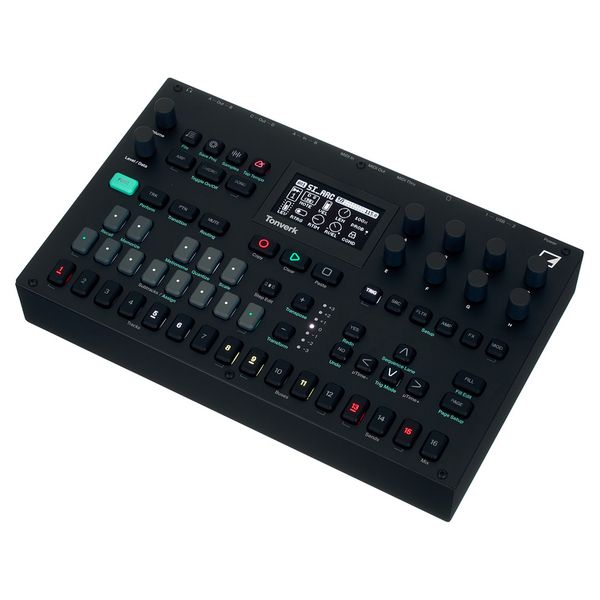
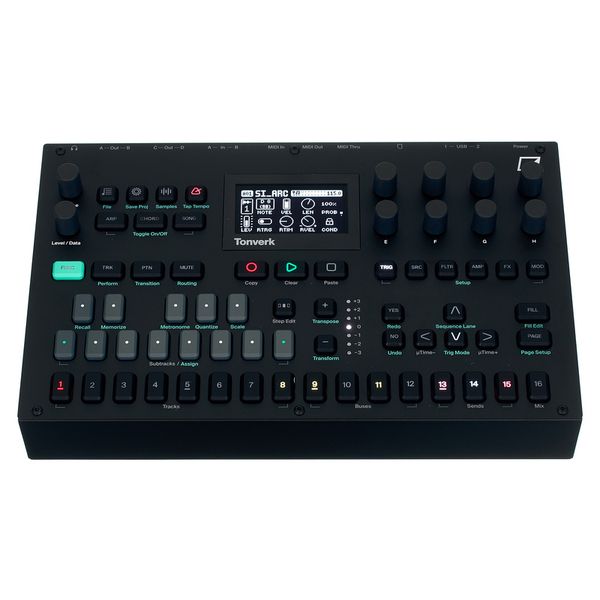
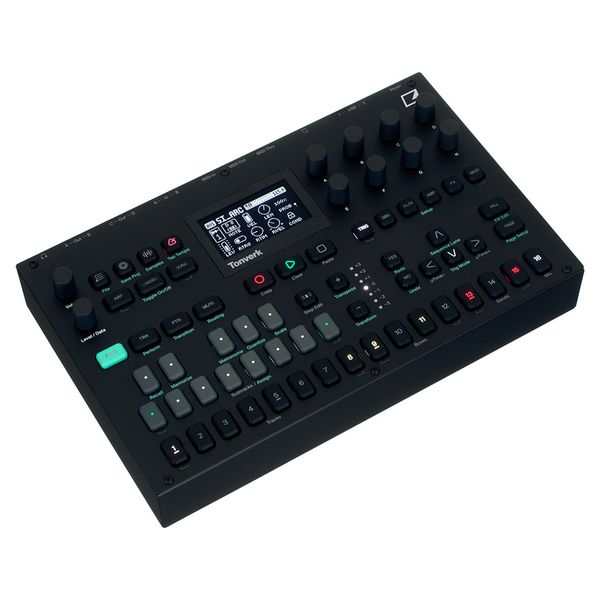
Elektron Tonverk

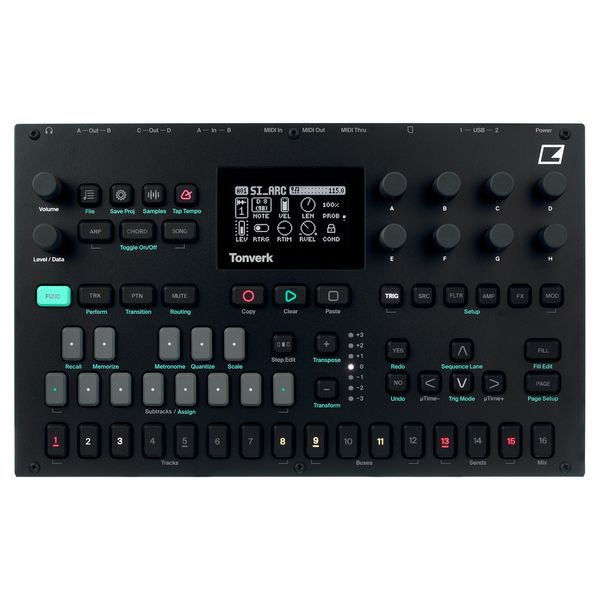
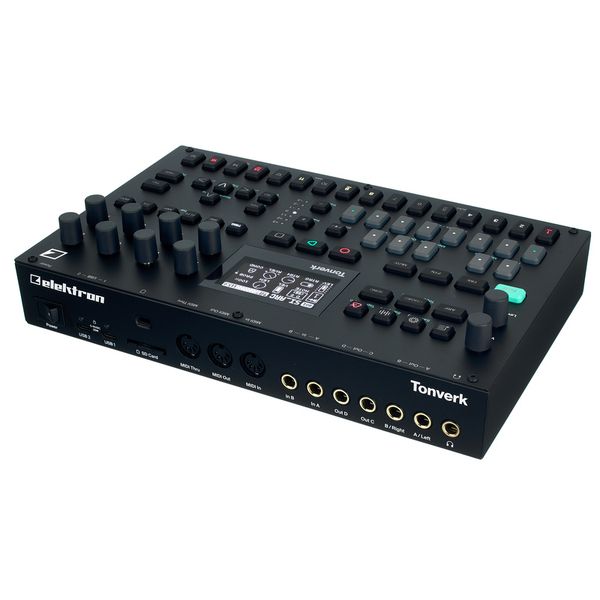



Includes 3 months of full access to ArtMaster.com – your online music learning platform for music production, songwriting and viral TikTok-style music creation.
As soon as your order has been dispatched, you will receive your free activation code via email. The subscription ends automatically at the end of the term. The code must be redeemed within 6 months of purchase.
When you purchase this studio product, you receive a free 3-month voucher worth EUR 59, valid from 15.07. to 14.10.2026, giving you full access to premium online courses focused on modern production techniques, beat-making, vocal editing, creative workflows and content-ready sound design.
ArtMaster.com – your e-learning partner created with industry professionals such as Sam Pounds (Chris Brown, Dr. Dre), Printz Board (Black Eyed Peas, Justin Timberlake), and Chris Kasych (Adele, Beck, Pharrell Williams). Learn from over 500 video lessons designed for producers, creators and songwriters — covering DAW production, mixing fundamentals, arrangement, hooks for TikTok, and essential skills for turning ideas into release-ready tracks.
This offer is available in English.
Polyphonic Performance Sampler
- Eight stereo audio tracks
- All eight tracks can be used either as audio or MIDI tracks
- Four bus tracks
- Three send effect tracks and one mix track
- Five machines per audio track selectable: single player, multi-player subtracks, grainer or MIDI (also selectable on bus tracks)
- Single Player: Polyphonic playback of individual WAV files (mono or stereo)
- Multi Player: Loading and polyphonic playback of multisamples (multiple velocity layers per note)
- Subtracks: Adds eight monophonic, multi-timbral subtracks to a track – each subtrack with its own sample, sequencer and individual parameter controls
- Grainer: Granular machine breaks samples down into tiny fragments (grains) and creates new sound forms
- Shape Machine (on the bus and send FX tracks)
- MIDI: Converts the selected track into a MIDI track
- Recorder: For easy audio sampling
- Auto Sampler: Automatically creates multisamples from hardware instruments connected via MIDI
- 1 x base width filter per track and sub-track
- Two assignable LFOs, two assignable FX LFOs and assignable modulation envelope per audio track
- Two assignable LFOs for each bus, send effect and mix track
- Extensive metering options
- MIDI track: 16-voice polyphony per step
- 16 assignable CC controllers and 2 assignable LFOs per track
- Two different Trig Modes, Keyboard, Chord and Song Mode
- Polyphonic sequencer: up to 256 steps per pattern and track, individual pattern length per track, adjustable clock divider per track, parameter locks, trigger conditions and retrig, micro timing and arpeggiator per track
- Various effects (depending on the track type)
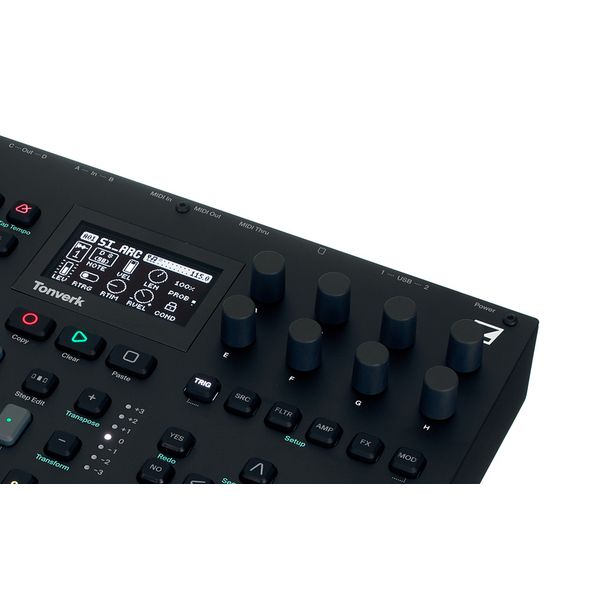
- 128 x 64 pixel OLED display
- 5 GB internal sampling memory
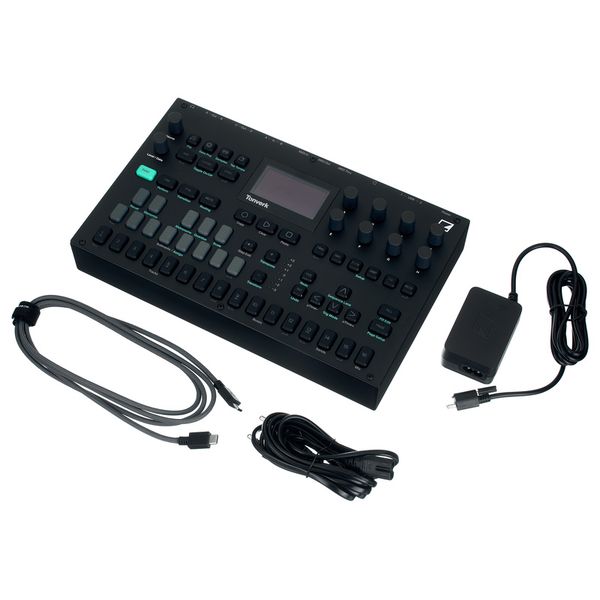
- Includes 64 GB SD card, PSU-5 power supply unit and USB-C cable
- Dimensions (W x D x H): 286 x 176 x 63 mm
- Weight: 1.85 kg
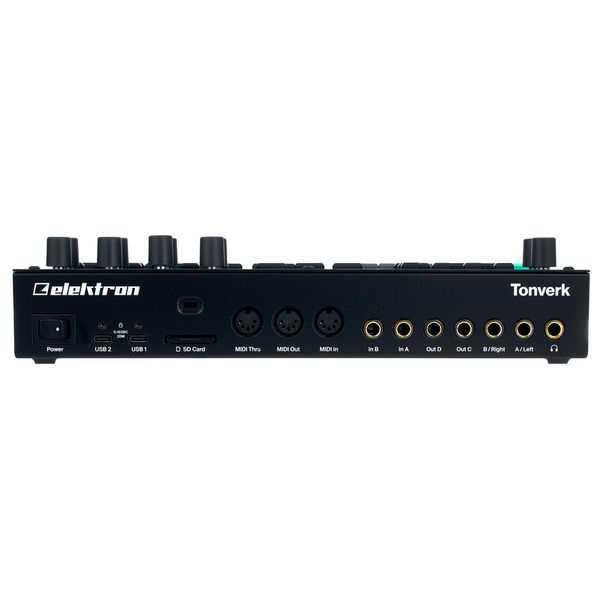
Connectors:
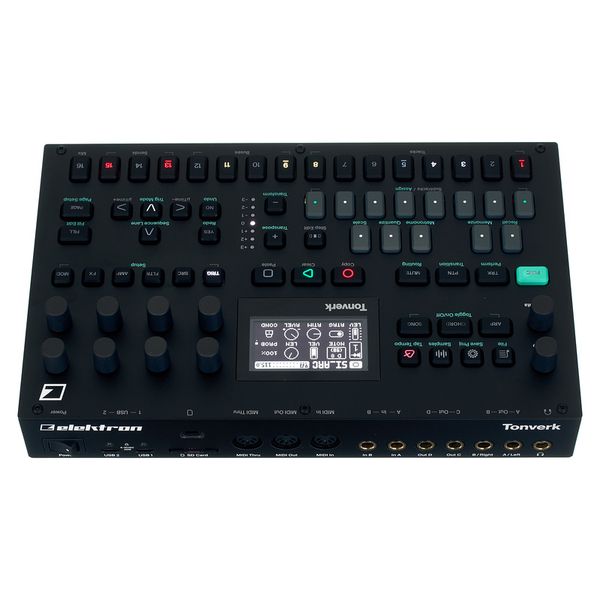
- MIDI In/Out/Thru
- 2 x 6.3 mm jack input
- 4 x 6.3 mm jack output
- 6.3 mm headphone output
- 2 x USB-C port
- SD card slot
-
Available since September 2025
-
Item number 625684
-
Sales Unit 1 piece(s)
-
Polyphony 64
-
Internal Storage Yes
-
Storage Medium SD Card
-
File Format WAV
-
Time Stretching No
-
Effects Yes
-
USB-port Yes
-
MIDI interface 1x In, 1x Out, 1x Thru
-
Analogue Inputs 2
-
Analogue Outputs 4
-
Digital Outputs No
-
Display Yes
-
Sequencer Yes
-
Design Desktop
-
Control MIDI, USB, Pads
-
Optional Expansions No
-
Special Features Subtracks
-
A 16-track sonic architect
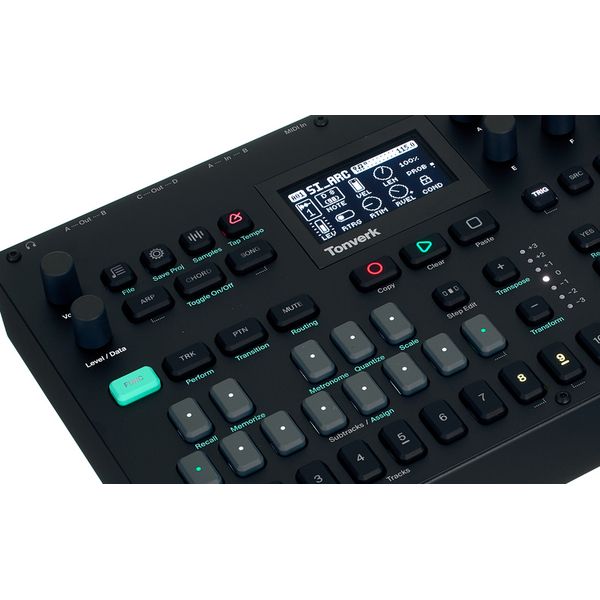
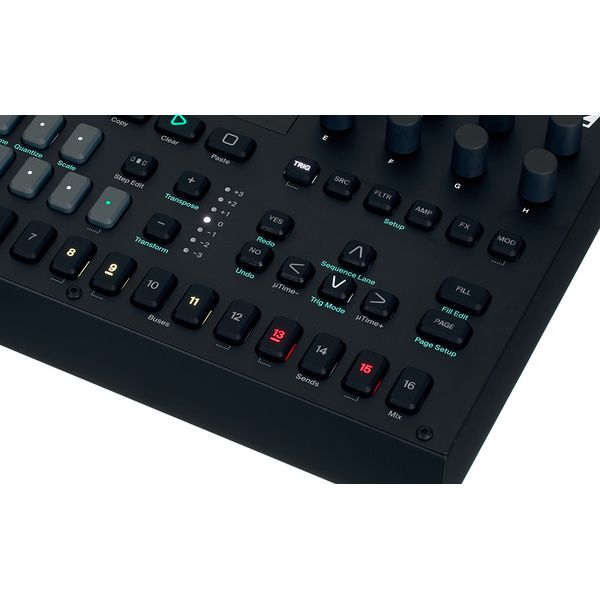
Swedish manufacturer Elektron's new Tonverk has taken sampling to a whole new level – while still delivering reassuringly fast results. This compact workstation combines polyphonic multisampling, flexible routing, and Elektron's most expansive sequencer to date in a single, smooth workflow that gives the user 16 tracks: Eight stereo audio tracks provide the sounds, and four buses, three sends, and a mix track – each with its own sequencer with up to 256 steps – create the sonic space. The initial basis of the Tonverk's sound creation is formed by three "Machines": Single Player for polyphonic one-shots, Multi Player, which lets the user create their own instruments (including an Auto Sampler function), and Subtracks, comprising up to eight drum machines. These are enhanced by fresh effects that include Rumsklang Reverb and Frequency Warper, while 48 kHz/24-bit D/A and A/D converters, two USB-C ports, SD storage, and a robust steel casing all make sure that the Tonverk will capably handle day-to-day life on stage and in the studio.

)
From sample to sequence
The Elektron Tonverk operates with up to eight voices and three core machines on each audio track, fundamentally determining how samples and multisamples are treated. Single Player polyphonically plays back stereo samples that have been uploaded or recorded; Multi Player distributes multisamples across the keyboard; and Subtracks combines up to eight individual samples per track. When it comes to sampling, there are two options: Using the recorder to sample internal and external sources in the conventional manner, or using the Auto Sampler tool, which records connected MIDI sources semi-automatically and creates a multi-sample instrument with the desired number of notes and velocity layers. The Tonverk's modulation lets musicians shape the sound in as much detail as they like, with a filter envelope and amp envelope per track/subtrack, as well as two voice LFOs, two FX LFOs, and a mod envelope. The sequencer provides up to 256 steps for each track, in addition to a range of parameter locks, micro timing, and multiple trigger/retrigger modes, with the workflow rounded off by individual pattern lengths and a time scale multiplier for each track, an arpeggiator, and chord or keyboard modes with 36 scales.
)
From the club to the studio
The Elektron Tonverk can be deployed as a central drum computer, an instrument sampler, or a step sequencer without being confined to a single genre, so users can exploit its capabilities more and more as their productions become more elaborate – from laid back Boom-bap beats through to pounding Techno and even cinematic soundscapes. Its Perform mode, pattern transitions, and parameter locks will ensure captivating arrangements during live performances, while in the studio, users can create customised polyphonic instruments using the Auto Sampler, and compact but powerful drum kits using Subtracks. Producers who favour a hardware-based approach without a DAW can use the clock, MIDI tracks, and the bus/send options as impulse generators for their productions, and the system can be integrated into DAW-based setups as a central audio and MIDI controller via USB audio. Operating the Tonverk requires a certain degree of familiarity with Elektron gear, but the rapid workflow and seamless development of ideas from rough sketch to finished song are well worth the effort.
)
About Elektron
The Swedish firm Elektron was founded in Gothenburg in 1998. The company develops tools for producers, artists, and DJs to perfect their respective crafts. The company's award-winning Overbridge software is designed to seamlessly integrate electronic musical instruments into computer-based DAWs as controllers and as external sound cards. Elektron is continuously bringing new innovations to the market in order to seamlessly integrate music into our day-to-day lives.
The nerve centre of any setup
Four balanced outputs on the Elektron Tonverk allow separate front, monitor, and recording stems to be created, while two inputs let the user record signals for sampling, resampling, or sidechain, and these can be routed specifically to buses and sends. The headphone output can be used either for cueing, as intended, or perhaps as a creative routing option. Thanks to the MIDI I/O and MIDI Thru with DIN sync, the user can easily keep their drum machines, synths, and other sequencers in time, in addition to which the Tonverk's two USB-C ports make bidirectional audio transmission a breeze, so it's ideal for use in conjunction with audio interfaces and DAWs. The SD slot allows extensive sample libraries and projects to be managed, so users can create clearly structured live sets and production sequences when they combine the Tonverk with a DJ mixer, mixing desk, recorder, effects rack, modular system, or MIDI keyboard.
)
In the spotlight
Subtracks
The Subtracks machine splits an audio track into eight "subtracks" that can then be played simultaneously. Each subtrack has a dedicated sample, two filters, one filter envelope, and one amp envelope, as well as freely assignable modulation options, all of which allows the user to create entire drum kits, stacked hits, or dense textures without having to use up additional tracks. Each step can be parameter locked, so the volume, filter, and envelope curve values can be precisely set, while micro timing and filter probabilities prevent the sequence from ever feeling static. The Supertrack, in turn, provides an additional control track that affects all eight of the subtracks and governs the effects that they share; it combines effect parameters and the corresponding LFOs, and can be automated for each step. All this means Subtracks lets artists turn every track into a compact and intuitively editable ensemble that can be precisely controlled in a live setting.
)
