


Mackie CR8 BT

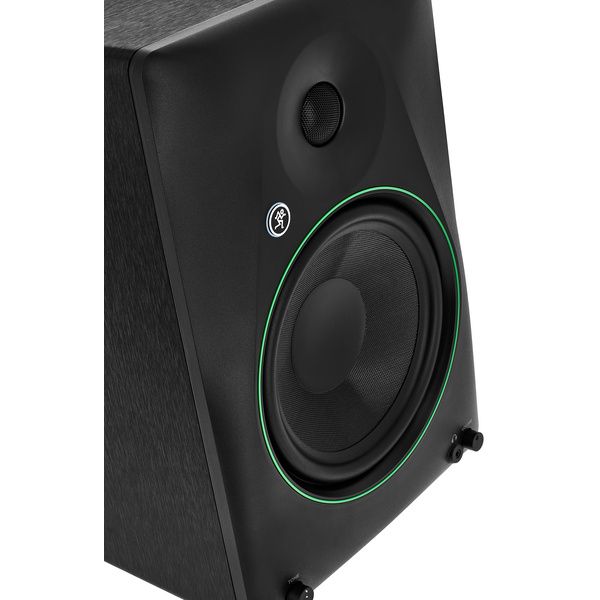


Active Multimedia Bluetooth Speakers
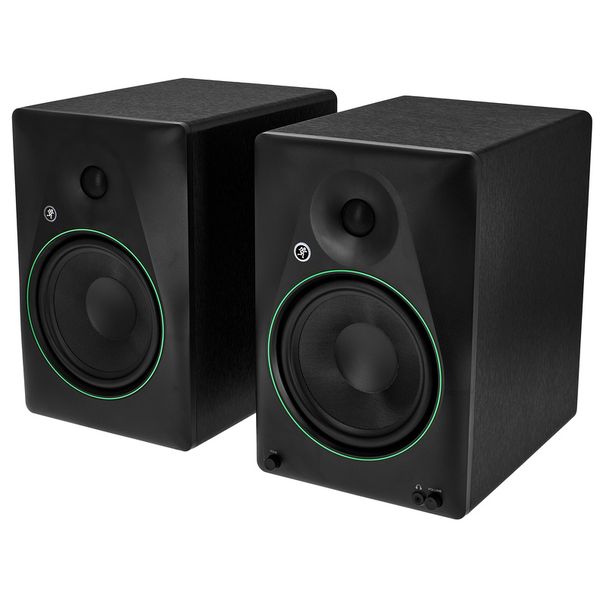
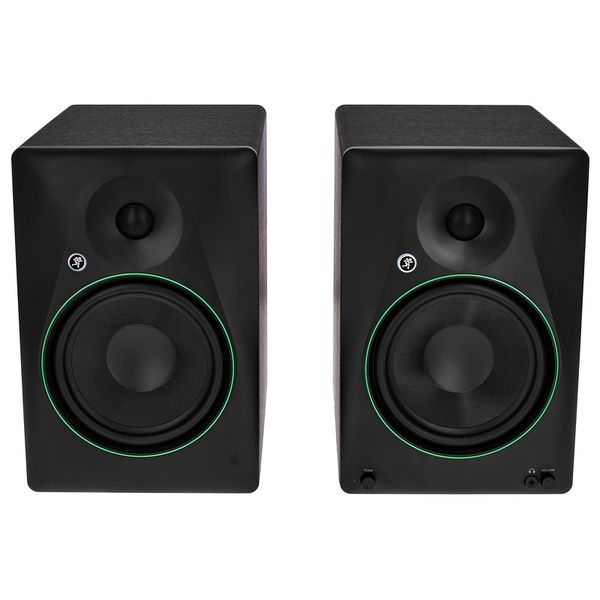
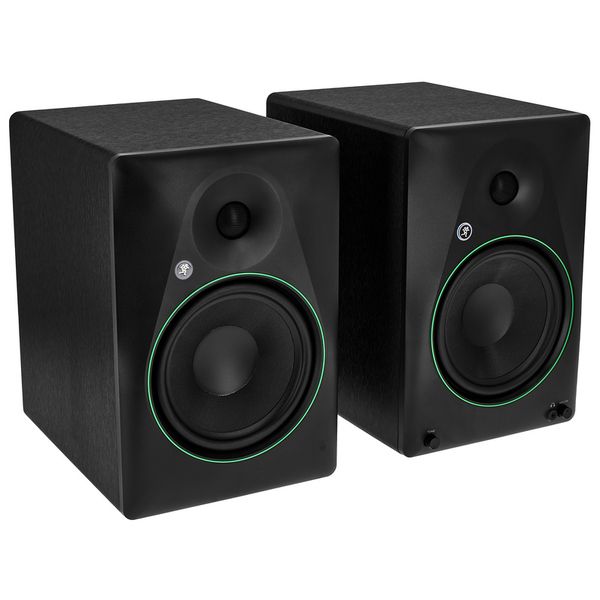
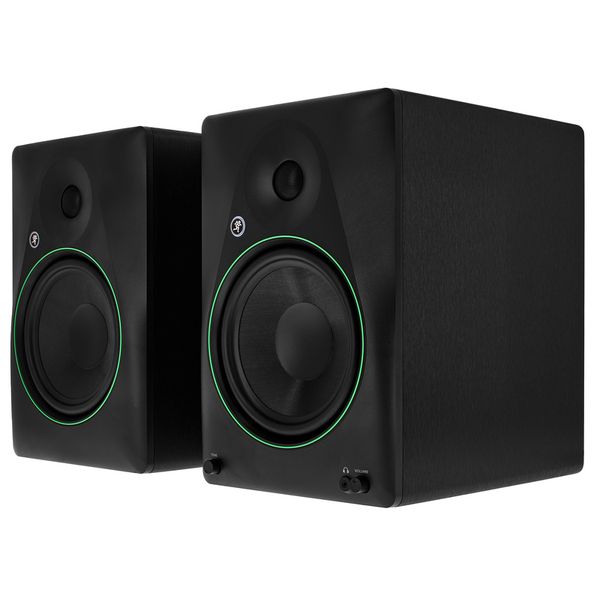
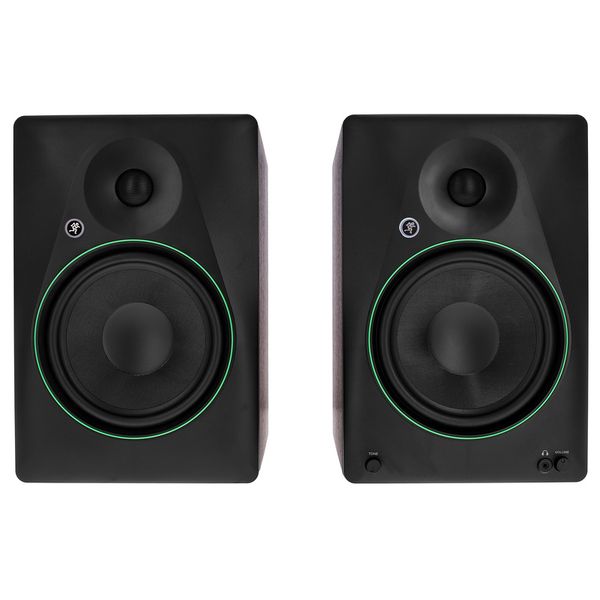
- 8" fabric-cone woofer
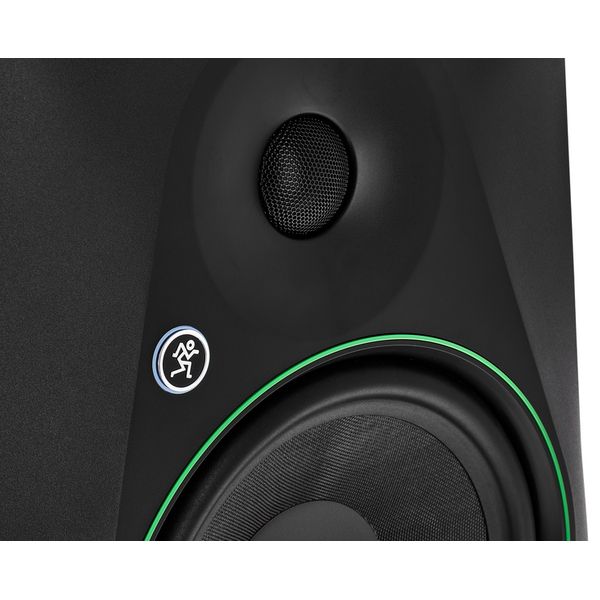
- Silk-dome tweeter with protective grille
- Frequency range: 44 Hz – 20,000 Hz
- Max. sound pressure level: 108 dB
- Class D amplifier with 140 W output (RMS)
- Bluetooth 5.0
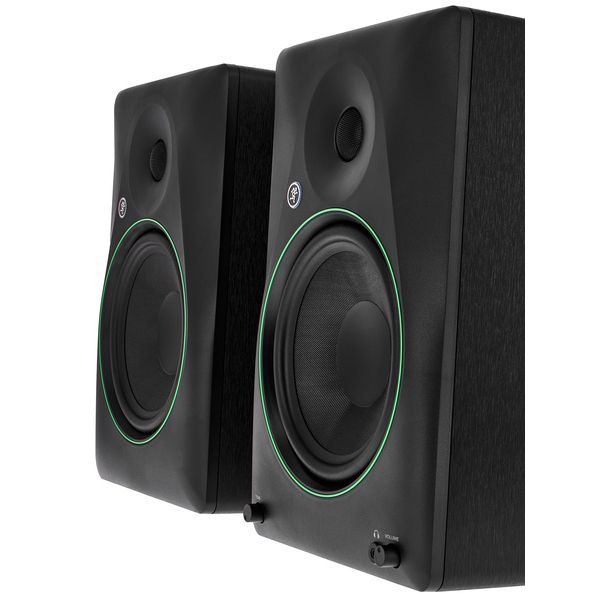
- Controls for adjusting sound and volume
- Position switch for desktop and bookshelf modes
- Position switch L/R
- Built-in switched-mode power supply 100 - 240V / 50 - 60 Hz
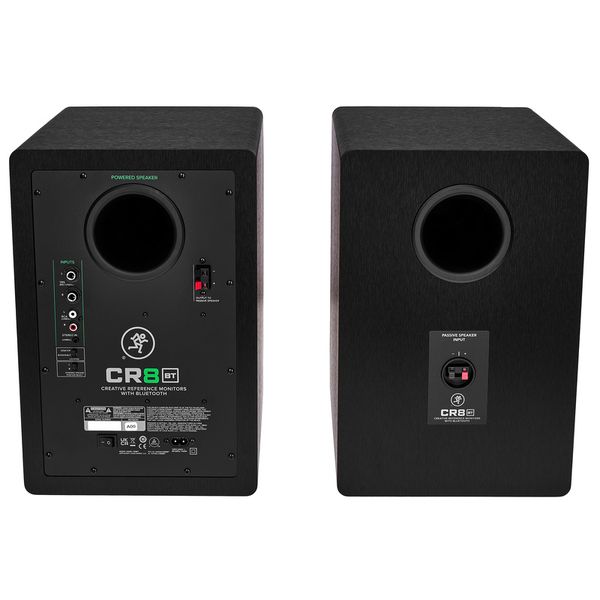
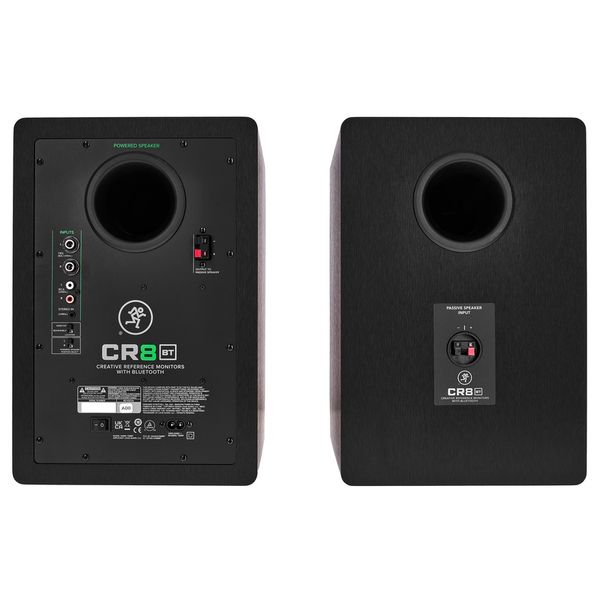
- Inputs: 2 x line 6.3 mm jack, 2 x RCA (L/R stereo) and 1 x 3.5 mm stereo mini jack
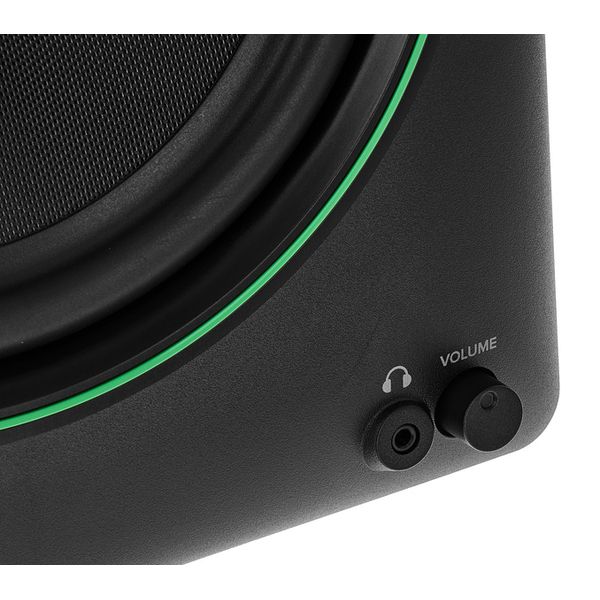
- Stereo headphone output: 3.5 mm mini jack
- Speaker terminal for connecting both monitors
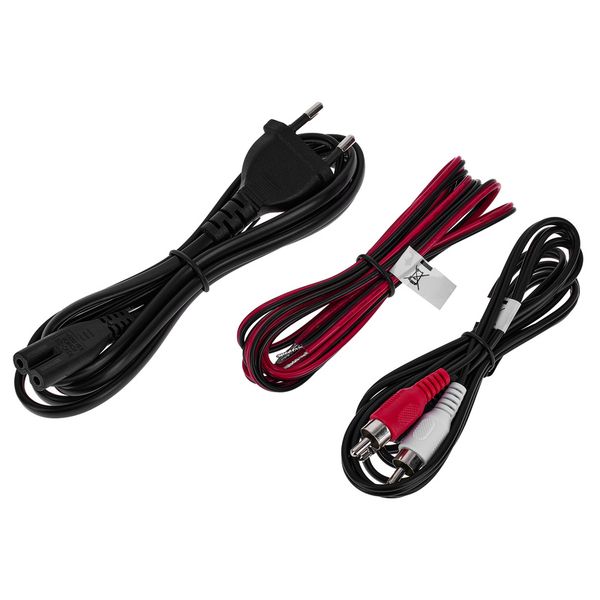
- Incl. power cable, RCA cable and speaker wire
- Dimensions of each speaker (H×W×D): 376×251×345 mm
- Weight per pair: 16 kg
- Price per pair
-
Available since January 2025
-
Item number 602465
-
Sales Unit 1 pair(s)
-
Woofer Size Class 8"
-
Number of Ways 2
-
Speaker Housing - Woofer System Bass reflex
-
Coaxial System No
-
Power per Unit 140 W
-
Frequency range 44 Hz – 20000 Hz
-
Analogue XLR Input No
-
Analogue Input (Jack) Yes
-
Analogue Input (Mini Jack) Yes
-
Analogue Input (RCA) Yes
-
Digital input No
-
Manual Sound Adjustment No
-
DSP Room Correction none
-
Woofer 8"
-
Tweeter 1“
-
Height 376 mm
-
Width 251 mm
-
Depth 345 mm
-
Weight 16 kg
-


The complete Bluetooth package
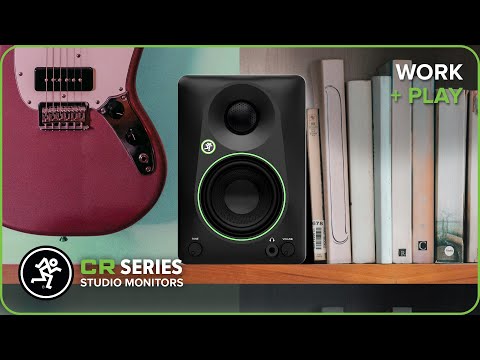
The CR8 BT is the largest active monitor system in Mackie's CR Gen 3 Creative Reference range, designed for users who need greater low-frequency reach and longer listening distances than the smaller CR models can provide, without stepping into full-size studio monitors. Part of the third-generation CR series, the system pairs a powered speaker with a passive partner to deliver a balanced, monitoring-grade stereo setup that remains familiar to configure and easy to integrate. A Class D amplifier delivers 140W of total output, providing ample headroom for larger desks, multi-purpose studios, and small-to-medium rooms. With its extended low end, versatile analogue inputs, and front-panel controls, the CR8 BT offers increased scale and room coverage while keeping the sound focused and practical. Bluetooth audio adds convenient wireless playback from phones, tablets, or laptops.
)
Shape the sound
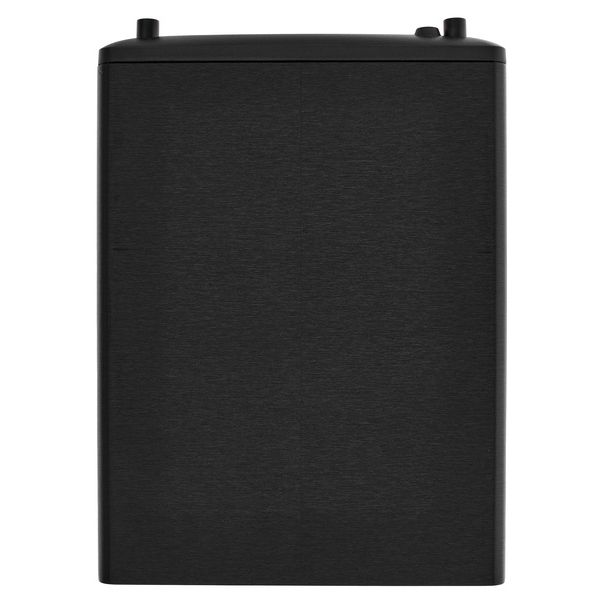
The Mackie CR8 BT uses rigid MDF cabinets with rear-firing bass reflex ports, tuned to support deeper low-frequency reproduction while maintaining control in nearfield and small-room environments. Each speaker combines an 8" woven-fibre woofer with a 1" silk-dome tweeter, crossed over at 3kHz for a smooth handover between lows, mids, and highs. Compared to smaller CR models, the larger woofer delivers bass lines, kick drums, and low-frequency effects with greater depth and ease, without obscuring midrange detail. Vocals, guitars, and dialogue remain clear and intelligible, while the high frequencies stay detailed without becoming sharp or fatiguing. Stereo imaging remains stable across longer listening distances, supporting both production work and immersive playback.
)
Suit the space
Designed for larger desks, multi-purpose studios, and small-to-medium rooms, the Mackie CR8 BT suits producers who want extended low-end coverage from a stereo system, as well as gamers and content creators looking for a more impacting listening experience. Balanced 1/4" TRS inputs connect directly to audio interfaces, mixers, or other studio gear, while RCA and 3.5mm stereo inputs accommodate computers, hi-fi equipment, and other consumer sources. A front-panel headphone output automatically mutes the speakers – ideal for late-night sessions or critical listening. Despite its increased size, the CR8 BT remains straightforward to place, configure, and use in everyday setups. BT versions add wireless playback from phones, tablets, or laptops.
)
About Mackie
In 1988 Greg Mackie, already a successful co-founder of a pro audio company, founded Mackie Designs Inc. with the goal of producing affordable, high-quality mixers. The company's first official product, the LM-1602 line mixer, was initially produced within the four walls of his home. As sales figures were encouraging, its successor model CR-1604 soon followed - and in 1991 the company finally moved into its first proper production facility. The combination of reliable quality and low prices quickly brought the company enormous success, so that by 1995 Mackie had already sold 100,000 products. In 2003, the company was renamed LOUD Audio, LLC so that there is no longer any confusion between the Mackie brand and its former parent company of the same name.
Scaling the CR system
Sitting at the top of Mackie's CR family of monitors, the CR8 BT offers the widest frequency range and greatest headroom in the series in a standalone stereo configuration. Its extended low-frequency reach reduces the immediate need for a subwoofer in many setups, particularly for general music production, gaming, and multimedia use. For users who require deeper sub-bass extension or more precise low-frequency control, the CR8 Gen 3 BT can also be paired with a CR8 BT subwoofer, forming a flexible 2.1 system that expands the system's range without changing the familiar CR voicing or workflow. This modular approach allows the CR system to scale naturally with room size and listening needs, from focused nearfield work to more spacious, immersive playback.
In the spotlight
Tone and Location controls
A defining feature of Mackie's CR Gen 3 monitors is a simple but effective voicing system that adapts the speakers to different uses and placements without relying on software EQ. The rear-panel Location switch compensates for desktop or bookshelf placement by adjusting the low-frequency response, helping reduce boundary reflections that can blur bass and low-mid detail. On the front panel, the Tone control shapes the overall character of the sound: Turned fully left, the response remains flatter and more neutral for tracking, mixing, or critical listening; as it's turned clockwise, low-end weight and high-frequency sparkle are gradually introduced for gaming, casual listening, or multimedia use. Together, these controls allow the CRs to shift smoothly between focused work and relaxed listening while preserving clarity and balance.
)
This is what customers who viewed this product bought
Accessories & matching items




Compare options
-
Mackie Active Nearfield Monitors at a glance
-
Display Active Nearfield Monitors from $ 250 - $ 350
-
Go to product group Active Nearfield Monitors
-
Go to product group Studio Monitors
-
Go to product group Studio and Recording Equipment
-
Show manufacturer details for Mackie
-
Mackie Studio and Recording Equipment at a glance