


Shure KSM 141 ST Stereoset

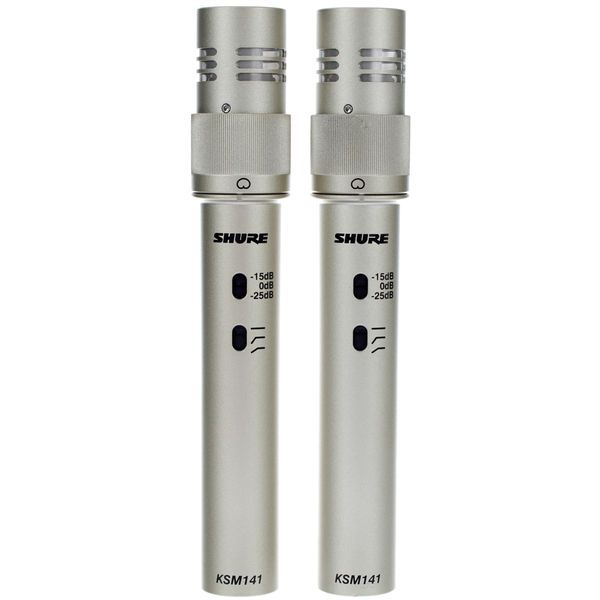
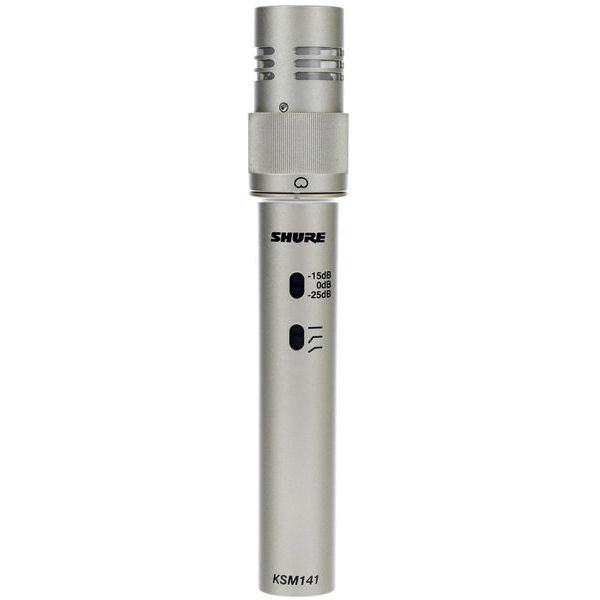
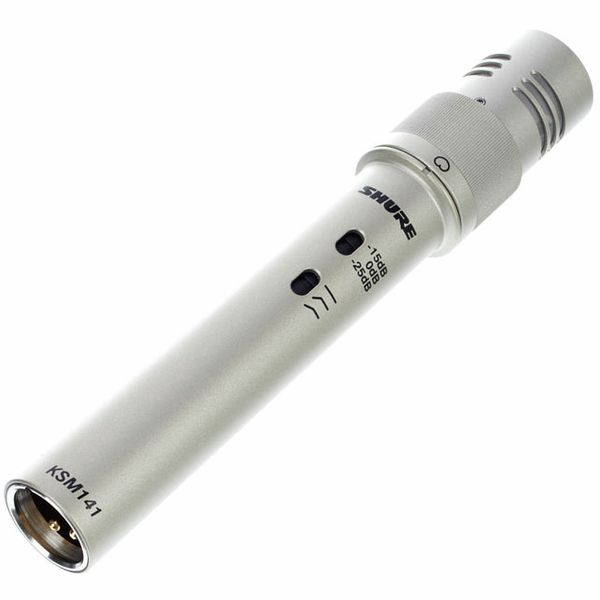
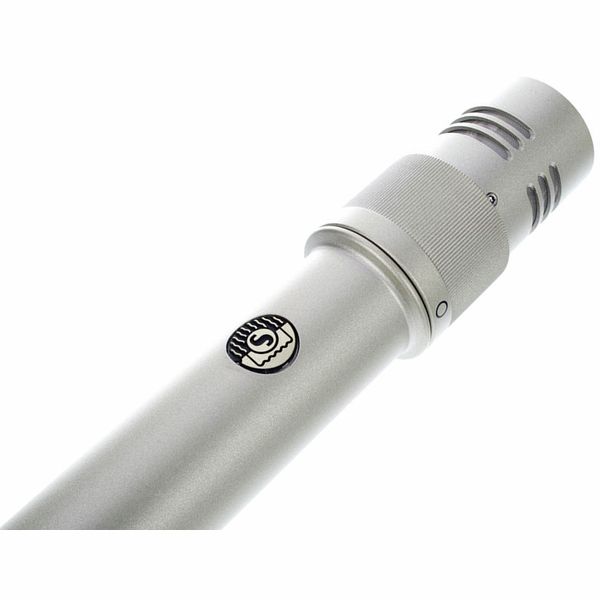
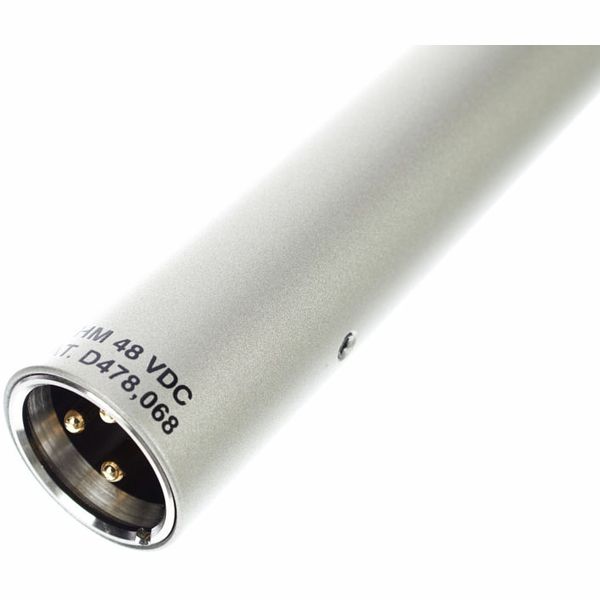
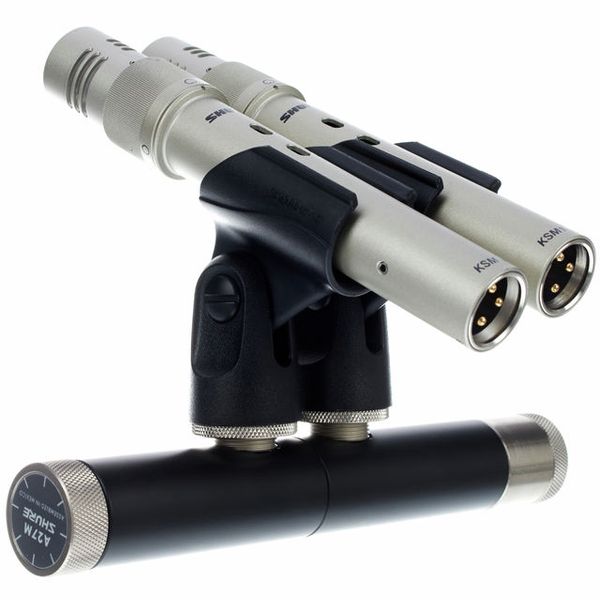
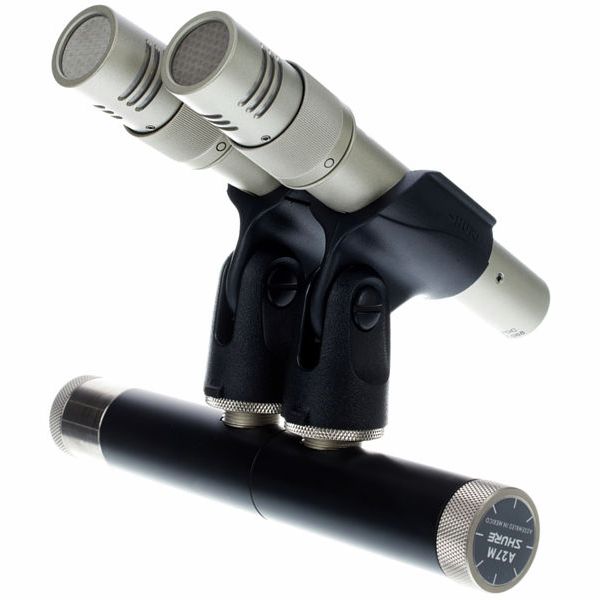
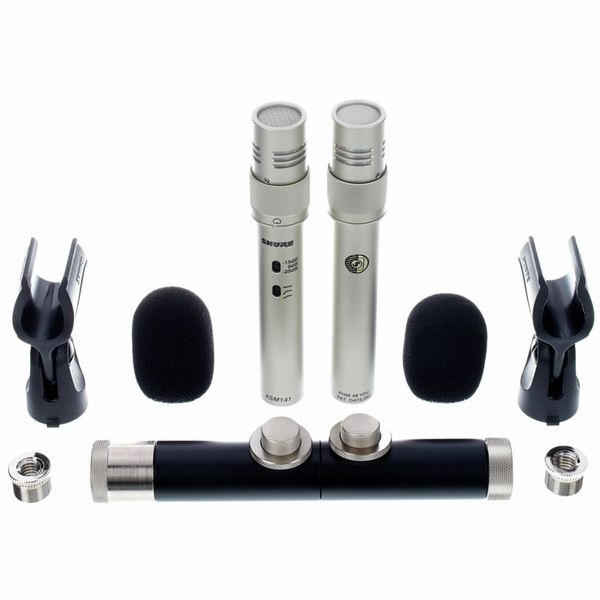


Stereo Pair of Small-Diaphragm Condenser Mics with Switchable Polar Patterns
- Precise, neutral sound for professional recording and live applications
- Ideal as an overhead or for hi-hat, piano, choir, orchestra, acoustic strings, percussion etc.
- Switchable polar patterns: Cardioid and omnidirectional
- Ultra-thin, gold-plated mylar diaphragm – low mass for excellent responsivity
- Frequency range: 20 – 20,000 Hz
- Impedance: 150 ohm
- Sensitivity: -37 dBV/Pa
- Max. SPL: 164 dB (with -25dB pad)
- Self-noise of 14 dB(A), very low for a small-diaphragm condenser
- Three-stage switchable low cut filter
- Pad switch with -15/-25 dB attenuation
- Gold-plated internal and external contacts
- Weight: 156 g
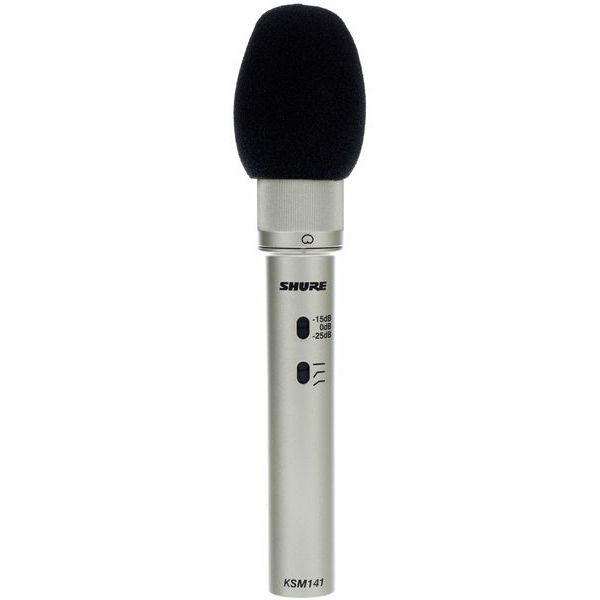
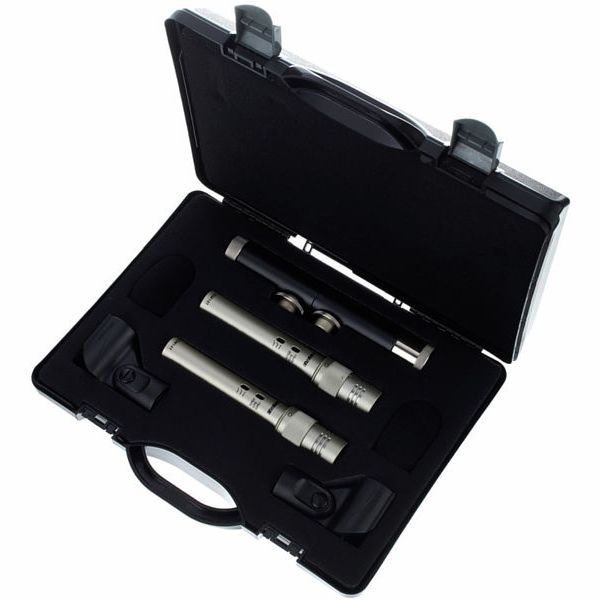
- Includes hard case, stereo bar, and two mic clips, thread adapters, and windshields
Optional accessories:
-
Available since March 2007
-
Item number 111975
-
Sales Unit 1 piece(s)
-
Battery Powered No
-
Stereo Pair Yes
-
Switchable Lowcut Yes
-
Pad switchable Yes
-
Polar Pattern Omni, Cardioid
A switchable stereo pair for pros
The Shure KSM141 Stereo Set pairs two factory-matched KSM141 dual-pattern condensers with the A27M stereo bar, providing a complete stereo recording system that can be switched between cardioid and omnidirectional and is ready to deploy from a single microphone stand. Each microphone combines a 2.5μm gold-layered mylar diaphragm with a Class A transformerless preamplifier, delivering 14dB SPL-A self-noise and a 20Hz–20kHz frequency response, with the capsules factory-matched. Each microphone's rotating collar independently selects cardioid or omnidirectional operation, with the same three-position pad (0/-15/-25dB) and three-position low-cut filter available in both patterns. Two windscreens, two mic clips, and a hard-shell carrying case are included alongside the A27M stereo bar; 48V phantom power is required for each microphone.

)
One capsule, two patterns
Unlike conventional multi-pattern condensers, the Shure KSM141 achieves its switchable polar patterns using a single-diaphragm capsule and a precision mechanical switching system, rather than dual diaphragms. Rotating the collar opens or closes the capsule's rear acoustic ports, transforming the microphone from a directional cardioid into a true omnidirectional transducer while preserving the same low-noise Class A electronics. In cardioid mode, the microphone develops useful proximity effect, while omnidirectional operation eliminates it entirely, producing a more open, distance-independent response with a gentle low-frequency rise that adds subtle body when recording rooms and ensembles. The ultra-thin 2.5μm diaphragm preserves fast transients with precision, while the permanent subsonic filter and switchable low-cut filter help control room rumble and unwanted low-frequency build-up.
)
Three stereo perspectives
A matched pair of Shure KSM141s covers a broader range of stereo recording situations than any fixed-pattern pair. In cardioid mode, the A27M stereo bar supports the same X-Y coincident and ORTF near-coincident techniques as the KSM137 Stereo Set. Switching both microphones to omnidirectional adds a third approach: a spaced omni pair capable of capturing large sound sources and acoustic spaces with natural width, depth, and low-frequency extension, free from proximity effect. Engineers whose work remains exclusively in cardioid will find the KSM137 Stereo Set provides the same core performance in a lighter, fixed-pattern package.
)
)
About Shure
The American company Shure began developing microphones during the early 1930s and is one of the pioneers of the audio engineering sector. Models such as the 55 Unidyne – known to many as the "Elvis microphone" – and the SM57 and SM58 which appeared in the mid-1960s are still ubiquitous in live sound production today. They enjoy cult status among musicians and technicians alike. In the 1990s, Shure introduced the first wireless microphones and in-ear monitoring systems and became a market leader in this field. In addition to microphones, Shure offers a wide range of earphones and headphones for studio and live use, as well as various accessories.
Concert hall, orchestra, and large ensemble recordings
Shure's KSM141 Stereo Set comes into its own where distance, space, and natural acoustics are as important as the source itself. A spaced omni pair positioned in a concert hall captures not only the orchestra or ensemble, but also the low-frequency weight and ambience of the room, producing an open, natural perspective that close-miking and cardioid techniques cannot fully replicate. The same approach suits choirs and other large acoustic ensembles, where preserving the blend is more important than isolating individual performers. Switching back to cardioid immediately returns the pair to closer applications such as drum overheads, piano, chamber ensembles, and room recording. For engineers who regularly move between intimate close-miking and large-scale acoustic recording, the KSM141 Stereo Set brings both approaches together in a single matched pair.
