


Shure KSM 137 SL

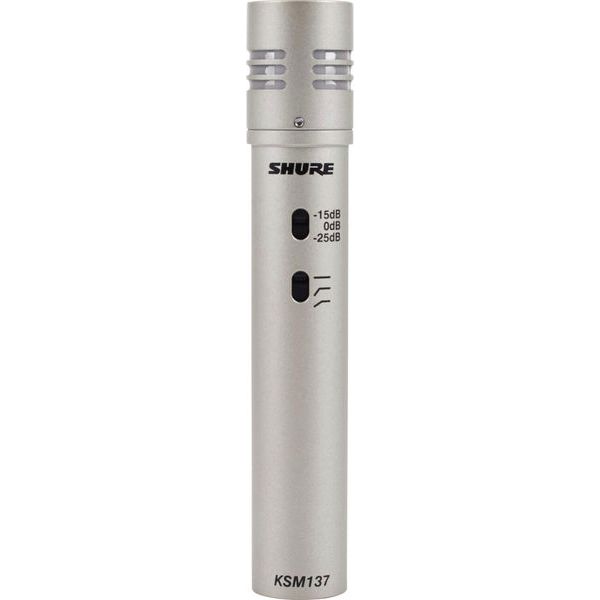
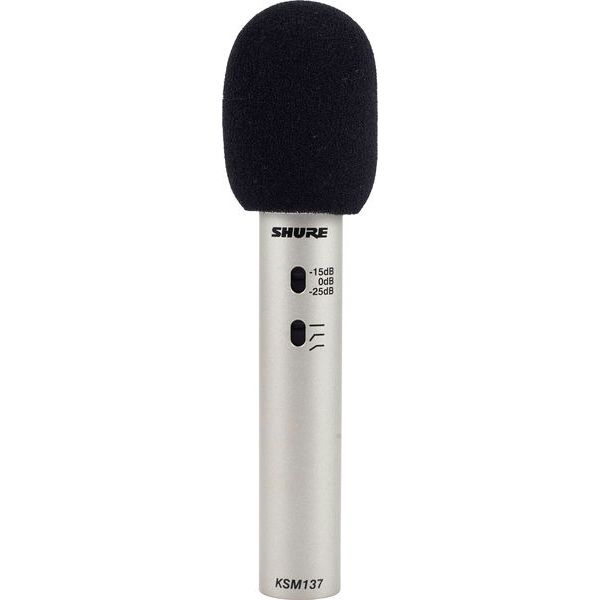
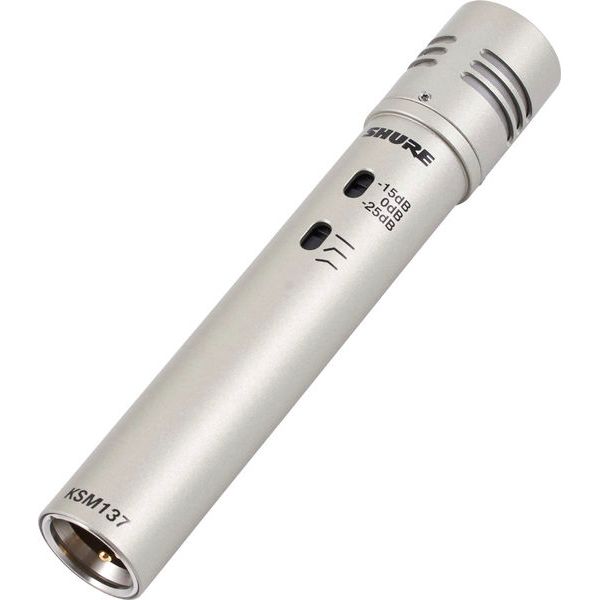
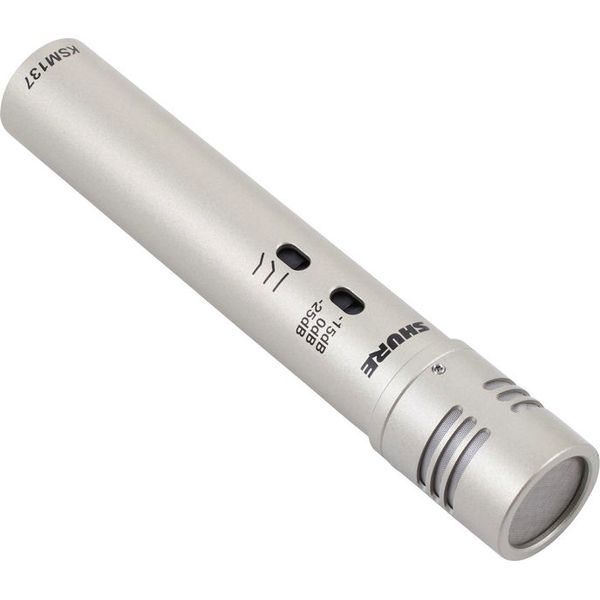
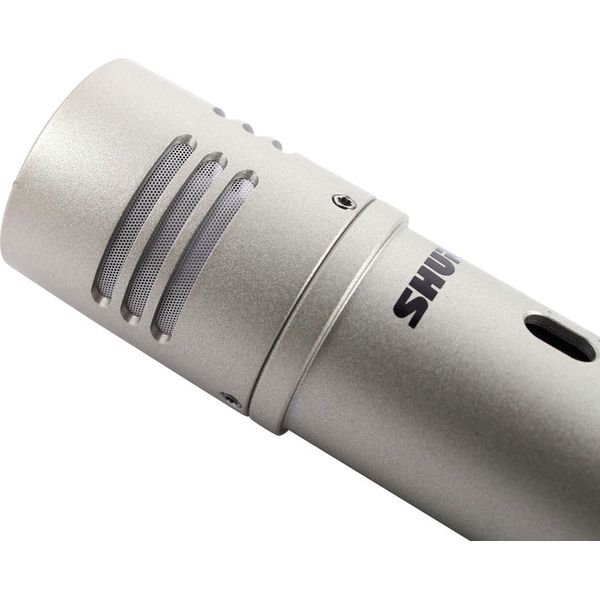
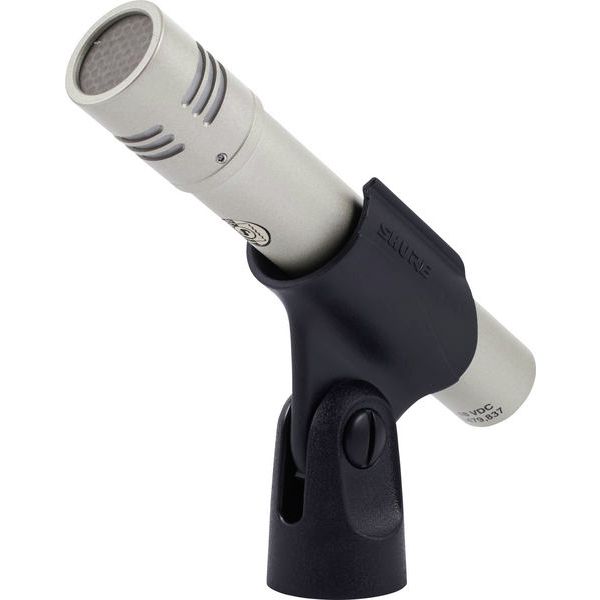
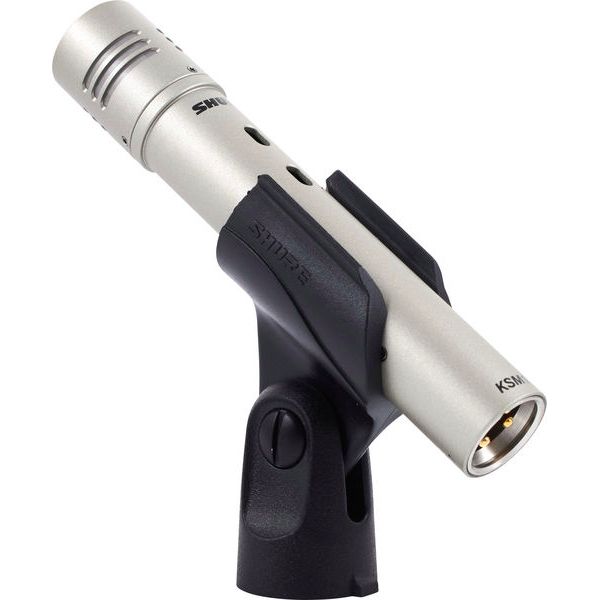
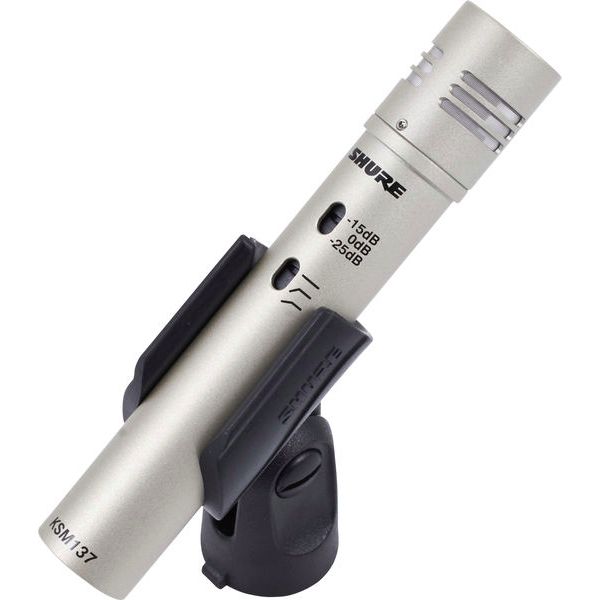


Small Diaphragm Condenser Microphone
- Optimised for acoustic instruments
- Neutral and precise sound for stage and studio applications
- Ideal for overhead, hi-hat, piano, choir and orchestra, and acoustic stringed instruments
- Ultra-thin, 2.5 micron, 24 karat gold-layered, low mass Mylar diaphragm for superior transient response
- Gold-plated internal and external contacts
- Polar pattern: cardioid
- Frequency response: 20 Hz - 20 kHz
- Sensitivity: -37 dBV / Pa
- Switchable pad: 0 dB, -15 dB, -25 dB
- SPL: 164 dB (with switched -25dB pad)
- Three-stage switchable low cut filter
- 14 db (A) very low self noise for a small diaphragm condenser microphone
- Robust housing
- Weight: 100 g
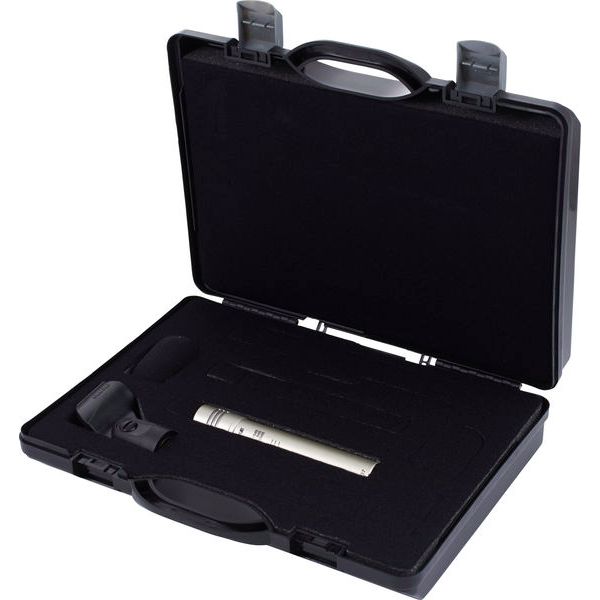
- Includes A137C plastic case, A100WS windshield and A57F microphone mount
- Also available as a pair: Art.171884
Optional accessories:
-
Available since December 2004
-
Item number 176015
-
Sales Unit 1 piece(s)
-
Clip-On Microphone No
-
Condenser Microphone Yes
-
Incl. Clamp Yes
-
Polar Pattern Cardioid
-
Switchable Lowcut Yes
-
Pad switchable Yes
-
The versatile pencil condenser
)
The Shure KSM137 is a professional small-diaphragm condenser microphone designed for accurate, natural capture across studio and live applications. Equally suited to acoustic instruments, drum overheads, brass, woodwinds, or amplified sources, it combines a lightweight 2.5μm gold-layered Mylar diaphragm with a Class A transformerless preamplifier to deliver low self-noise, high headroom, and fast transient response. Its frequency response extends from 20Hz to 20kHz, remaining largely flat throughout, with only a subtle presence lift around 8kHz that adds clarity without exaggerating brightness. A recessed three-position pad (0/-15/-25dB) and a low-cut switch provide effective control over loud sources, proximity effect, and unwanted low-frequency rumble. A mic clip, foam windscreen, and carrying case are included; 48V phantom power is required.

)
Fast, accurate, and versatile
The Shure KSM137's ultra-thin 2.5μm diaphragm captures fast transients with precision, preserving the attack of a plucked string, a struck drum head, or a brass articulation with the speed that heavier diaphragms lose. Behind it, the Class A transformerless circuitry maintains low distortion alongside a low 14dB SPL-A self-noise figure, allowing subtle instrumental detail to be captured without adding coloration. Like any cardioid microphone, the KSM137 develops useful proximity effect at close range, adding warmth and weight when required, while the switchable low-cut filter provides three positions before the signal reaches the preamplifier: flat; a gentle 6dB/octave rolloff at 115Hz for proximity effect compensation; and a steeper 18dB/octave cutoff at 80Hz for room rumble and ventilation noise. A permanent subsonic filter also attenuates frequencies below 17Hz, helping eliminate unwanted mechanical noise at the source.
)
Natural sound, practical design
The Shure KSM137 is aimed at recording engineers, producers, and musicians who need a neutral, dependable small-diaphragm condenser for acoustic instruments, drum overheads, brass, woodwinds, ensembles, and detailed stereo recording – sources where the microphone's job is to get out of the way of the instrument rather than impose character of its own. The source is captured as it is, leaving only microphone placement and the instrument itself to shape the final result. The fixed cardioid pattern is a deliberate design choice rather than a limitation: For engineers who regularly work in cardioid, a dedicated cardioid capsule offers excellent consistency and predictable off-axis behaviour. At just 100g, it's easily positioned on boom arms and overhead stands. Engineers requiring both cardioid and omnidirectional operation will find the KSM141 offers the same core performance with the added flexibility of switchable polar patterns.
)
)
About Shure
The American company Shure began developing microphones during the early 1930s and is one of the pioneers of the audio engineering sector. Models such as the 55 Unidyne – known to many as the "Elvis microphone" – and the SM57 and SM58 which appeared in the mid-1960s are still ubiquitous in live sound production today. They enjoy cult status among musicians and technicians alike. In the 1990s, Shure introduced the first wireless microphones and in-ear monitoring systems and became a market leader in this field. In addition to microphones, Shure offers a wide range of earphones and headphones for studio and live use, as well as various accessories.
From close-miking to stereo recording
The Shure KSM137 suits a wide range of recording tasks. Its combination of low self-noise and high maximum SPL allows it to handle both a delicate fingerpicked guitar and a close-miked snare drum without audible noise or distortion. The extended low-frequency response adds weight to bass instruments, percussion, and drum overheads, while the subtle 8kHz presence lift preserves clarity without introducing harshness. Used as a matched pair, two KSM137s work equally well in coincident X-Y or wider ORTF stereo configurations, capturing both solo acoustic instruments and full ensembles with precise stereo imaging and excellent phase coherence. The optional Shure A27M stereo bar, supplied with the KSM137 Stereo Set, provides a practical mounting solution for consistent, repeatable stereo setups in both studio and live recording environments.
This is what customers who viewed this product bought

Accessories & matching items


Compare options
-
Shure Small Diaphragm Condenser Microphones at a glance
-
Display Small Diaphragm Condenser Microphones from $ 400 - $ 500
-
Go to product group Small Diaphragm Condenser Microphones
-
Go to product group Overhead Microphones
-
Go to product group Microphones for Trumpet, Horn ETC
-
Go to product group Microphones for Clarinets
-
Go to product group Microphones for Saxophone
-
Go to product group Acoustic Guitar Microphones
-
Go to product group Microphones
-
Show manufacturer details for Shure
-
Shure Microphones at a glance