


Universal Audio UAFX Evermore Studio Reverb

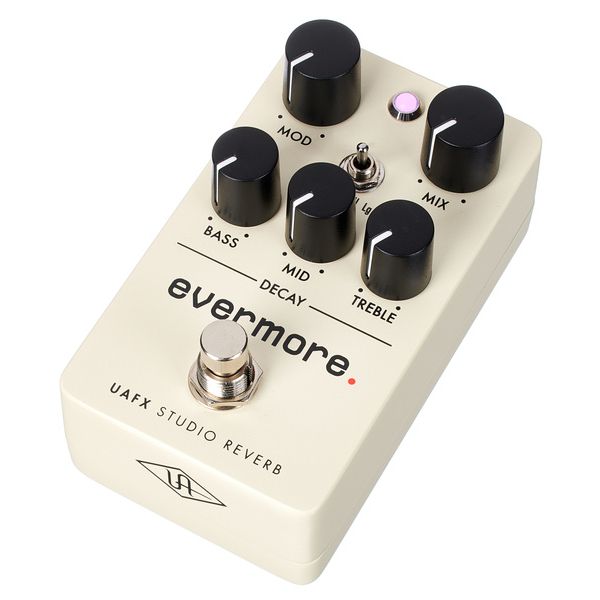
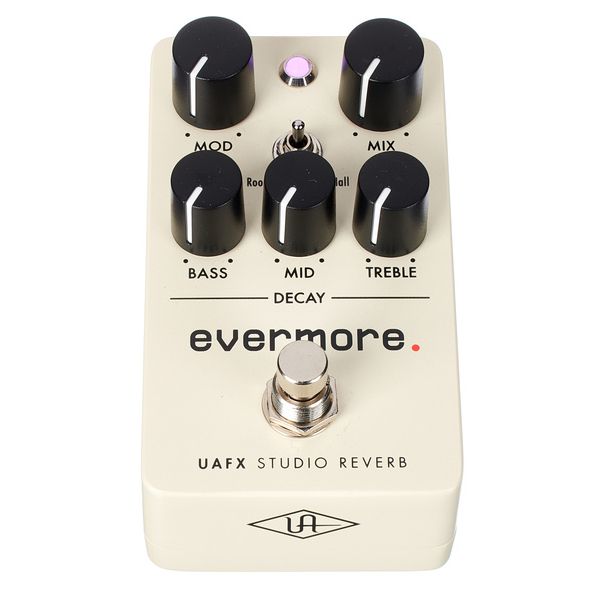
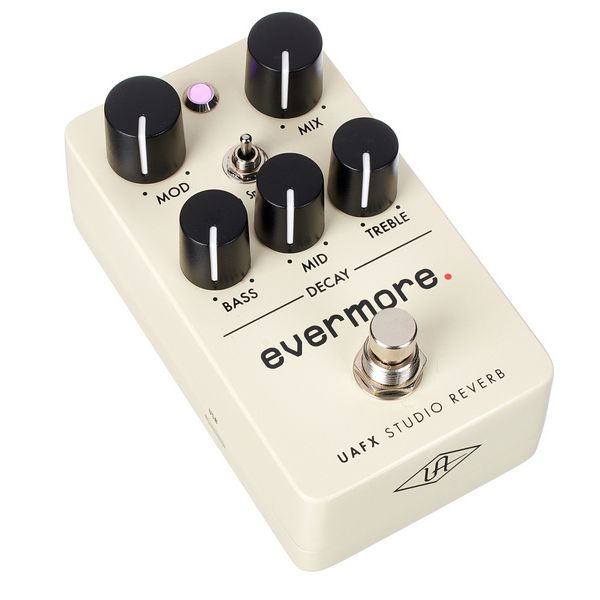



Universal Audio UAFX Promo
Between 01.07. and 31.08.2026 when you purchase a selected Universal Audio UAFX Pedals, after registration you will receive the Paradise Guitar Studio unlocked as a free Download.
Effect Pedal for Electric Guitar
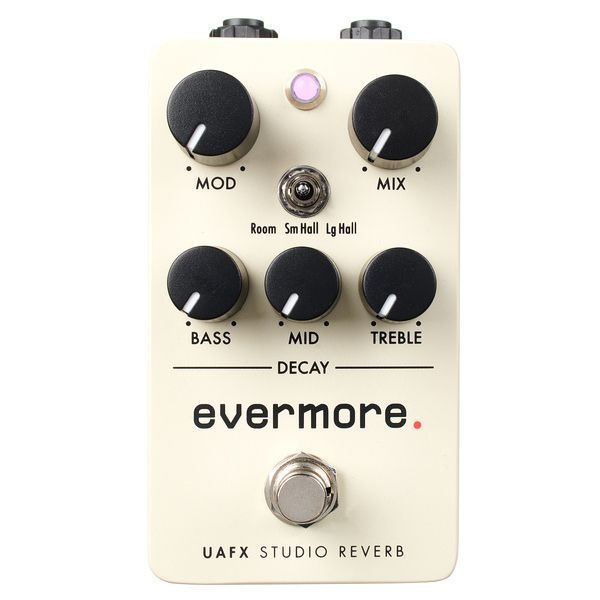
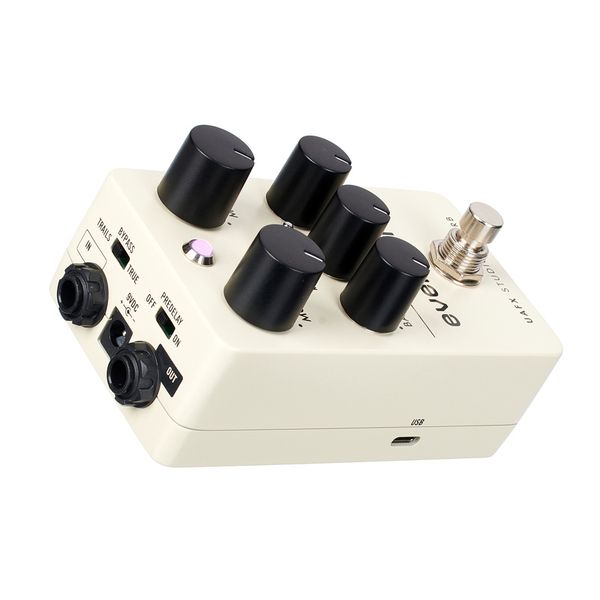
- With three reverb emulations
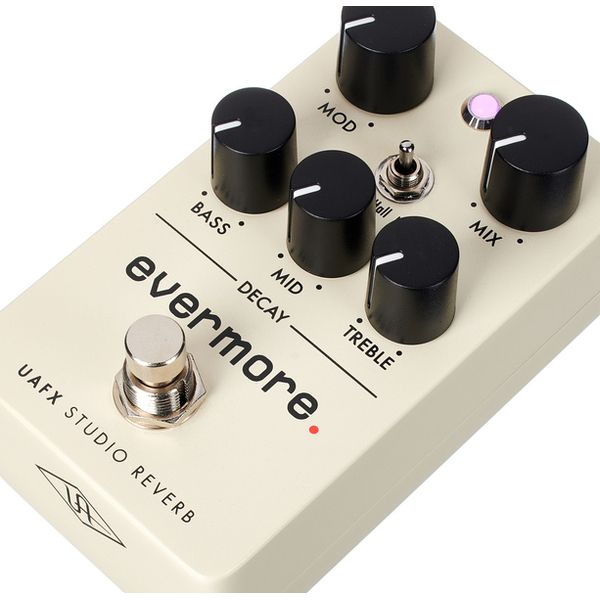
- Room, Small Hall and Large Hall "Vintage Digital" programs
- Mod control
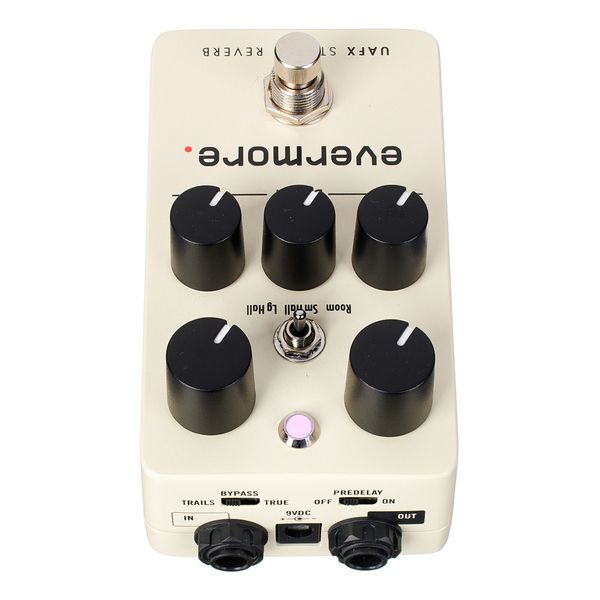
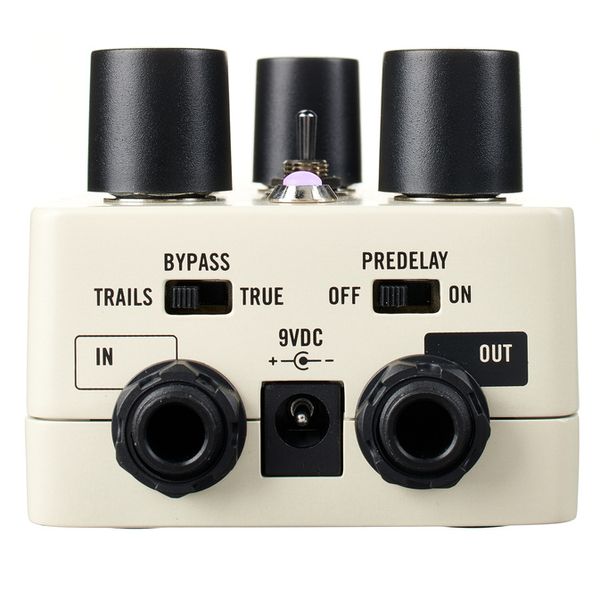
- Selectable True / Trails Bypass
- Short / Long Pre-delay: analogue Dry Through
- Input: 6.3 mm jack
- Output: 6.3 mm jack
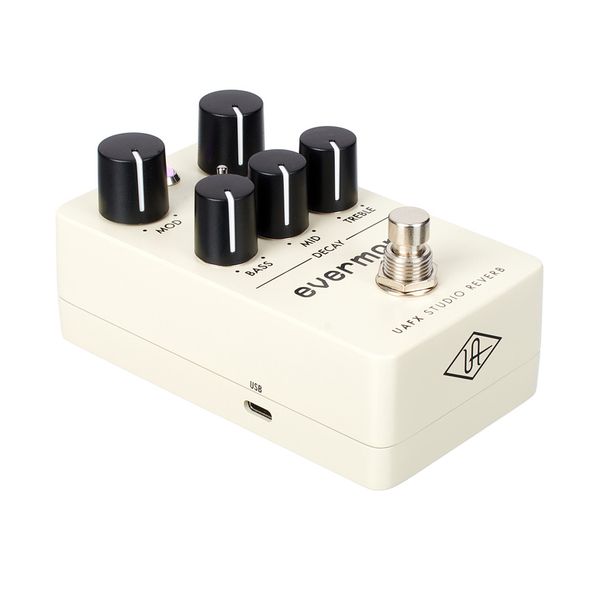
- USB Type-C connection for updates via computer
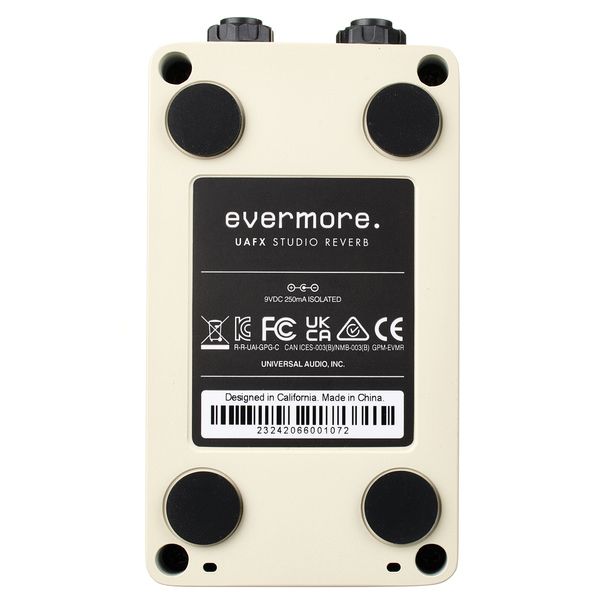
- Power supply via 9 V DC power supply unit with negative pole inside and min. 250 mA (not included, suitable power supply unit available under item no. 543322)
- Dimensions (W x H x D): 6.55 x 5.81 x 12.07 cm
- Weight: 0.295 kg
-
Available since August 2023
-
Item number 573265
-
Sales Unit 1 piece(s)
-
Analogue No
-
Battery Operation No
-
PSU included No
-
input/output configuration Mono in / mono out

Legendary dense reverb
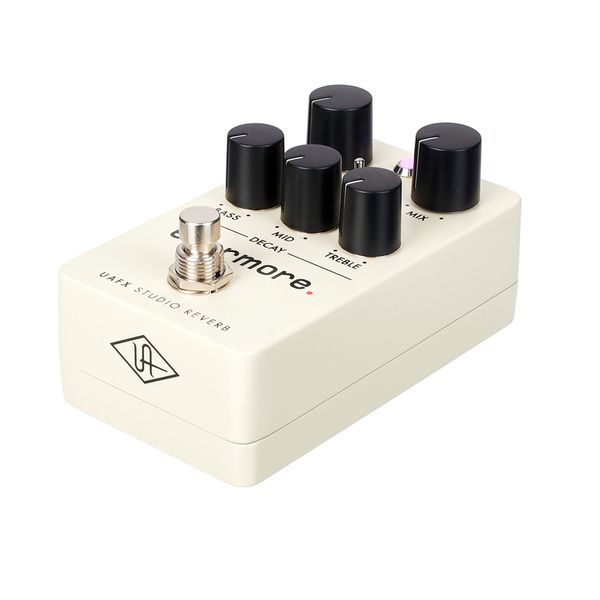
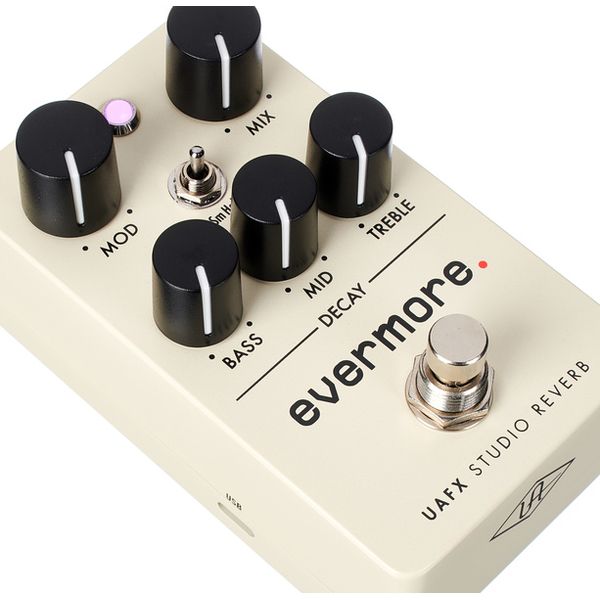
Behind the monophonic Evermore Studio Reverb sits a carefully crafted emulation of a classic studio unit, whose distinctive character has been translated into a compact pedal by Universal Audio. Three "224" algorithms are available - Room, Small Hall, and Large Hall - each offering its own spatial nuance, while the decay time can be shaped independently across low, mid, and high frequencies, giving the overall ambience a gentle sense of depth and dimension. Adjustable modulation adds a subtle liveliness to the reverb tail, and the mix control balances the dry and processed signals with natural continuity, creating a smooth blend of tone and space. A rear switch allows the addition of a slight pre-delay, and the pedal can operate in either buffered or true bypass mode, rounding out a design that aims for both authenticity and flexibility.

)
Musical in the best possible sense
The "224" model ranks among the earliest digital reverbs of the late 1970s and continues to retain a distinct sense of magic, with its dense and musical ambience merging effortlessly with the source signal to create a spaciousness that enriches the overall sound. With optimised input levels and impedances, the compact and robust pedal version is tailored for electric string instruments and performs reliably on stage. Beyond the selectable basic character of the simulated rooms, the reverb tail can be shaped swiftly through three frequency-specific decay controls, allowing a natural adjustment to the ongoing mix, while the modulation control contributes an added touch of animation to the final texture.
)
Studio upgrade for the stage
Universal Audio has packed the sound of a renowned studio classic into a compact pedal, carefully tailored for guitarists and bringing decades of refined, studio-quality reverb directly to the stage. Clean tones can be enveloped in a warm, spacious ambience, subtle modulation adds depth and richness, and solos gain body, presence, and clarity, making every performance more expressive. The effect is highly versatile, far surpassing the capabilities of any built-in spring reverb, and responds intuitively to adjustments. Frequency-specific decay controls allow the reverb tail to be shaped with precision across low, mid, and high ranges, ensuring that each guitar's unique character can be highlighted effortlessly while blending naturally within the overall mix.
)
About Universal Audio
Few manufacturers can draw upon a wealth of audio engineering experience comparable to that of Universal Audio. The company's founding father Bill Putnam, along with his friend Les Paul, have an admirable reputation as trend-setting music producers and developers of legendary analogue studio technology. Putnam recorded Chuck Berry, Muddy Waters, and Sarah Vaughan, and was Duke Ellington's favourite sound engineer. He developed the famous 1176 Peak Limiter and distributed the Teletronix LA-2A level amplifier. This earned him a posthumous "Technical Grammy Award" in 2000. In 1999, Putnam's sons, Bill Putnam Jr. and James Putnam, re-founded Universal Audio, transferring their father's analogue vision and craftsmanship to the digital music world. Their product range includes audio interfaces, dedicated DSP farms, and a variety of plug-ins, as well as analogue hardware devices.
Enhanced sound for amplifiers and recordings
The Universal Audio Evermore Studio Reverb is a seamless addition to any pedalboard, designed for effortless use while delivering studio-quality space and richness at the press of a button. It blends naturally with both clean and distorted tones, as well as with modulation and delay effects, enhancing the overall sound without overwhelming it. Ideally positioned in the effects loop of a guitar amplifier, it will also prove highly effective in situations without a traditional amp or when using speaker simulations, creating new sounds, or recording demos. The reverb tail can be shaped precisely, and the pre-delay option adds extra spatial depth, providing clear separation between the original signal and the adjustable effect whenever needed.
In the spotlight
Modelling – made by Universal Audio
Universal Audio stands at the forefront of modelling studio technology, effects devices, and tube amplifiers, meticulously capturing the essence of even the rarest originals. Every component of the original circuits is measured precisely, including specific values and characteristic curves, ensuring an accurate digital representation. This detailed approach creates a virtual model that faithfully reproduces the sound of the original, including the subtle variations introduced by its controls and switches. Depending on the device being modelled, additional defining elements and accessories are also incorporated, preserving the full character and functionality of the original equipment.
)
This is what customers who viewed this product bought

Accessories & matching items
Compare options
-
Universal Audio Reverb Pedals at a glance
-
Display Reverb Pedals from $ 140 - $ 180
-
Go to product group Reverb Pedals
-
Go to product group Guitar and Bass Effects
-
Go to product group Guitars and Basses
-
Show manufacturer details for Universal Audio
-
Universal Audio Guitars and Basses at a glance