To the page content

DI Box

  • Industry standard for microphone free amp acceptance
  • Integrated box simulation
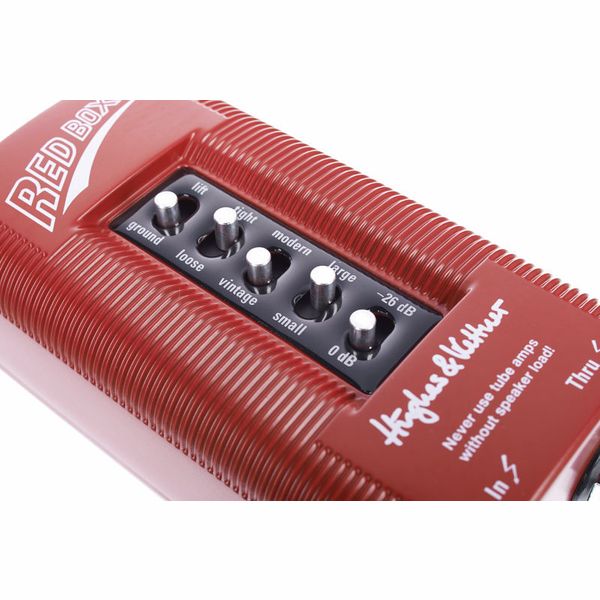
  • Three independently selectable filters for the sound adjustment of a 4x 12-cab simulation: Loose / Tight (response)
  • Large / Small (cabinet volume) and Vintage / Modern (speaker character)
  • Dimensions: 113 x 38 x 60 mm
  • Power supply via battery
  • Phantom power or power supply (not included): 10 mA, 9-15V AC or 9-24V DC
  • Weight: 200 g
  • Available since July 2013
  • Item number 313198
  • Sales Unit 1 piece(s)
  • Multi-Channel Unit No
  • Channels 1
  • Active / Passive Active
  • 19" No
  • Pad switchable Yes
  • Gnd/Lift switchable Yes
  • Powered by battery No
  • Speaker Simulation Yes
$48
The shipping costs are calculated on the checkout page.
In stock
1

Three new features for the fifth generation

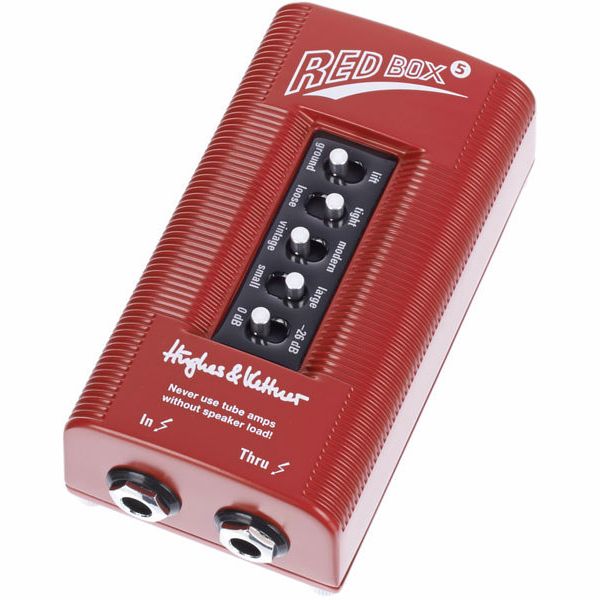
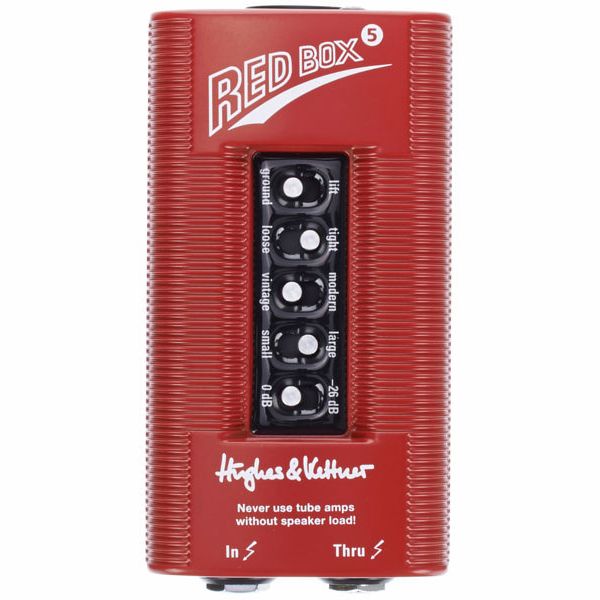
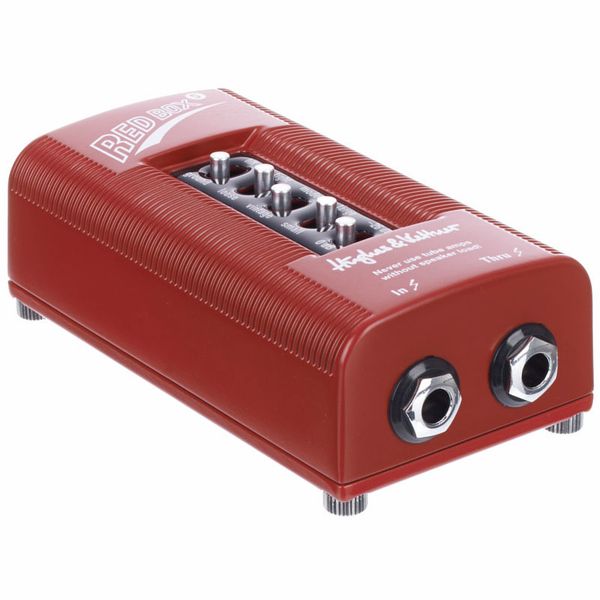
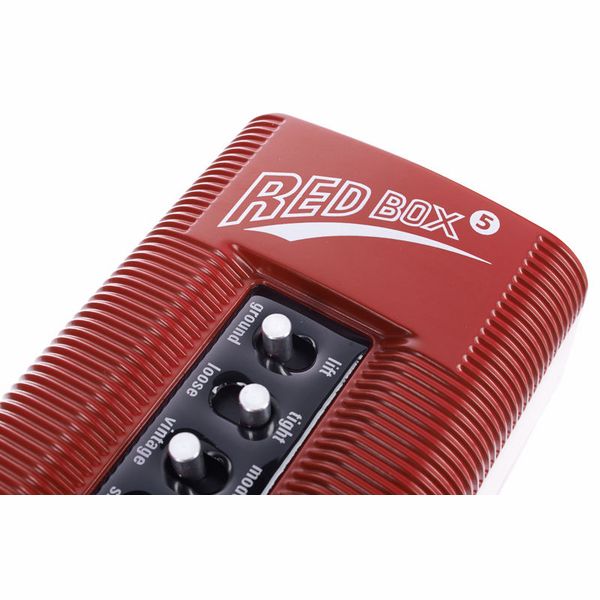
The legendary Hughes & Kettner Redbox is now in its fifth generation, and by now it's practically the industry standard for recording instrumental amplifiers without using a microphone – and without a lot of fuss. But the Redbox 5 is much more than just a simple DI box. In addition to the classic functions such as a ground/lift switch, the newest model here has three very interesting additional features: a tight/loose switch for the response, a modern/vintage switch for altering the sound being emulated, and even a small/large switch for selecting the size of the virtual cabinet. In addition, the levels can be set between 0dB and -26dB, which makes the Red Box 5 suitable for use with a huge range of instrumental amplifiers. Nothing has changed when it comes to this new generation's reliably robust construction, its characteristic red metal housing, and of course its compact size – all things that have helped cement this miniature classic's cult status.

Hughes & Kettner Redbox 5, front view with switches

Uncomplicated, flexible, effective

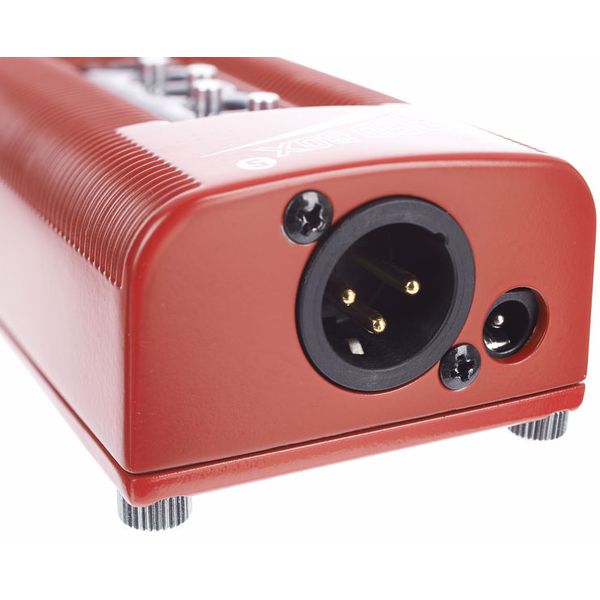
The Red Box 5 makes it easy to record amplifiers when a high-quality signal is important but there's no need – or perhaps no way – to actually mic up the amps. This little red box is simply connected between the amp's output stage and the cabinet: The balanced XLR output delivers the sound directly to the mixing console with remarkable clarity and presence. The Hughes & Kettner Red Box 5, like its predecessors, is just as suited to live use as it is when hooked up to a recording interface in the studio. It's powered by a 9V battery, although it's also possible to operate the Red Box on phantom power. In addition to its three filters, the adjustable characteristics of the virtual speaker, and of course its practical size, the Hughes & Kettner Red Box 5 also offers guitarists and bassists a number of other effective features, allowing them to adapt their instrument's output to the specific setting and circumstances.

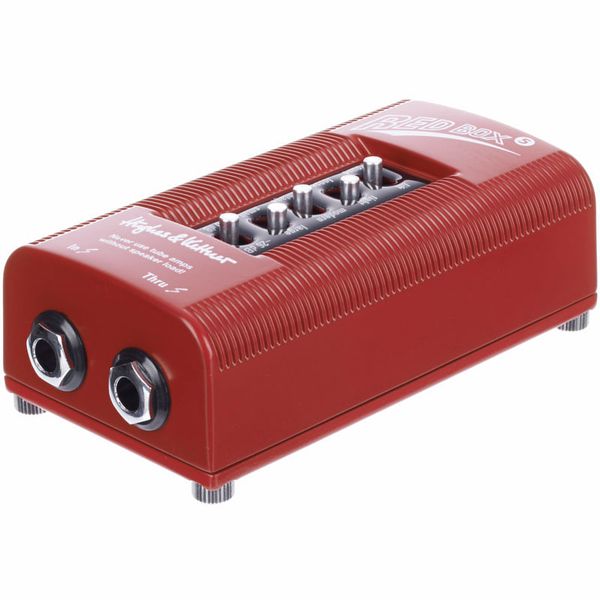
Hughes & Kettner Redbox 5, XLR output

Every sound engineer's got one

Because it does away with the need for complicated mic setups, while simultaneously guaranteeing a perfectly clean signal from the amplifier with zero background noise, most studio techs will have already been using one of Hughes & Kettner's Red Box models for years. The little red box is an indispensable fixture of PA work, and it can be found in more or less every well-equipped sound engineer's toolkit. With the addition of the three filters, the fifth generation of this evergreen also makes it possible to process the sound to such an extent that there's scarcely any need to use a mixer to further correct it, be it live or in the studio – a high-quality signal quality is guaranteed.

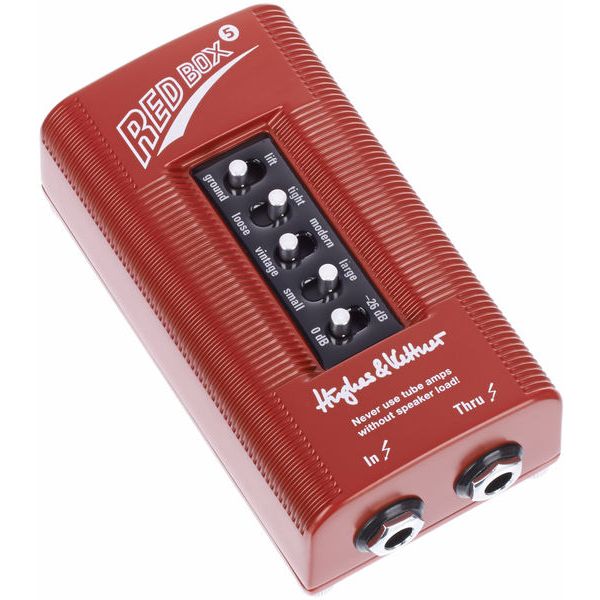
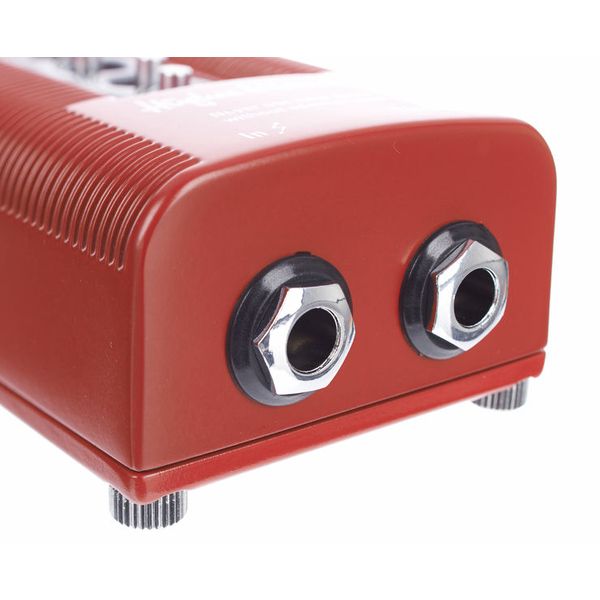
Hughes & Kettner Redbox 5, Input and Thru

About Hughes & Kettner

Hughes & Kettner is one of the largest German suppliers of guitar and bass amplifiers. Founded in 1984 by Hans and Lothar Stamer under the name Stamer Musikanlagen GmbH, the manufacturer from St. Wendel in the Saarland can boast of its numerous innovations. For example, its first venture into the field of guitar amplifiers, the ASR64 from 1986, was the first programmable amplifier in the world. Thanks to its compact format, the Cream Machine of 1987 can be counted among the very first mini tube amplifiers. Equally influential were the Red Box analogue speaker simulation, the first six-channel amplifier (the Triamp), and the ZenTera, which used modelling technology in an integrated amplifier even before Line 6.

Don't mic the amp

Used between the output and the cab of a guitar or bass amplifier, the Red Box 5 delivers an unaltered and balanced signal directly from the amp to the mixer. This means there's no need to mic the amp for live gigs, which saves an enormous amount of time and also makes the mixer's job much easier. Often, a clean DI signal like this is used to complement the microphone pickup of an amplifier, in order to isolate the room sound and combine it with the dry signal to give a satisfying overall sound. The Hughes & Kettner Red Box 5 is an excellent tool for this purpose too, both live and in the studio.

104 Customer ratings

4.6 / 5

features

sound

quality

59 Reviews

A
H+K Red Box amp to audio interface feed.
Anonymous 11.03.2015
This is a well made and flexible little unit. On face value being able to produce a microphone level out to an audio interface without using a microphone doesn't seem particularly exciting. If you already have a mic then you probably think this won't be much use to you. I think in the ideal world most of us would rather have the flexibility to swap mics and use different mic'ing positions but for many people mic'ing cabs throws up all sorts of problems with extraneous noise and poor room acoustics that can be an expensive problem to fix. If those issues are a problem for you then recording direct does make life easier.

In this configuration the Red Box receives the amp to speaker output, sends this on to the speaker cab via a through jack and using phantom power or a 9v battery sends an XLR balanced signal to your audio interface or to a mixer. With the addition of an attenuator this then facilitates recording valve amps when the rest of the family are in bed. Silent recording or practice.

My own use runs in two further configurations. First, I run the Red Box as a separate input whilst recording a track with a mic'ed cab. The purpose of this is twofold. It works as an insurance policy should the mic'ed signal pickup spillover and it also provides me with a reference signal when I am trying new mics and mic'ing positions.

Next, I use the Red Box as the feed for a Wet/Dry/Wet stereo effects setup. The Red Box sits in the speaker feed and sends it's signal to an fx processor that returns to the mixer and powered speakers or headphones. Long atmospheric reverbs or heavy repeating delays can be quite inspirational for the player but aren't great for recording because you can't undo a processed signal. In this setup though you can still mic up the dry speaker cab, record it into your DAW and non-destructively add fx later.

Lastly, and my favourite trick.... Got an amp you love that doesn't have reverb or an fx loop? Stick a Red Box on the output, run it into your pedalboard and back to a powered speaker situated next to the main cab and now that all original vintage amp doesn't need to be modified as it has it's own "post-output stage parallel fx". And even if that is just adding reverb onto a non-reverb amp it more than justifies the Red Box purchase price.

10
2
Report

Report

TV
Forget microphones - buy a Redbox
TC Vu 15.02.2014
I use the Redbox to give out the guitar in the rehearsal room via the PA. And that works just fine - even with a 1-watt practice amp (Blackstar HT-1 Combo). The small amplifier is in fact too weak to be mic´ed, via the Redbox there is more than enough output now, and without interference of the other instruments.
In our very small rehearsal room, we now have a well-balanced sound and a few square inches of extra space where there used to be the microphone in front of the guitar speaker. In live performances the soundman at the console is also more than pleased - much less work with the Redbox compared to a microphone job on stage. Clear buy recommendation not only for sound-engineers!
1
0
Report

Report

A
A great little box
Anonymous 30.01.2015
I bought this box having used a microphone in front of my amplifier for many years.
Many of the stages I play on are very small and it's very easy to trip over a mic stand in front of your amplifier so this looked like an ideal product.

It's a very compact unit and appears very well constructed.
It's very flexible to power as you can use phantom power, psu, or a battery (although the thumb screws are very hard to remove to access the battery).

It has quite an array of switches on the top, but it's actually quite easy to understand. 3 of the switches deal with tone and it's easy to tweak your sound to get the sound of a combo or stack with a modern or retro voicing.
What I didn't expect was the ability to use line level signals as well as speaker level and this has proved very useful to allow recording directly from my pedalboard.

Since owning it I have used the Redbox live and in the studio and I've been extremely impressed. The sound is dynamic and sounds convincingly like a real speaker. It does sound very "dry", but after adding a subtle reverb you would be hard pressed to tell the difference between this and a well miced amplifier.

I now keep my unit permanently hooked up in the back of my combo.
1
0
Report

Report

Ž
Žikac 14.02.2020
Great quality. Nice manufactured.
0
0
Report

Report