


Behringer JT Mini

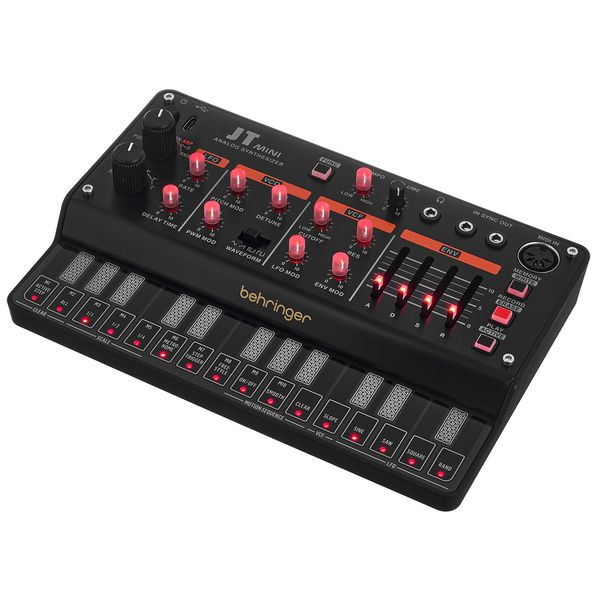
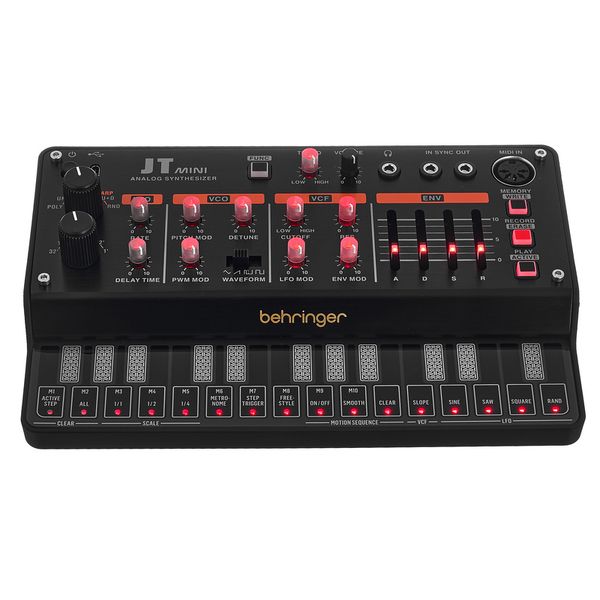
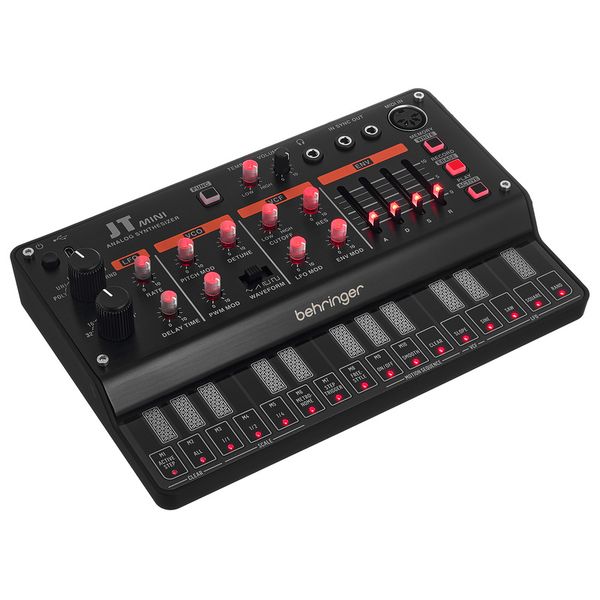
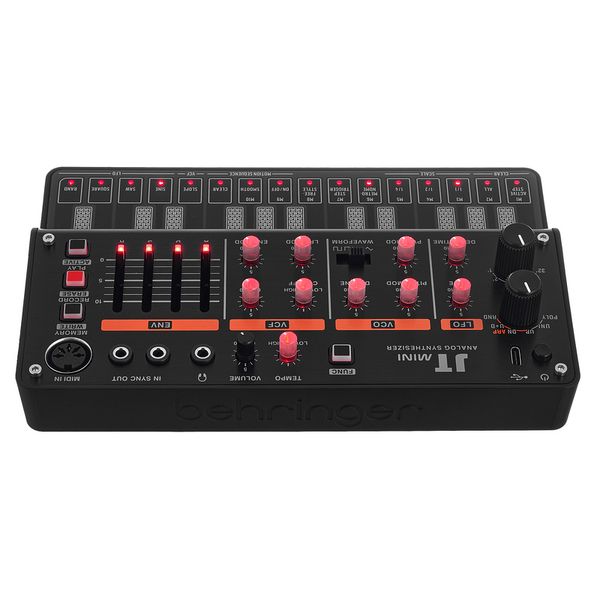
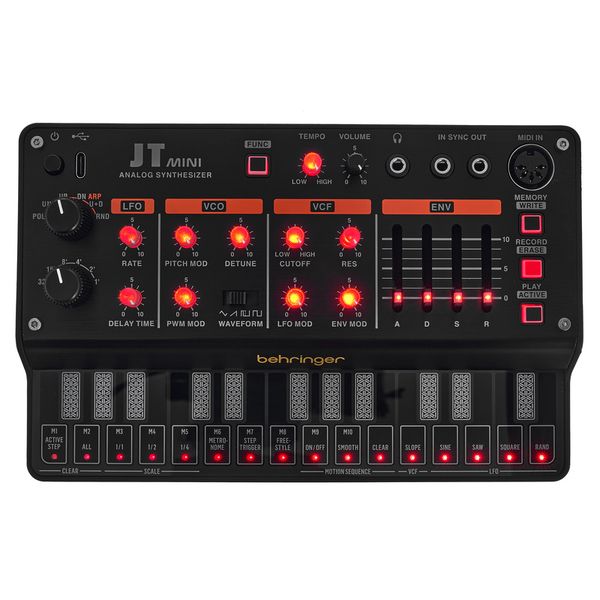
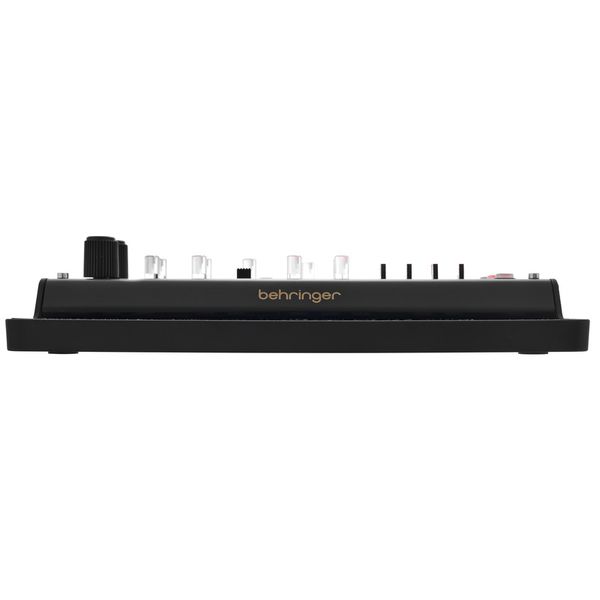
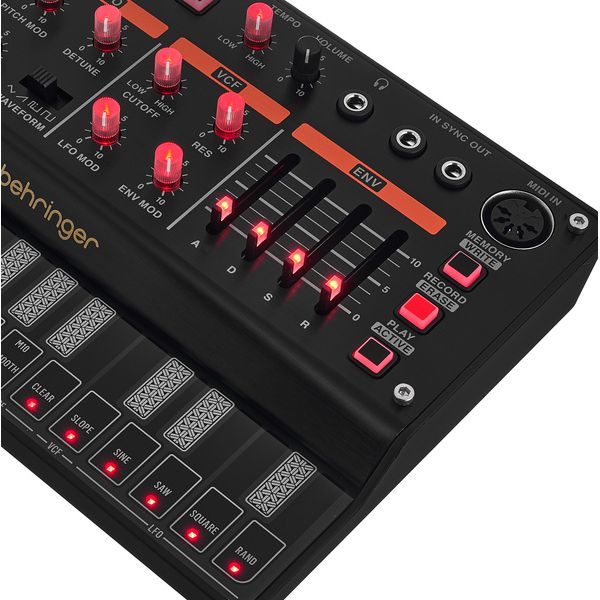
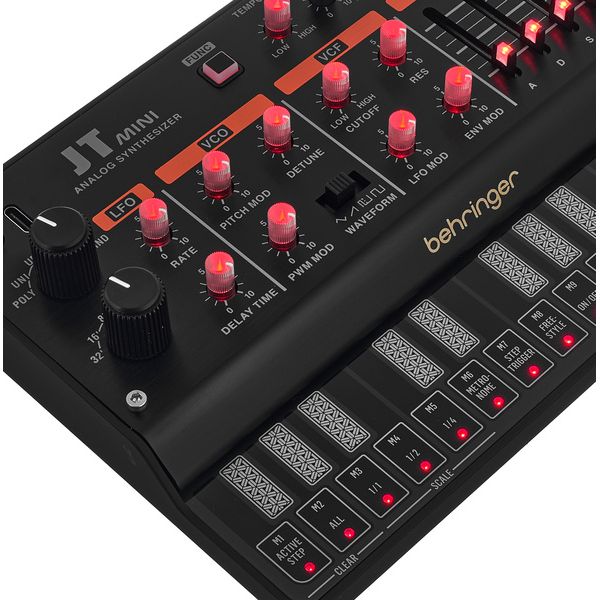
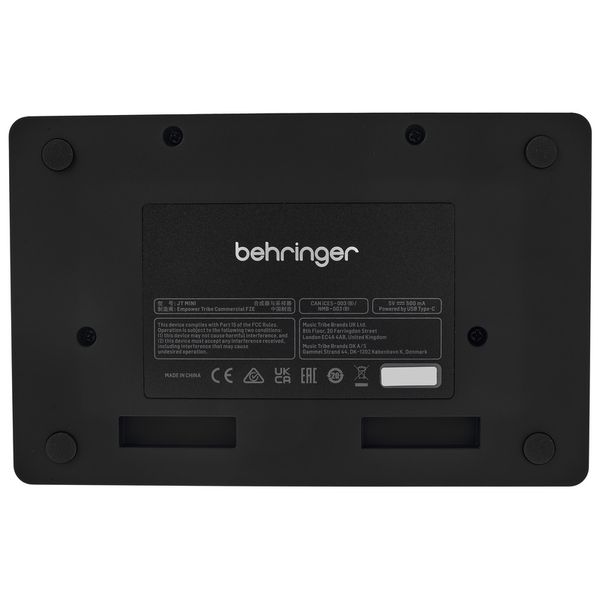


Analogue Polyphonic Synthesizer
- With 3 VCOs, Multi-Mode VCF, Arpeggiator and 16-Step Motion Sequencer
- 27 touch-sensitive buttons
- Pure analogue signal path based on authentic VCO, VCF and VCA design
- VCOs with 4 selectable waveforms: Sawtooth, triangle, square and pulse waveforms
- Pulse width modulation
- Vintage multimode filter with resonance
- Filter switchable between 2-pole and 4-pole
- Play modes: Poly, Unisono and Arpeggiator
- 16-step motion sequencer with 8 memory locations and parameter recording
- LFO with saw, triangle, square and random waves for vibrato, tremolo and wah-wah effects
- Power supply via USB-C connection (smartphone, power bank, computer or USB power supply unit)
- Stereo headphone output: 3.5 mm mini jack stereo
- Sync input and output: 3.5 mm mini jack
- MIDI input
- USB-C
-
Available since March 2025
-
Item number 607143
-
Sales Unit 1 piece(s)
-
Number Of Keys 27
-
Touch-Sensitive No
-
Aftertouch No
-
Split Zones No
-
Modulation Wheel No
-
Number of simultaneous Voices 3
-
Sound Engine Analogue
-
Storage Medium Internal
-
USB-port Yes
-
Effects 0
-
Arpeggiator Yes
-
Number of Analog Outputs 1
-
Digital Output No
-
Display No
-
Pedal Connections None
A dwarf Jupiter
Behringer has transformed the gas giant Jupiter into a pocket-sized dwarf planet. While the JT Mini is clearly inspired by one of the most iconic flagship synthesizers, it is by no means a clone – its ultra-compact form factor makes that much clear. The analogue circuitry and vintage aesthetic are without doubt reminiscent of its famous predecessor, yet this little synth packs far more power than its size suggests. Polyphonic with three voices, the Behringer JT Mini features a multi-mode filter, a versatile arpeggiator, and a motion-capable step sequencer, making it equally suited to minimalist setups or full studio productions. Whether sketching ideas on the go or crafting polished tracks, the JT Mini delivers big analogue sound in a tiny package.

)
Analogue engine with three VCOs
The JT Mini's sound engine is based on three voltage-controlled oscillators, each offering four selectable waveforms – saw, triangle, square, pulse – plus pulse-width modulation for deeper tonal shaping. In poly mode, the synth provides three independent paraphonic voices; in unison mode, all three VCOs can be detuned for thick, monophonic leads and basses. The filter section blends low-pass and high-pass response and allows soundsmiths to switch between 2-pole (12 dB) and 4-pole (24 dB) slopes for further flexibility. A single envelope and LFO (featuring saw, triangle, square, and random waveforms) modulate the VCO, VCF, and VCA. The 16-step sequencer records both notes and knob movements for dynamic modulation. An arpeggiator with multiple modes adds rhythmic variety, while Sync I/O and MIDI provide integration with external hardware or DAWs.
)
Fits into any setup
Compact, versatile, and budget-friendly, the Behringer JT Mini makes an ideal entry point into synthesis. Its streamlined, hands-on interface offers musicians immediate access to key parameters, delivering powerful analogue pads, leads, and basses with ease. Its feature set is well judged – neither overly simple nor unnecessarily complex, making it suitable for beginners and experienced users alike. For crowded desktop or tabletop setups, the JT Mini is both practical and musically capable. It runs on USB power (via power bank, smartphone, or laptop) and integrates seamlessly with grooveboxes, sequencers, or other compact gear. As a polyphonic analogue synth, it adds vintage-flavoured breadth and warmth to any small-scale setup.
)
About Behringer
The company, which was founded in Germany by Uli Behringer and now manufactures its products in China, has been known for affordable and great-value equipment since its very first product, the Studio Exciter F. An array of mixing consoles (such as the Eurodesk MX8000), signal processors, and later sound amplification and monitoring equipment, has made it possible for countless musicians to fit out their home studios, practice rooms, and mobile PAs within budget limits that were previously unthinkable. The acquisition of other companies, including Midas, Klark Teknik, and TC Electronic, meant that new product groups were added - and also resulted in the technical expertise of these companies being incorporated into product development.
Sketching ideas on-the-go
As a mobile synthesizer, the JT Mini is an ideal tool for developing basslines, hooks, and leads while on the move – whether relaxing in the park, commuting, or between sessions. All it requires is a power bank and headphones. The two-octave touch-sensitive keyboard allows users to input melodies into the sequencer and record real-time tweaks such as filter sweeps and modulation. Once in the studio, these sketches can be recorded as audio tracks in a DAW and expanded into full arrangements. The JT Mini's three-voice polyphony can even be extended by layering larger chords across multiple tracks – a studio trick dating back to the 1970s that remains just as effective today!
)
