


KRK Kreate 3

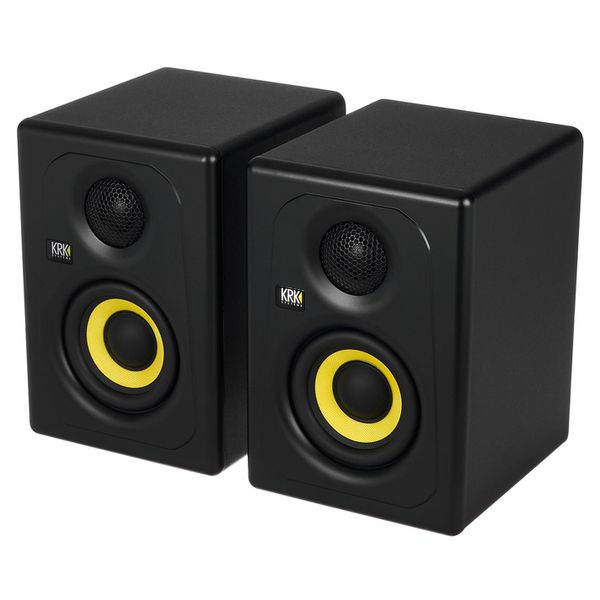
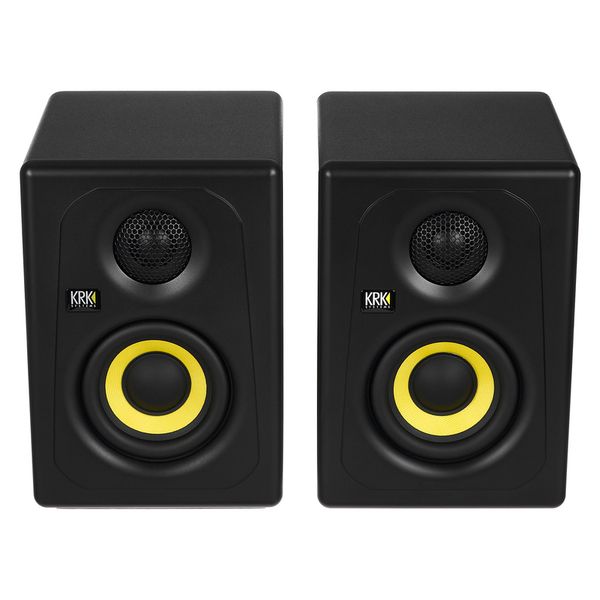
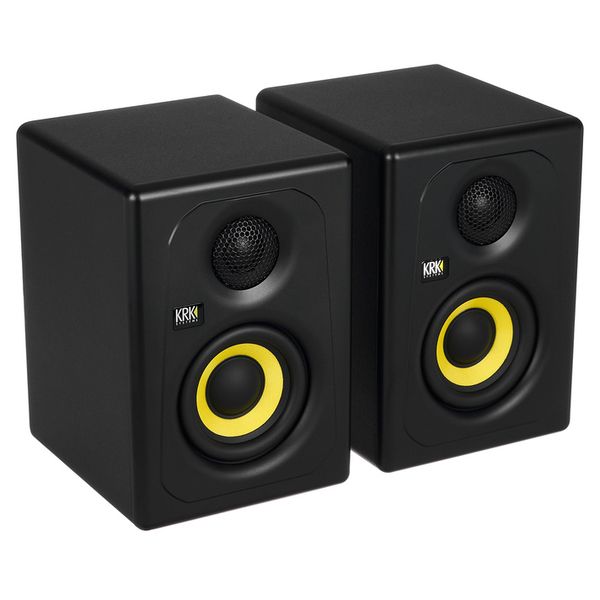
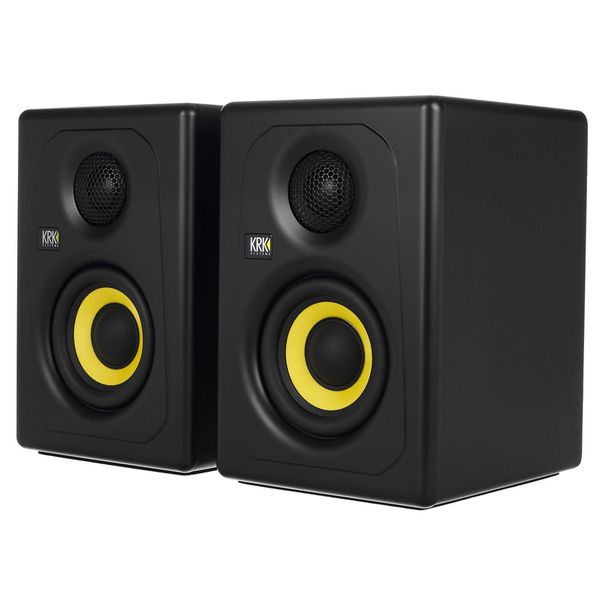
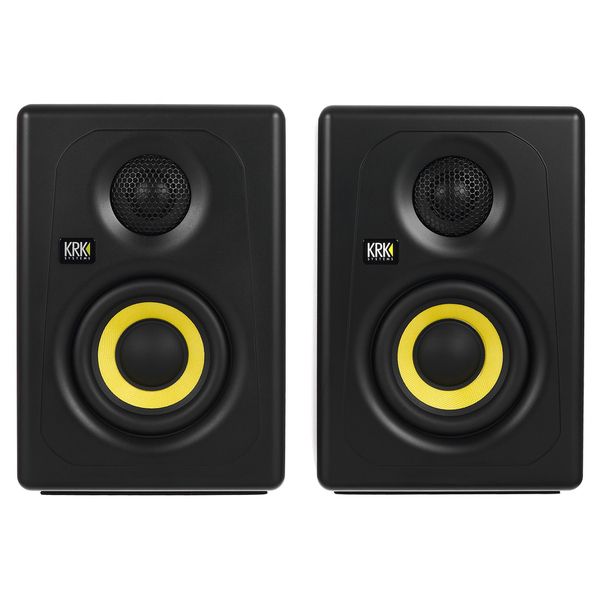
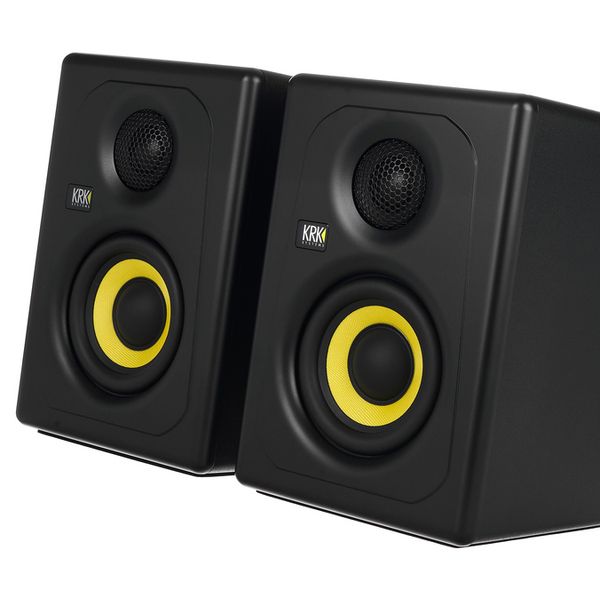
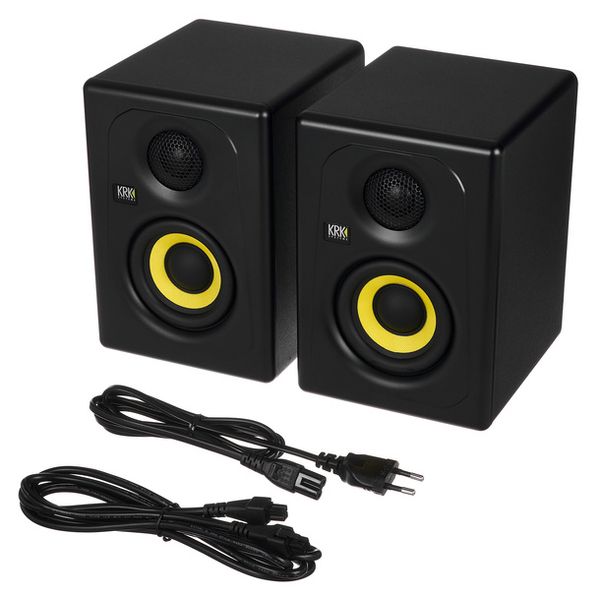


Active Nearfield Studio Monitor
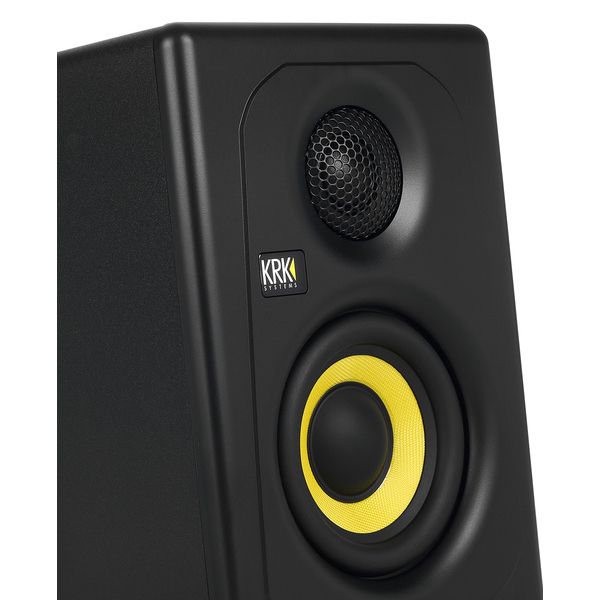
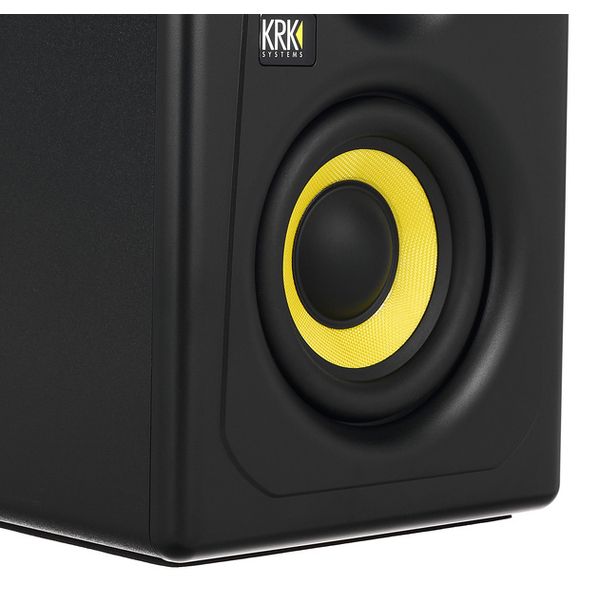
- Equipped with: 3.5" glass fibre aramid woofer, 1" fabric dome tweeter
- Power: 66 W total
- Frequency range: 70 - 33.000 Hz
- max. SPL: 104 dB
- Class-D amplifier
- Adjustable HF/LF
- Level control
- NF shelf filter
- Bluetooth Classic 5.3 A2DP
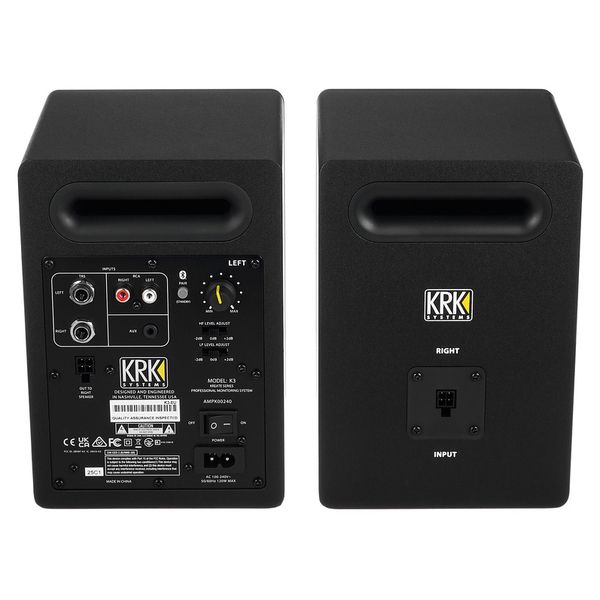
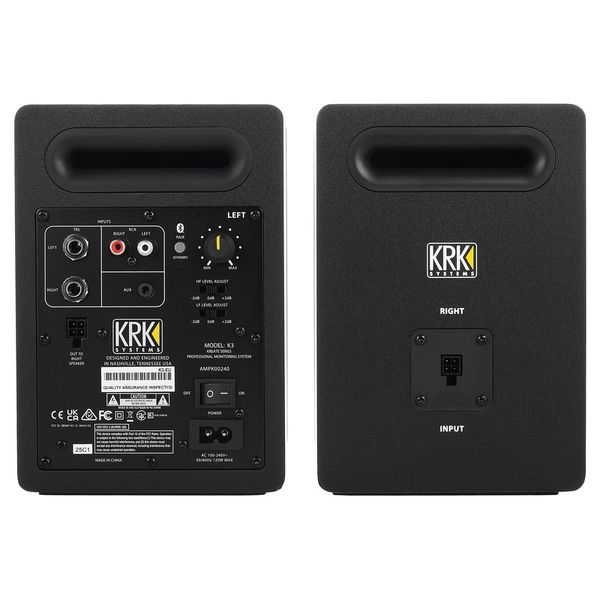
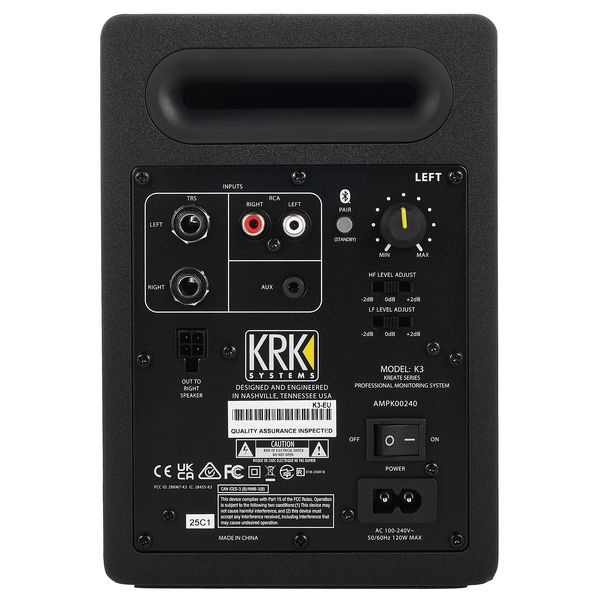
- Line inputs: 6.3 mm balanced jack, RCA, 3.5 mm stereo mini jack
- Dimensions (W x H x D): 140 x 205 x 159 mm
- Weight: 4.5 kg
- Contents of delivery: 1 pair
-
Available since June 2025
-
Item number 603241
-
Sales Unit 1 pair(s)
-
Woofer Size Class 3"
-
Number of Ways 2
-
Speaker Housing - Woofer System Bass reflex
-
Coaxial System No
-
Power per Unit 66 W
-
Frequency range 70 Hz – 33000 Hz
-
Analogue XLR Input Yes
-
Analogue Input (Jack) Yes
-
Analogue Input (Mini Jack) No
-
Analogue Input (RCA) Yes
-
Digital input No
-
Manual Sound Adjustment Yes
-
DSP Room Correction none
-
Woofer 3,5"
-
Tweeter 1"
-
Height 205 mm
-
Width 140 mm
-
Depth 159 mm
-
Weight 5,44 kg
-


Small, yellow, and loud
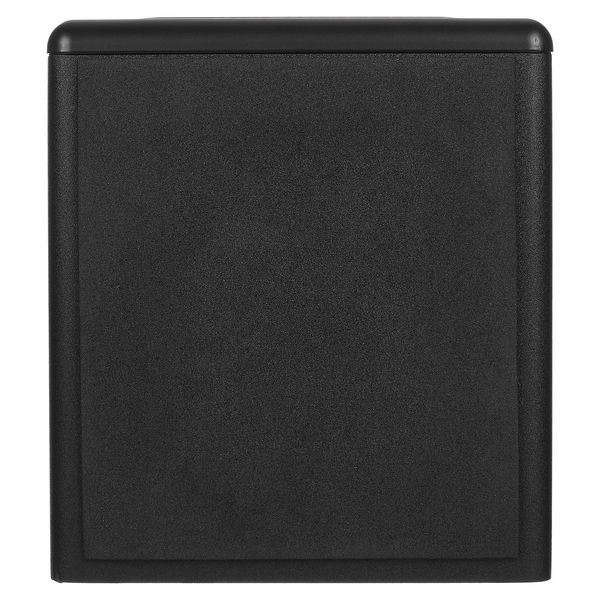
The KRK Kreate 3 comprises a pair of compact two-way studio monitors with Bluetooth functionality and an integrated bass reflex port, featuring a 3.5" driver with a yellow composite diaphragm made of glass fibre-reinforced aramid for woofer and midrange duties, paired with a 1" fabric dome tweeter that sits safely behind a perforated metal grille. The characteristic combination of low mass, high rigidity, and internal damping of the yellow KRK diaphragm delivers a clear and well-controlled response in the low and mid frequencies, which is reflected, among other aspects, in the notably smooth group delays below 100Hz. All of the active electronics are housed in the left speaker, while the right unit receives its signal through the passive connection cable included in the package, creating a tidy and efficient setup.

)
Even the bats will hear it
The KRK Kreate 3 reaches high frequencies up to 33kHz, a range beyond human hearing that nonetheless contributes to a particularly clean, precisely defined reproduction in the audible band up to roughly 21kHz. The bass response extends to around 70Hz, a limit set by the compact housing, yet still gives a sense of weight through a focused boost around 100Hz that adds noticeable low-end presence. An integrated Class D amplifier delivers 32.5W per speaker, enabling the system to reach a remarkable sound pressure level (SPL) of 104dB at full volume, which is exceptionally high for monitors of this size. The KRK Kreate 3 is offered exclusively as a matched pair.
)
Bluetooth-ready
The KRK Kreate 3 will suit anyone seeking compact stereo monitoring at an accessible price, offering sound control tailored for near-field use and performing best at listening distances of roughly one metre. Two shelving filters allow gentle adaptation to match the acoustics of the room, with bass and treble adjustable by ±2dB and applied simultaneously to both speakers. The left speaker provides a flexible range of connections, including balanced 6.3mm TRS inputs for audio interfaces, an unbalanced RCA input for HiFi gear, and a 3.5mm AUX input for quick, wired use with mobile devices. The ability to stream audio via Bluetooth in turn adds a convenient, modern option that works seamlessly with smartphones and other wireless sources.
)
About KRK
The KRK Systems brand, today a subsidiary of US guitar manufacturer Gibson, has existed since 1986, and has acquired as many years of experience in the construction and design of studio monitors. Today, KRK's product range has extended to include subwoofers and headphones, in addition to their near- and midfield monitors. KRK adepts include such illustrious names as Mark "Spike" Stent (Ed Sheeran’s sound engineer), Grammy winner Ed Cherney, rock producer Jacquire King, rock and metal producer Ulrich Wild as well as trance DJ Armin van Buuren.
Impressive connectivity
The KRK Kreate 3 provides flexible connection options that make it easy to integrate into a wide range of living or working environments, fitting especially well into compact or minimalist setups often used by YouTubers and podcasters. As an honest monitoring speaker for video editing or as a straightforward desk speaker, the KRK Kreate 3 provides a bass response that is sufficient for many everyday applications while remaining clear and controlled. For users who produce electronic music or regularly work with bass-heavy material, adding a subwoofer becomes a sensible choice, as it not only relieves the compact Kreate 3 in the lower frequencies but also adds a significant downward expansion to the overall reproduction range, creating a fuller and more balanced system.
In the spotlight
Group delay
In acoustics, "group delay" refers to the time offset with which specific frequency components pass through a system such as a studio monitor, describing in milliseconds how much a given range lags behind and serves as an indicator of the system's temporal precision. In the low-frequency region, a high group delay of more than about 20ms below 100Hz can cause reproduction to feel blurred or slightly muddy, as bass elements no longer align cleanly with the rest of the signal. Ideally, group delay should remain low and as even as possible across the spectrum so that all parts of a signal reach the listener at virtually the same moment, preserving a clear and well-defined overall sound.
)
This is what customers who viewed this product bought
Accessories & matching items


Compare options
-
KRK Active Nearfield Monitors at a glance
-
Display Active Nearfield Monitors from $ 140 - $ 180
-
Go to product group Active Nearfield Monitors
-
Go to product group Studio Monitors
-
Go to product group Studio and Recording Equipment
-
Show manufacturer details for KRK
-
KRK Studio and Recording Equipment at a glance