


Shure MV7 Plus White

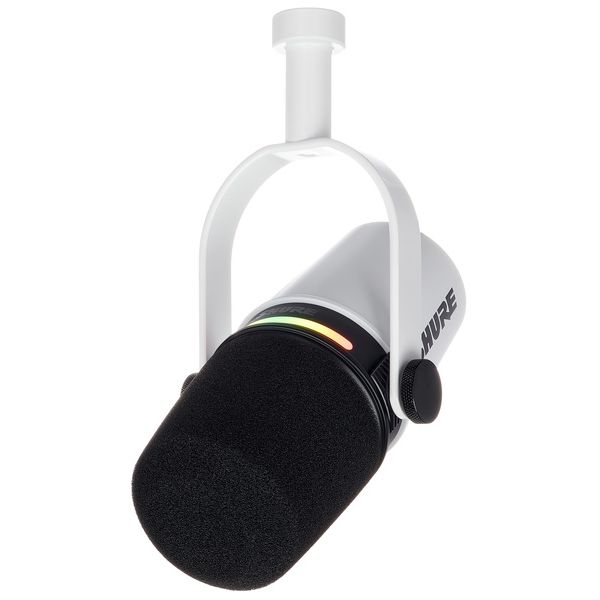
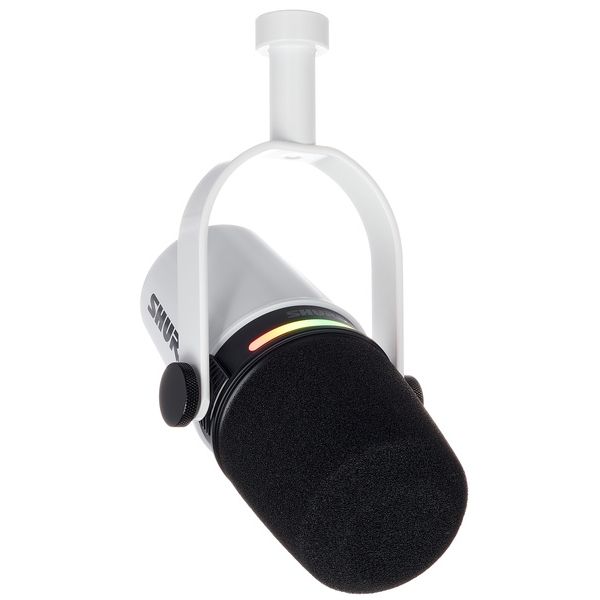


Dynamic Podcast Microphone
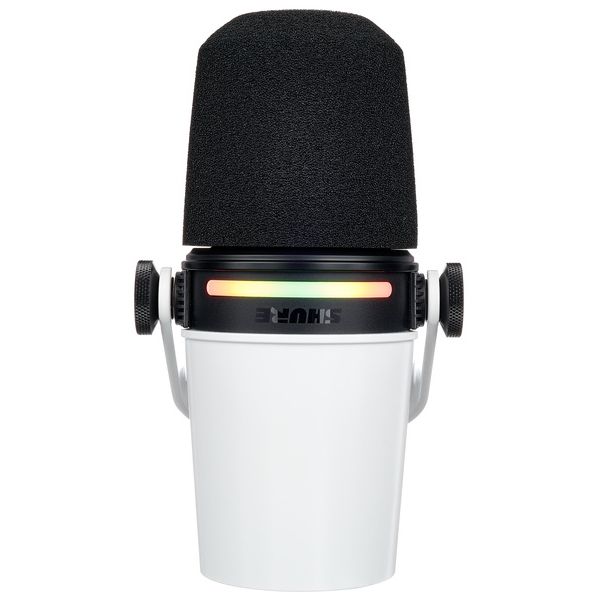
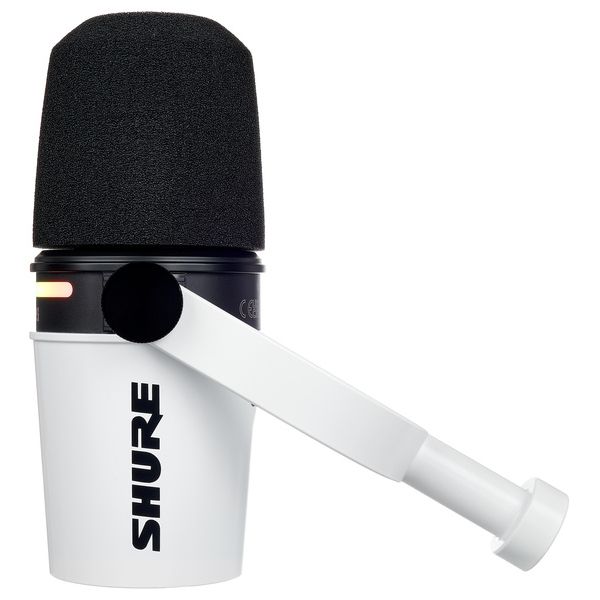
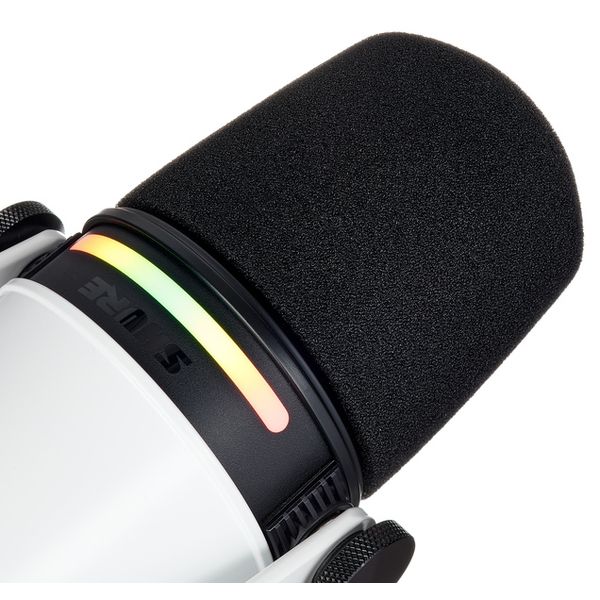
- Multicoloured LED strip functions both as a mute switch as well as displaying gain or monitoring levels
- ShurePlus MOTIV desktop application allows users to save their own presets or enable automatic gain, compression, reverb, real-time denoiser and EQ presets
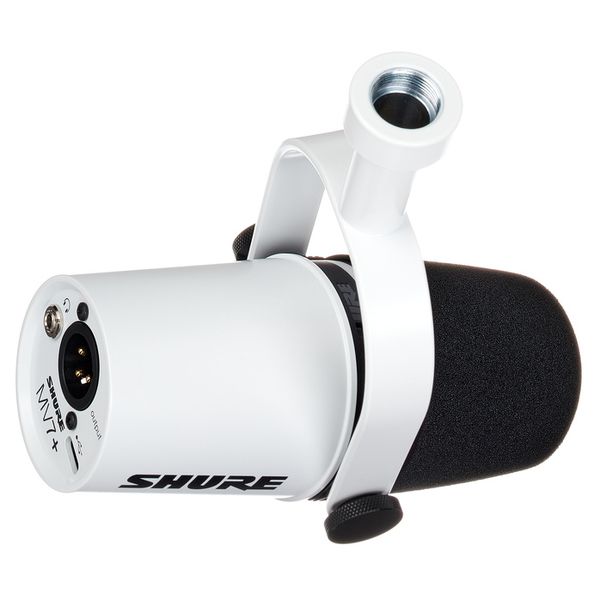
- Internal shockmount
- Digital Popper Stopper eliminates hard plosive sounds to improve audio quality
- Compatible with PC / Mac / iPad / Android
- Polar pattern: cardioid (unidirectional)
- A/D converter: 16 or 24 bit, 44.1 or 48 kHz
- Frequency range: 50 - 16,000 Hz
- Adjustable gain range: 0 to +36 dB
- Sensitivity: XLR -55 dBV/Pa (1.78 mV) at 1 kHz, USB-C -33 dBFS/Pa at 1 kHz (at minimum gain, flat mode 1 Pa = 94 dB SPL)
- USB Maximum SPL 128 dB
- DSP modes (presets): near/far, dark/natural/bright
- Power requirement: Power supply via USB or lightning connector
- MFi certified
- XLR output impedance: 350 Ohm at 1 kHz
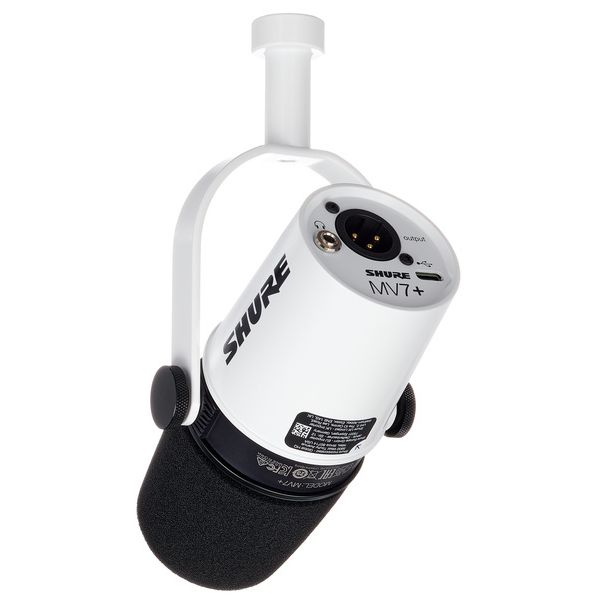
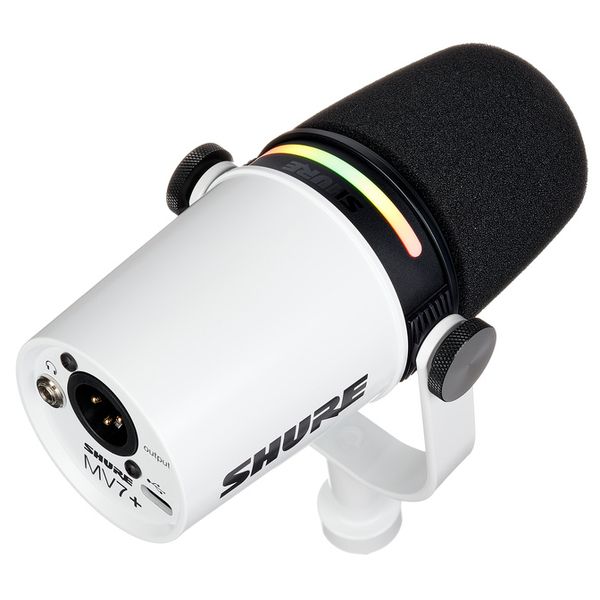
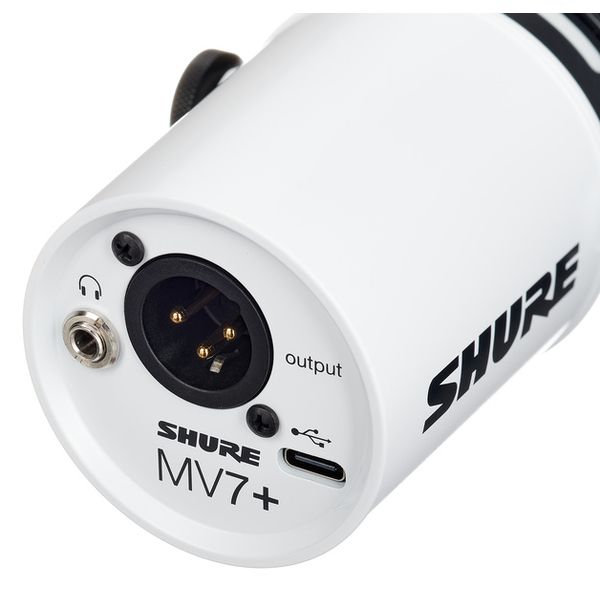
- XLR or USB-C output
- Headphone output: 3.5 mm mini jack
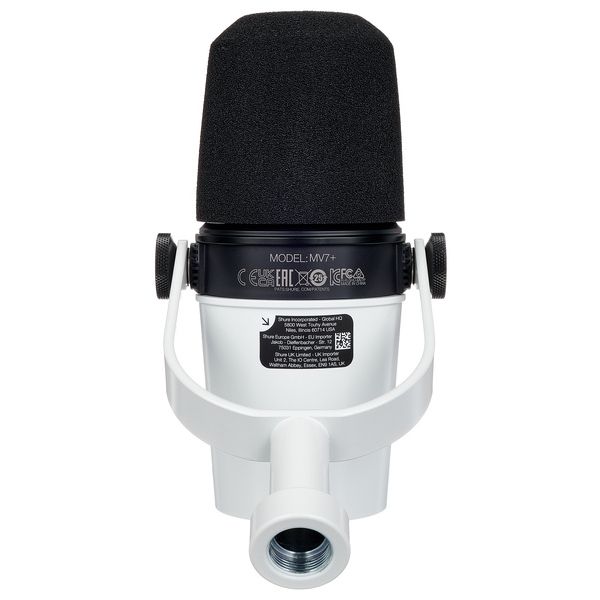
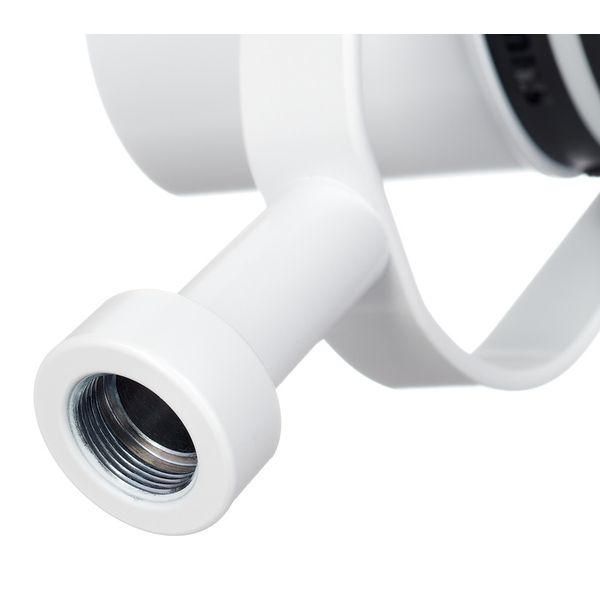
- 5/8" Thread
- Dimensions microphone in bracket (H x L x D): 164 x 207 x 90 mm
- Weight: 573 g
- Colour: White
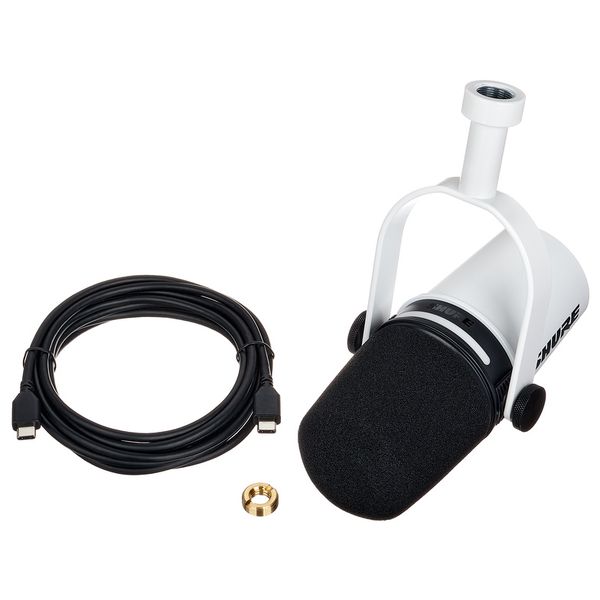
- Includes holder and 3 m USB-C to USB-C cable
-
Available since June 2024
-
Item number 590403
-
Sales Unit 1 piece(s)
-
On/Off Switch No
-
Polar Pattern Switchable
-
Phones Output Yes

Two mics in one
The Shure MV7+ is a dynamic cardioid microphone that works both as a standard analogue XLR mic and as a USB-C digital mic, while expanding on the original MV7 with new features such as a customisable LED touch panel, improved Auto Level Mode, and a new DSP stack including a Digital Popper Stopper and Real-time Denoiser. In analogue mode the MV7+ behaves like any standard dynamic moving-coil mic, feeding a mic preamp or interface. In USB-C mode, the internal AD converter handles amplification and conversion without the need for an interface, connecting directly to Mac, PC, iOS, or Android. Visually and sonically, the family resemblance to the SM7B is deliberate – capturing a similar broadcast-style voicing in a smaller, dual-output body.

)
Dynamic mic, dynamic functions
In analogue mode, the MV7+ connects via XLR to a mic preamp or audio interface – the XLR signal is passive and unaffected by software settings. For digital use, the USB-C output handles amplification and analogue-to-digital conversion internally, operating at 24-bit/48kHz. Both outputs are active simultaneously: A processed digital stream can run over USB-C while the XLR carries the unprocessed analogue signal. The 3.5mm headphone output provides latency-free monitoring of the USB signal. Its 50Hz–16kHz frequency range is tuned for the human voice, rather than full-range instrument capture, with a 128dB max. SPL handling the loudest close-miked vocal without clipping. At 573.5g, the MV7+ has the reassuring heft of a broadcast desk mic.
)
Very vocal
The MV7+ is built for podcasters, streamers, and musicians who want broadcast-quality vocal capture with the option to run analogue and digital paths in parallel. Auto Level Mode handles gain in real time, adjusting for distance, volume, and position, so levels stay consistent whether the talent leans in for emphasis or sits back. The trade-off inherent to any voice-optimised dynamic is reduced sensitivity and a narrower top end than a condenser – the MV7+ sounds best at close range and is tuned for spoken and sung vocals, not recording acoustic instruments. For full-range capture, condenser microphones are generally favoured; for voice work where consistency, presence, and feedback rejection matter, the MV7+ is the more forgiving choice.
)
About Shure
The American company Shure began developing microphones during the early 1930s and is one of the pioneers of the audio engineering sector. Models such as the 55 Unidyne – known to many as the "Elvis microphone" – and the SM57 and SM58 which appeared in the mid-1960s are still ubiquitous in live sound production today. They enjoy cult status among musicians and technicians alike. In the 1990s, Shure introduced the first wireless microphones and in-ear monitoring systems and became a market leader in this field. In addition to microphones, Shure offers a wide range of earphones and headphones for studio and live use, as well as various accessories.
Mix, monitor, stream
The simultaneous XLR + USB-C output is a practical solution for creators who need both a broadcast feed and a backup recording path from the same mic – for example, sending an uncompressed signal to a DAW via XLR while streaming a processed signal live over USB. The MOTIV Mix desktop app provides access to the full DSP toolkit: a tone slider (Dark, Natural, Bright), Real-time Denoiser for fan hum and room noise, Digital Popper Stopper for plosive control, a high-pass filter at 75Hz or 150Hz, and three reverb types (Plate, Hall, Studio) for music recordings. Manual mode offers direct control over gain (0-36dB), compressor, and limiter. The LED touch panel is configurable across 16.8 million colours, with Live mode acting as a real-time level meter. The MV7+ is PS5-compatible and recognised as a standard audio device in OBS Studio. A 3m USB-C to USB-C cable is included.
Accessories & matching items


Compare options
-
Shure Broadcast Microphones at a glance
-
Display Broadcast Microphones from $ 250 - $ 350
-
Go to product group Dynamic Allround Microphones
-
Go to product group Broadcast Microphones
-
Go to product group USB/Podcast Microphones
-
Go to product group Microphones
-
Show manufacturer details for Shure
-
Shure Microphones at a glance