


Neural DSP Quad Cortex Mini




Capture Kings Cali 90s Dual RF for free!
During the period of 09-09 up to and including 21-10-2026 when you purchase a Neural DSP Quad Cortex, Quad Cortex Mini or Nano Cortex, you will receive two free Capture Packs worth EUR 54,80. Once your order has been dispatched, you will automatically receive the activation code by email. There are no costs involved. Capture Kings brings the sound of your favourite amps straight into the digital world – with high-quality Amp Captures exclusive to Neural DSP. By guitarists, for guitarists.
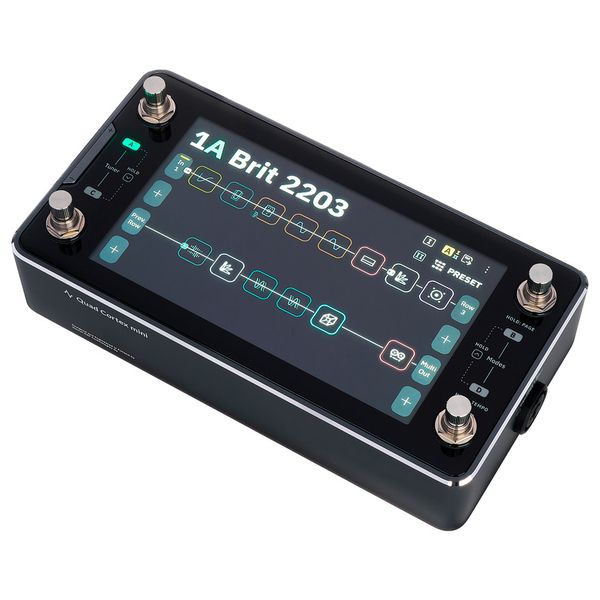
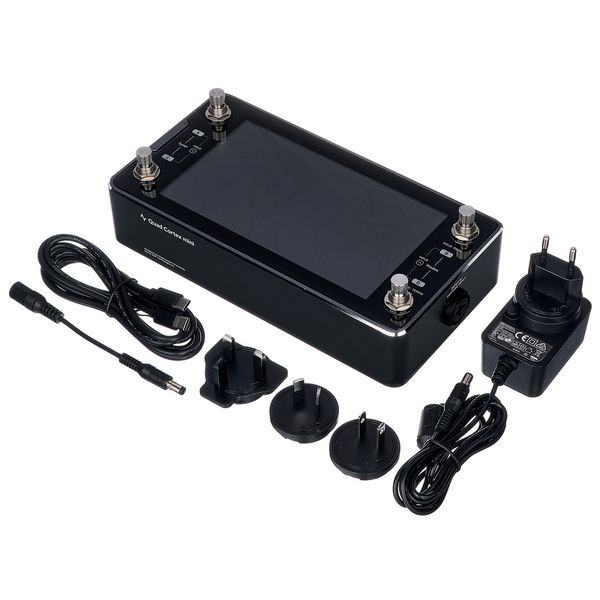
Multi-Effect Pedal for Electric Guitar and Electric Bass
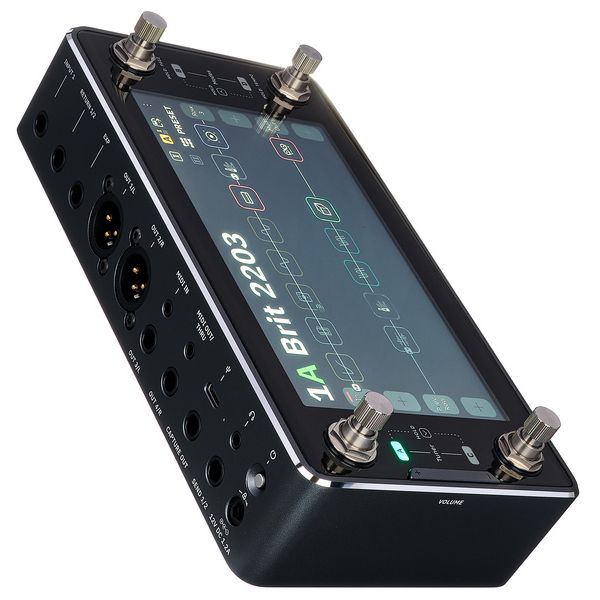
- Powerful and compact effect pedal with superior modelling technology
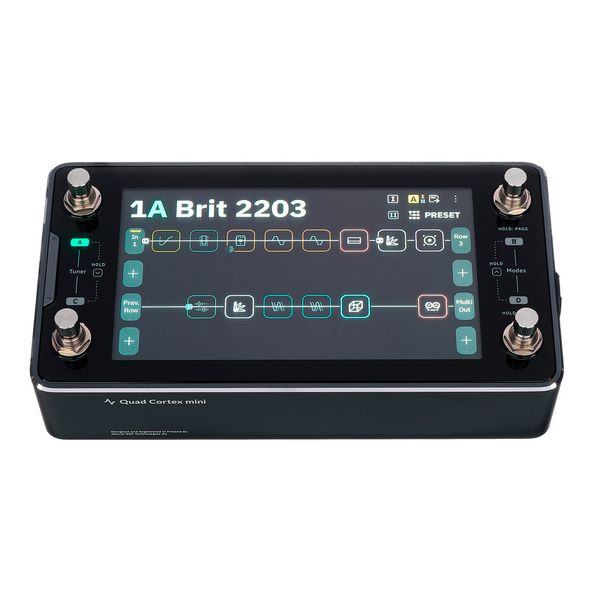
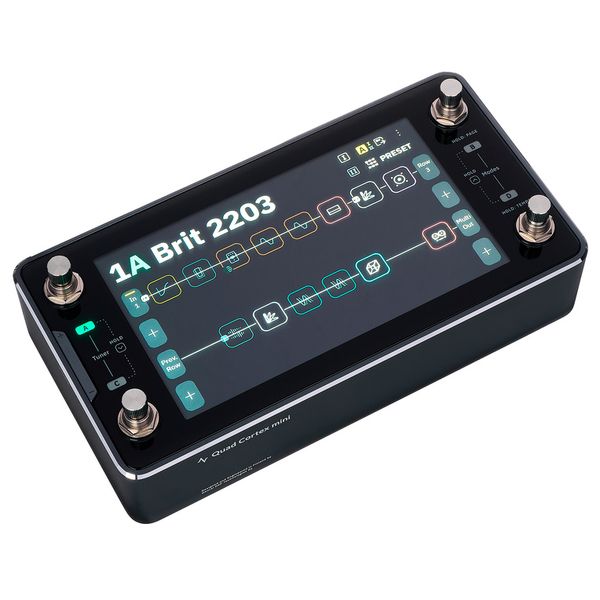
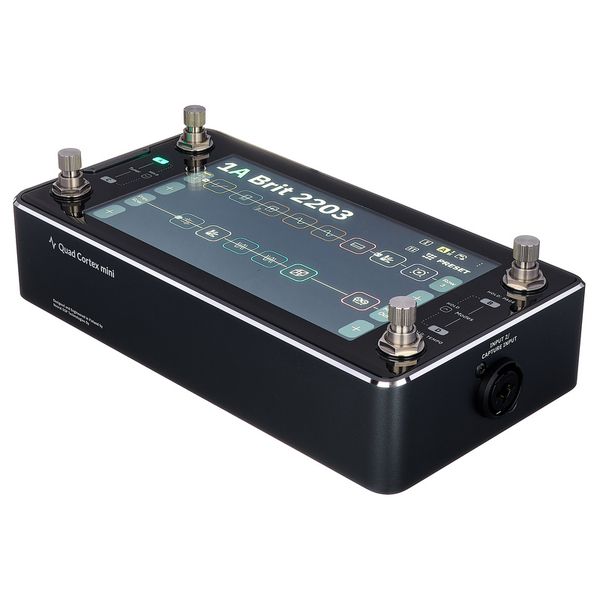
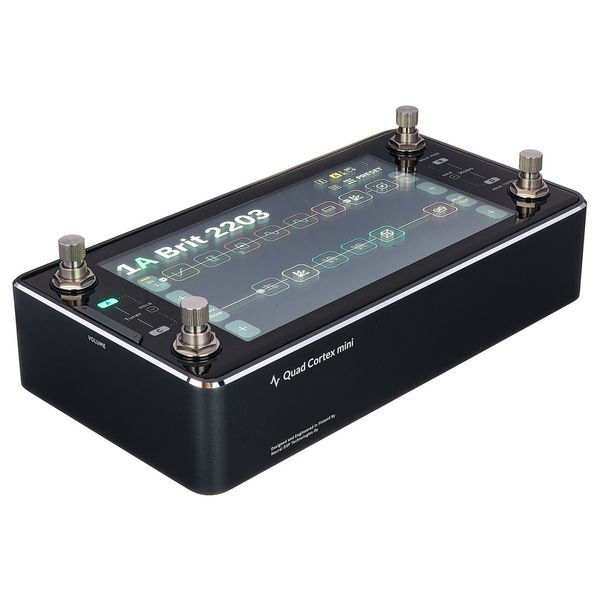
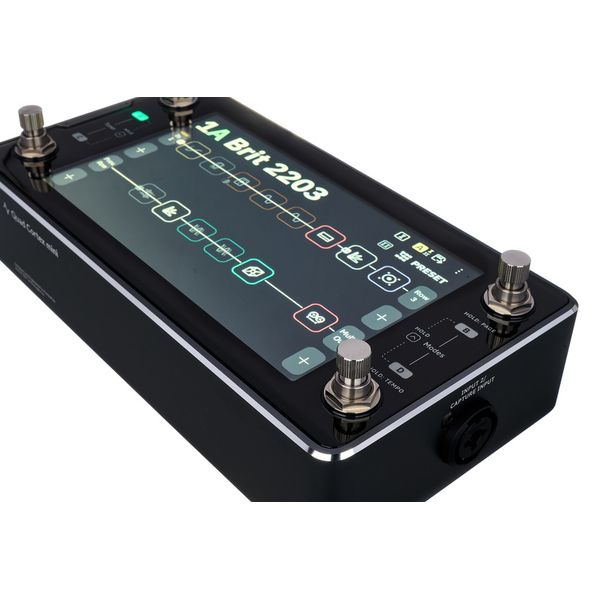
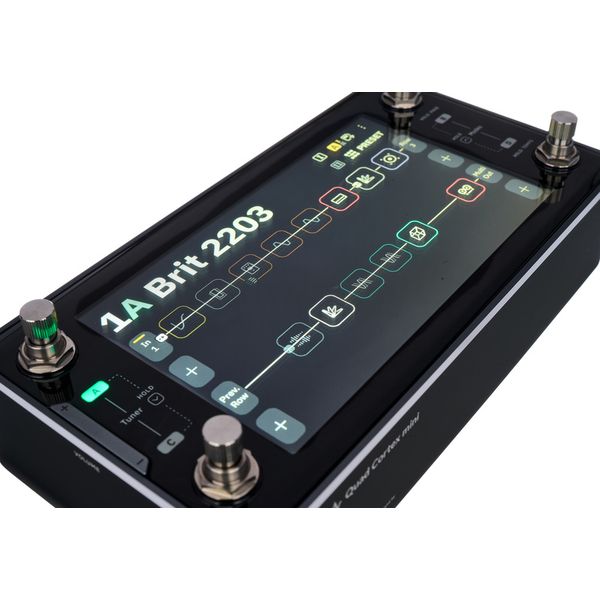
- 7" multi-touch display
- Four combination footswitches/rotary controls
- Power consumption: 1200 mA
- Power supply with a 12 V DC mains adapter (included)
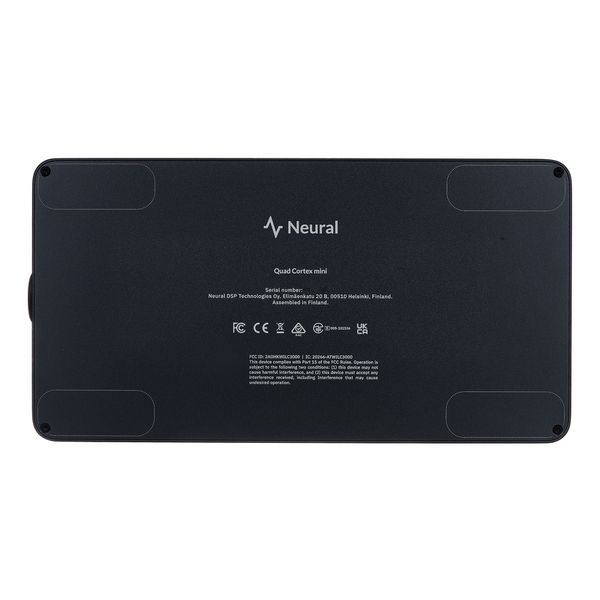
- Dimensions (W x D x H): 228 x 118 x 65 mm
- Weight: 1.5 kg
- Includes power supply
Note: Battery operation is not supported.
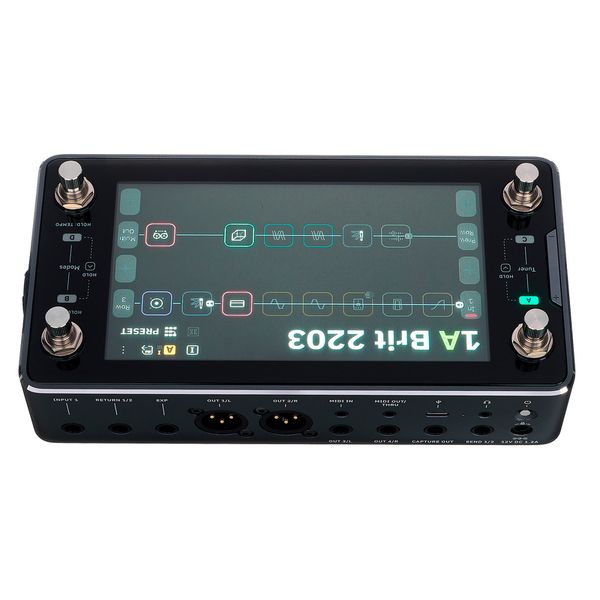
Connections:
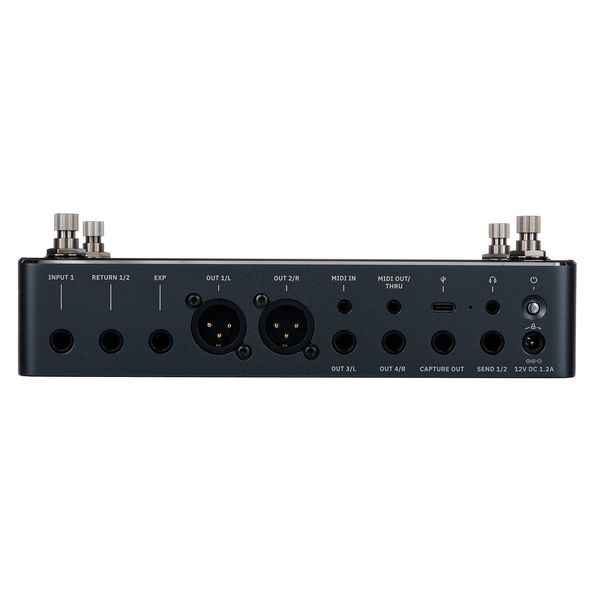
- Input 1: 6.3 mm jack
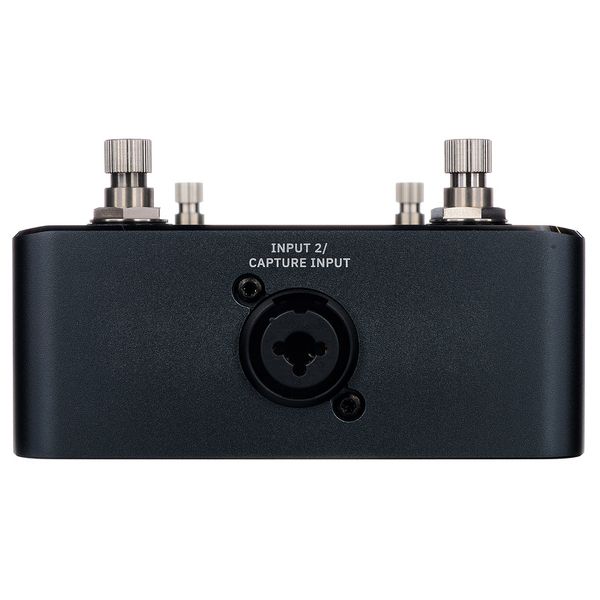
- Input 2 (capture input): 6.3 mm jack / XLR combo
- Send 1/2: 6.3 mm stereo jack
- Return 1/2: 6.3 mm stereo jack
- Outputs 1/L and 2/R: 2 x XLR
- Outputs 3/L and 4/R: 6.3 mm jack
- MIDI In and Out/Thru: 2x 3.5 mm stereo jack
- Headphone connection: 3.5 mm stereo jack
- Capture output: 6.3 mm jack
- Power supply connection: Barrel connector 5.5 x 2.1 mm, centre negative
- USB-C
-
Available since January 2026
-
Item number 634079
-
Sales Unit 1 piece(s)
-
Design Floorboard
-
Tube(s) No
-
Amp Modeling Yes
-
Effects Yes
-
Headphone Output Yes
-
Direct Out Yes
-
MIDI Interface Yes
-
Integrated Expression Pedal No
-
Connections for Pedals or Switches Yes
-
Aux-Input Yes
-
Integrated Tuner Yes
-
USB-Port Yes
-
Drum-Computer No
-
Incl. Tuner Yes
-
Integrated Effects Yes
-
MIDI Connector(s) Yes
-
Line Out Yes
-
Aux Input Yes
-
PSU included Yes
-
USB Connection Yes
-

Top performance, compact package
The Neural DSP Quad Cortex Mini packs modelling, effects, and capture technology into a single compact multi-effects unit for guitar and bass. Despite its tiny footprint, the Quad Cortex Mini still feaures a 7" touchscreen and four multi-functional footswitches that also double as rotary controls. This user interface allows the player to edit their presets, signal chains, and parameters directly on the device without the need for external editing software. Neural DSP's established modelling platform handles signal processing, which covers amps, cabs, and effects; the overall combination of touchscreen operation, footswitch encoders, and flexible signal routing makes this the ideal multi-effects solution for pedalboards as well as for studio and recording applications.

)
As direct as it gets
The Neural DSP Quad Cortex Mini is operated primarily via its large touchscreen, where the user can freely arrange their signal blocks into whatever sequence they desire. The parameters of individual effects or amp models can be adjusted either directly via touch or by using the four combination footswitches, which function as preset switches, scene selectors, or encoders depending on which mode is active. In addition to classic effect blocks, high‑quality amp and cab simulations are also on board, allowing flexible integration into mono or stereo setups, and guitarists can even incorporate external effects gear via the send and return connections if they want to put together a hybrid setup. And as if that weren't enough, the capture function even makes it possible to integrate external amplifiers or pedals through dedicated input and output pathways, then record their tonal characteristics and recall them later directly from the device.
)
Routing and integration
In terms of connectivity, the Neural DSP Quad Cortex Mini features balanced outputs in both XLR and jack formats, allowing the device to be connected directly to PA systems, audio interfaces, or guitar power amps; these are accompanied by two inputs, one of them a capture input in XLR/jack combo format that also provides phantom power for microphones. The Quad Cortex Mini is also equipped with two send and two return channels for external effects as well as a separate capture output, while the MIDI in and MIDI out/thru (each in 3.5mm TRS format) allow the device to be incorporated into more complex control setups. And of course the obligatory headphone output - for monitoring or simply practising in peace - has not been forgotten either. Finally, the Neural DSP Quad Cortex Mini's USB-C port also provides a connection to a computer, so users can integrate it into their recording setup as well as update the firmware with no hassle.
)
By the pros, for the pros
Guitarists and bassists on the hunt for a compact yet high-performance modelling system that doesn't skimp on connectivity need look no further than the Neural DSP Quad Cortex Mini; its combination of touchscreen operation and hands-on controls makes it equally ideal for in-depth sound programming in the studio and for direct preset editing in a live environment. Players looking to integrate their favourite effects or "capture" the sound of their own amps also have the corresponding options at their fingertips. With the wealth of functions it provides, users will need a little while to get to grips with the Quad Cortex Mini, so it is perhaps best suited to musicians with an active interest in signal routing and sound design; those who are simply looking for plug-and-play presets will of course have plenty to keep them busy, but perhaps not be able to unleash the modeller's full potential.
)
About Neural DSP
Founded in Finland in 2017, Neural DSP regards itself as a developer and provider of computer-based solutions for the music industry. Inspired by innovative technologies such as advanced algorithms and machine learning, Neural DSP Technologies initially developed software plug-ins. New products have been released at regular intervals, most of which faithfully reproduce legendary amps or, in collaboration with popular guitarists such as Plini and Tosin Abasi, exactly reproduce their characteristic sounds. The Quad Cortex, the first hardware product from the still-young company, was released in 2021 and, true to the company's credo, is intended to bring artists a new level of creative inspiration through technological innovations.
Access all areas
The Neural DSP Quad Cortex Mini is versatile enough for all manner of uses: Home studio users can employ it as the central sound source for direct recordings - including amp simulations, effects, and even re-amping via external gear - while live musicians can run it straight into the PA and simultaneously feed the signal to their on-stage monitors or power amps using the jack outputs. The send and return connections mean that players can keep their favourite pedals in the setup without having to bypass the Quad Cortex Mini's internal effects section, and since it packs a variety of classic pedalboard and amp combinations into its compact footprint, it will even serve as a compact fly rig for rehearsals, sessions, or touring. And this compact modeller is not just for guitarists - bassists too can create their own custom signal chains with whatever amp models and whatever dynamic and modulation effects they choose, without the need for any outboard equipment.
In the spotlight
Mini vs. "full-size" Quad Cortex
The Neural DSP Quad Cortex Mini employs the same modelling engine, CorOS software, and Neural Capture technology as the full-sized version, and it also provides access to the Cortex Cloud with its wealth of presets and captures. Sonically and functionally, the Mini's amp models, effects, and signal blocks are identical to those of its bigger sibling, and the preset, scene, and stomp concepts are based on the same principles. The main differences between the two devices are visible in their hardware: The Mini subsitutes the original's selection of switches for just four multifunctional footswitch encoders and, overall, features fewer physical controls for direct access; the range of connections on offer is also less extensive, with the Mini featuring fewer additional returns, expression inputs, and routing options. However, the Quad Cortex Mini makes up for this with significantly greater portability thanks to its smaller dimensions and lighter weight, while also being easy to integrate into small pedalboards and desktop setups without sacrificing any of the original Quad Cortex's sonic goodness.
)
This is what customers who viewed this product bought

Accessories & matching items
Compare options
-
Neural DSP Guitar Multi Effects at a glance
-
Display Guitar Multi Effects from $ 1000 - $ 1500
-
Go to product group Electric Guitar Preamps
-
Go to product group Bass Preamps
-
Go to product group Guitar Multi Effects
-
Go to product group Guitar and Bass Effects
-
Go to product group Guitars and Basses
-
Show manufacturer details for Neural DSP
-
Neural DSP Guitars and Basses at a glance